
Parents often feel pressured to get antibiotics for their sick child. A runny nose turns green. A fever lingers. A cough won’t quit. It’s natural to want a quick fix. But here’s the hard truth: antibiotics don’t work for most childhood illnesses. Giving them when they’re not needed doesn’t help your child-it harms them, and everyone else.
Antibiotics Only Work on Bacteria-Not Viruses
Antibiotics are powerful tools, but they’re not magic pills. They kill bacteria, not viruses. And most childhood illnesses? They’re viral. A runny nose, cough, sore throat, ear pain, vomiting, or diarrhea? More than 90% of the time, it’s a virus. Your child’s immune system will clear it on its own in a few days.
Think about it this way: out of every 100 kids with a sore throat, only about 20 have strep throat-a bacterial infection that needs antibiotics. The other 80? They have a cold, flu, or another virus. Giving antibiotics to those 80 kids does nothing for their symptoms, but it still exposes them to side effects and increases the risk of antibiotic resistance.
The same goes for ear infections. While some ear infections are bacterial, many aren’t. The CDC now recommends watchful waiting for children over 6 months with mild symptoms. If they don’t improve in 48 to 72 hours, then antibiotics make sense. Waiting doesn’t mean doing nothing-it means monitoring, offering pain relief, and letting the body heal.
Common Antibiotics Used in Kids-and How They Work
When antibiotics are truly needed, doctors pick the safest, most effective one. For most kids, that’s amoxicillin. It’s a penicillin-type antibiotic, easy to take, and works well for common infections like ear infections, sinus infections, and some types of pneumonia.
Here’s what’s commonly used:
- Amoxicillin: First choice for ear infections, sinus infections, and strep throat. Usually given twice a day for 10 days. Dose is based on weight-typically 80-90 mg per kg per day.
- Azithromycin: A macrolide used for whooping cough, mild pneumonia, or if a child is allergic to penicillin. Often given as a 3- to 5-day course.
- Cefdinir or Ceftibuten: Cephalosporins used for ear infections that don’t clear with amoxicillin or for more complicated cases.
Each antibiotic targets different bacteria. Amoxicillin is broad-spectrum, meaning it hits many types. Azithromycin is more targeted. Doctors don’t just guess-they follow guidelines based on the infection, age, and severity.
Side Effects Are Common-But Usually Mild
One in ten kids will have side effects from antibiotics. Most aren’t dangerous, but they’re annoying. Diarrhea is the most common, affecting 5% to 25% of kids, depending on the antibiotic. Nausea, vomiting, and upset stomach are also frequent. Yeast infections (like diaper rash or oral thrush) happen in 1% to 5% of cases.
These happen because antibiotics don’t just kill bad bacteria-they wipe out good ones too. Your child’s gut is full of helpful microbes that keep digestion running and the immune system balanced. When antibiotics disrupt that balance, problems pop up.
One serious risk is Clostridium difficile (C. diff) infection. This bacteria can take over when good bacteria are wiped out. It causes severe diarrhea, fever, and belly pain. It’s rare in healthy kids but more common in those who’ve had multiple antibiotic courses or long hospital stays.
True Allergies Are Rare-But Misdiagnosed All the Time
Many parents say their child is “allergic to penicillin.” But in most cases, they’re wrong. Studies show that 95% of kids labeled allergic to penicillin based on family history or a mild rash can actually take it safely.
Here’s the difference:
- Side effect: A mild rash (flat or slightly raised, not itchy), stomach upset, or diarrhea. These are common and don’t mean the child can’t take the drug again.
- True allergy: Hives (red, itchy, raised welts), swelling of the lips or tongue, wheezing, trouble breathing, or vomiting right after taking the antibiotic. These are rare-under 0.1% of courses-but require immediate medical care and lifelong avoidance.
If your child had a rash after amoxicillin, don’t assume it’s an allergy. Talk to your doctor. A simple skin test or supervised dose can confirm whether it’s safe to use penicillin in the future. Labeling a child as allergic to penicillin often leads to using stronger, broader antibiotics-which increases resistance and side effect risks.
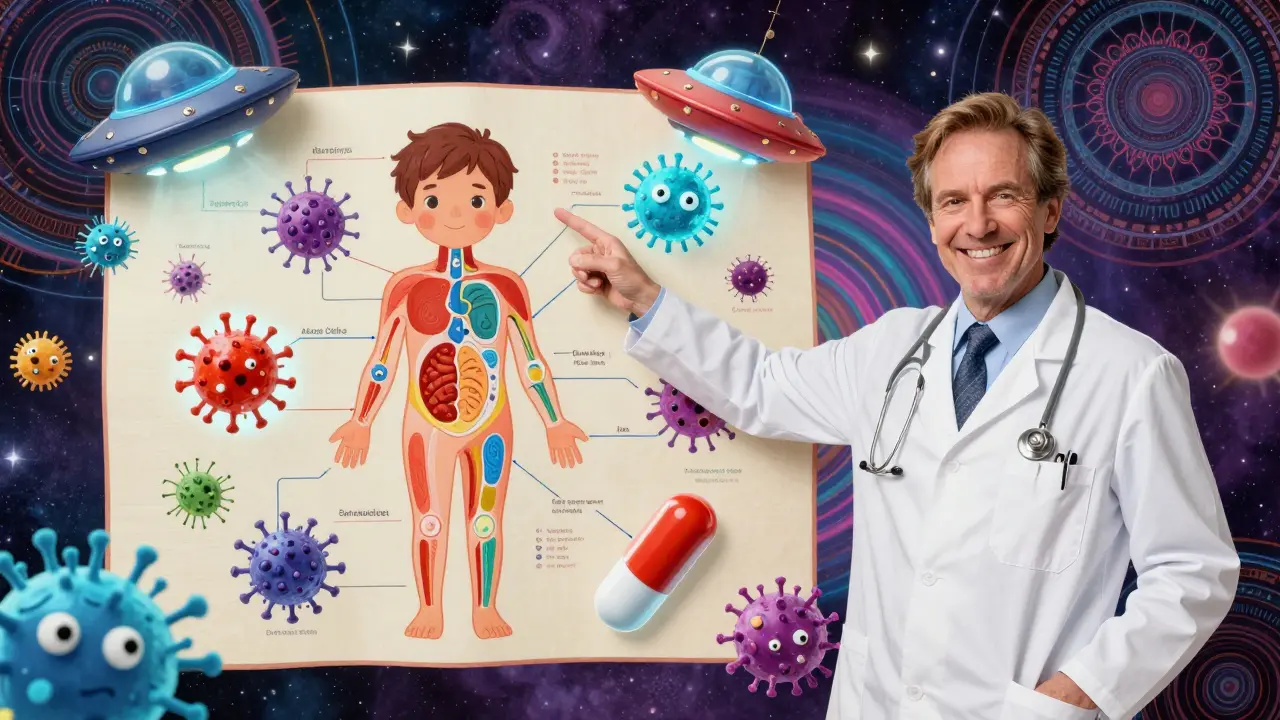
Why Stopping Early Is Dangerous
It’s tempting. Your child feels better after two days. The fever’s gone. The cough’s fading. Why keep giving the medicine?
Because the bacteria aren’t all dead yet.
Antibiotics don’t kill every single bacterium right away. The first few days wipe out the weakest ones. The remaining bacteria are the toughest. If you stop early, those tough ones survive-and multiply. They become resistant. That’s how superbugs like MRSA spread.
Research shows 30% of parents stop antibiotics early when symptoms improve. That’s a huge driver of resistance. Even if your child feels fine, finish the full course. For amoxicillin, that’s usually 10 days. For azithromycin, it’s 3 to 5 days. No exceptions.
What to Do If Your Child Vomits After Taking Antibiotics
It happens. Liquid antibiotics taste terrible. Kids gag. They spit. They vomit.
Here’s what to do:
- If vomiting happens within 30 minutes of the dose: Give the full dose again.
- If vomiting happens 30 to 60 minutes after: Give half the dose.
- If vomiting happens after 60 minutes: No need to repeat. The medicine was absorbed.
Don’t double up unless you’re sure the dose wasn’t absorbed. Too much can cause more side effects.
How to Get Kids to Take Their Medicine
Amoxicillin tastes like bitter chalk. No kid wants it. But there are tricks.
- Mix it with a small spoonful of chocolate syrup, apple sauce, or yogurt. Don’t mix it into a full bottle of juice-it dilutes the dose.
- Use a dosing syringe, not a spoon. It’s more accurate and easier to squirt to the side of the mouth, avoiding the bitter taste buds on the tongue.
- Ask your pharmacist about flavoring. Many compounding pharmacies can make amoxicillin taste like strawberry, bubblegum, or grape.
- Give it right before a meal or snack. Food helps mask the taste and reduces stomach upset.
And remember: never hide pills in large meals. If your child doesn’t eat it all, they won’t get the full dose.
Antibiotic Resistance Is Real-and Getting Worse
Every time antibiotics are used unnecessarily, bacteria get smarter. They evolve. They fight back.
Right now, 47% of the bacteria that cause ear infections and pneumonia in kids are resistant to penicillin. That’s up from 35% just 10 years ago. MRSA infections in children have jumped 150% since 2010. These aren’t just numbers. They mean that when your child really needs antibiotics-say, for a severe infection-the first-line drugs might not work anymore.
The CDC says 30% of antibiotic prescriptions for kids are unnecessary. That’s nearly one in three. In the U.S. alone, antibiotic resistance causes over 35,000 deaths a year. And kids are part of that problem-and part of the solution.
What You Can Do as a Parent
You’re not powerless. You can help protect antibiotics for your child and future generations.
- Ask: “Is this infection bacterial or viral?” Don’t accept a prescription without knowing why.
- Ask: “Do we need antibiotics now, or can we wait?” For ear infections, sinus infections, or mild pneumonia, watchful waiting is often the right call.
- Ask: “Is there a test?” For sore throats, insist on a rapid strep test. Don’t accept a diagnosis based on looks alone.
- Never use leftover antibiotics from a previous illness. Different infections need different drugs.
- Don’t pressure your doctor. Studies show 68% of parents feel guilty or anxious if the doctor doesn’t prescribe antibiotics-even when they know it’s not needed.
The most powerful medicine for most childhood illnesses isn’t a pill. It’s time. Rest. Fluids. Pain relief. Fever reducers. Let your child’s body do what it’s built to do.
What’s Changing in Pediatric Antibiotic Use
Doctors are getting better tools. In 2023, the FDA approved a new rapid test that can tell if an infection is bacterial in just 6 hours-not 2 to 3 days. That means fewer kids get broad-spectrum antibiotics while waiting for results.
Some clinics now use CRP blood tests. CRP is a marker of inflammation. High levels suggest bacterial infection. Low levels mean it’s likely viral. One study showed using CRP cut unnecessary antibiotic use by 85%.
And research from the PediCAP study found that using a blood test called procalcitonin to guide treatment reduced unnecessary antibiotic use by 62%-without increasing complications.
These tools are starting to appear in clinics. Ask your pediatrician if they use them. They’re changing how care is delivered.
Final Thought: Preserve the Power
Antibiotics saved millions of lives. But they’re not infinite. Every time we use them when we don’t need to, we chip away at their power.
Your child’s next ear infection might need antibiotics. But it probably won’t. And if it doesn’t, holding off isn’t neglect-it’s responsibility. It’s protecting not just your child, but the whole community.
When in doubt, ask. When in wait, watch. And when antibiotics are truly needed, give them exactly as directed. That’s how we keep these lifesaving drugs working-for our kids today, and for the next generation.
Can antibiotics treat a cold or the flu?
No. Colds and the flu are caused by viruses, and antibiotics only work against bacteria. Giving antibiotics for a viral infection won’t shorten the illness, reduce fever, or prevent spreading it. It only increases the risk of side effects and antibiotic resistance.
My child had a rash after taking amoxicillin. Does that mean they’re allergic?
Not necessarily. Most rashes after antibiotics are side effects, not true allergies. A mild, flat, non-itchy rash that appears days after starting the medicine is usually not an allergy. True allergic reactions include hives, swelling of the face or lips, wheezing, or trouble breathing. If you’re unsure, talk to your doctor. Up to 95% of kids labeled allergic to penicillin can actually take it safely after proper testing.
How long should my child take antibiotics?
Always finish the full course, even if your child feels better. For amoxicillin, that’s usually 10 days. For azithromycin, it’s 3 to 5 days. Stopping early lets the toughest bacteria survive and multiply, leading to resistant infections. The full course ensures all harmful bacteria are wiped out.
What should I do if my child vomits after taking an antibiotic?
If vomiting happens within 30 minutes of the dose, give the full dose again. If it happens between 30 and 60 minutes, give half the dose. If it’s been more than 60 minutes, the medicine was likely absorbed-no need to repeat. Never double the next dose unless instructed by your doctor.
Can I give my child leftover antibiotics from a previous illness?
No. Different infections need different antibiotics. A drug that worked for an ear infection won’t help a throat infection or pneumonia. Leftover antibiotics may be expired, improperly stored, or the wrong type. Using them can delay proper treatment and increase resistance risk. Always get a new prescription for each illness.
Is green or yellow mucus a sign my child needs antibiotics?
No. Green or yellow nasal discharge is normal during a viral cold. It doesn’t mean a bacterial infection is present. Most cases of sinus congestion with colored mucus are still viral. Antibiotics are only needed if symptoms last more than 10 days, worsen after improving, or are accompanied by high fever and facial pain. Color alone isn’t a reason to prescribe antibiotics.
Janette Martens 28.12.2025
antibiotics are for bacteria dumbass. why do parents think a runny nose needs a pill? my kid got a cold last winter and i just gave him honey and sleep. no drugs. he’s fine. stop coddling kids with meds for every sniffle.
Marie-Pierre Gonzalez 28.12.2025
Thank you for this thoughtful, evidence-based overview. As a pediatric nurse in Ontario, I see firsthand how misinformation drives unnecessary prescriptions. Parents are often anxious, not reckless-so education, not judgment, is key. I’ve started handing out one-pagers on viral vs. bacterial symptoms, and the response has been overwhelmingly positive. Let’s keep the conversation calm, clear, and kind. 🙏
Louis Paré 28.12.2025
Let’s be real: this whole post is a liberal fantasy wrapped in CDC pamphlets. You think parents are the problem? Try the $800 billion pharmaceutical industry that profits from overprescribing. Doctors don’t ‘follow guidelines’-they follow insurance codes and fear lawsuits. And ‘watchful waiting’? That’s just code for ‘we don’t have time to actually care.’
Also, amoxicillin tastes like chalk because it’s made by corporations who don’t give a damn about your kid’s tongue. Flavor it? Please. That’s just sugar-coating a systemic failure.
And don’t get me started on ‘antibiotic resistance.’ It’s not your fault. It’s capitalism’s. Your child’s ear infection isn’t the crisis. The system is.
Vu L 28.12.2025
lol so antibiotics are bad but we should still use them when 'truly needed'? what does that even mean? who decides? the same docs who prescribe them for colds? yeah right.
James Hilton 28.12.2025
My kid got amoxicillin for a fever last year. 3 days later, he was dancing around the house like a caffeinated squirrel. Then he pooped glitter. No, seriously-diarrhea. We called the doc. They said ‘it’s normal.’
So yeah, I’m now the guy who asks for tests before the script. And I don’t trust ‘watchful waiting’ unless I’m holding a thermometer and a snack.
Mimi Bos 28.12.2025
my daughter got a rash after amoxicillin and we thought it was an allergy… turns out it was just a virus reaction. we were so scared. so glad we didn’t just assume. thanks for this post, it helped me feel less alone.
Payton Daily 28.12.2025
Okay, so let me get this straight. You’re telling me that if my kid has a fever and green snot, I should just wait? What if they die? What if they get meningitis? You think a parent should just sit there while their child suffers because some study says ‘maybe it’s viral’?
And don’t even get me started on ‘finish the course.’ I’ve seen kids throw up the whole bottle. Why should they suffer more because some doctor thinks it’s ‘scientific’?
Antibiotics are a gift from God. Use them when you feel like it. Don’t let some bureaucrat in a lab coat tell you what your child needs.
Kelsey Youmans 28.12.2025
This is one of the most balanced and clinically accurate summaries I’ve read on pediatric antibiotic use. The distinction between side effects and true allergy is critical, and the emphasis on stewardship over fear is exactly what our public health system needs. I’ve shared this with my entire family, including my sister-in-law, who is a pediatrician in Chicago. Thank you for the clarity and compassion.
Sydney Lee 28.12.2025
It’s not just about antibiotics-it’s about the erosion of trust in medicine. Parents are told to ‘wait’ while their child screams in pain, then blamed for ‘overreacting’ when they finally demand help. The system has failed them. The CDC guidelines are not gospel-they’re compromises written by committees who’ve never held a feverish toddler at 3 a.m.
And yet, here we are, lecturing mothers about ‘watchful waiting’ while hospitals are understaffed, pediatricians are overworked, and pharmacies won’t compound flavored amoxicillin because it’s ‘not cost-effective.’
So yes, I’ll finish the course. But I won’t apologize for wanting my child to feel better. Not today. Not ever.