
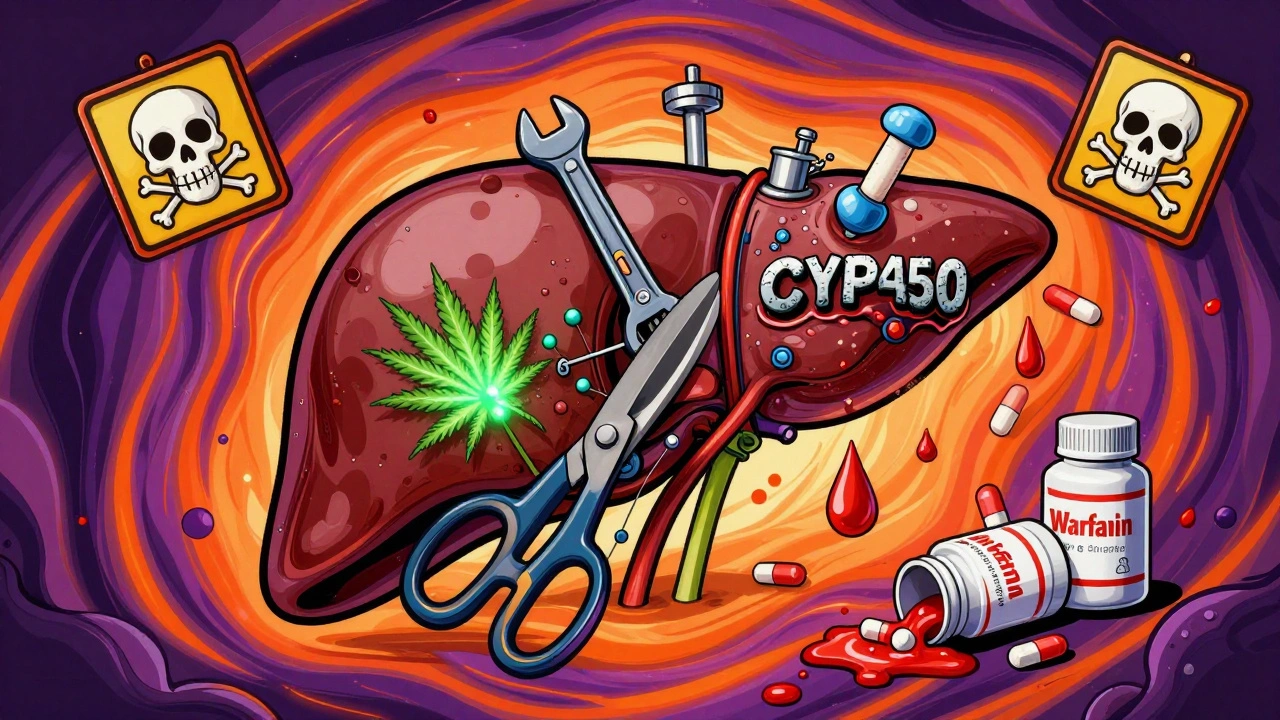
When you're taking prescription meds and considering cannabis for pain, anxiety, or sleep, you might not realize you're playing with fire. It's not just about getting high or feeling relaxed. Cannabis-especially CBD and THC-can quietly mess with how your body handles other drugs. And the consequences? They can be serious, even life-threatening.
How Cannabis Changes How Your Body Processes Medications
Your liver uses a family of enzymes called cytochrome P450 (CYP450) to break down about 60% of all prescription drugs. Think of them like tiny molecular scissors. Now, CBD and THC? They're like throwing a wrench into those scissors. CBD strongly blocks CYP3A4 and CYP2C19. THC blocks CYP1A2, CYP2C9, and CYP3A4. When these enzymes are slowed down, your meds don't get broken down as fast. That means they build up in your blood-sometimes to dangerous levels.
Take warfarin, a blood thinner. If you start taking CBD oil while on warfarin, your INR (a measure of how long your blood takes to clot) can spike by 29% to 48% within just 72 hours. That’s not a small bump. That’s a red flag for internal bleeding. One 2022 review of 17 real patient cases found multiple instances of gastrointestinal bleeding linked to this combo. The American College of Clinical Pharmacy warns that warfarin and cannabis together can cause INR spikes of 2.0 to 4.5 units-enough to send someone to the ER.
High-Risk Medications You Should Avoid with Cannabis
Some drugs are just too risky to mix with cannabis. Here are the big ones:
- Warfarin: As mentioned, even a small amount of CBD can make your blood too thin. The American Society of Health-System Pharmacists says patients on warfarin who use cannabis need INR checks every 3-5 days-not weekly.
- Tacrolimus: Used after organ transplants to stop rejection. Cannabis can make tacrolimus levels jump 300-500% in just 72 hours. That’s not a tweak-it’s a potential transplant failure.
- Clobazam: An anti-seizure drug. In epilepsy patients, CBD can raise clobazam levels by 60% to 500%. One Reddit user described being so sedated they “couldn’t walk straight.” Their neurologist cut the clobazam dose by 40%.
These aren’t theoretical risks. These are documented, repeatable, and dangerous. If you’re on any of these, talk to your doctor before touching cannabis-even a low-dose CBD gummy.
Moderate-Risk Interactions: Watch for Warning Signs
Not every interaction is an emergency, but they still need attention.
- Benzodiazepines (like alprazolam or lorazepam): Cannabis boosts their sedative effect. In elderly patients, this increases fall risk by 47%. One study showed sedation scores went up 35-60% when combined.
- Opioids (like oxycodone or morphine): Cannabis slows how fast your body clears these drugs. That means more drowsiness, slower breathing, and higher overdose risk-even if you’ve been on opioids for years.
- Calcium channel blockers (like amlodipine): Used for high blood pressure. Cannabis can raise their levels by 30-40%, leading to dizziness, fainting, or dangerously low blood pressure.
These aren’t deal-breakers, but they require monitoring. If you start using cannabis and suddenly feel like you’re walking through molasses, or you’re dizzy when standing up, it might not be the weed-it’s the interaction.
Low-Risk, But Not Risk-Free
Some medications show minimal interaction. SSRIs like sertraline may see a 10-15% rise in blood levels with CBD. Statins like atorvastatin might go up 20-25%. But here’s the catch: no real cases of rhabdomyolysis (muscle breakdown) or serotonin syndrome have been confirmed.
Still, people report mixed results. A 2023 Epilepsy Foundation survey found 63% of CBD users on clobazam felt more tired. But a separate Reddit survey of 872 people on SSRIs found 41% noticed zero changes. That inconsistency? It’s why you can’t assume it’s safe just because “it worked for someone else.”
Route of Use Matters-Smoking vs. Oil vs. Edibles
How you take cannabis changes everything.
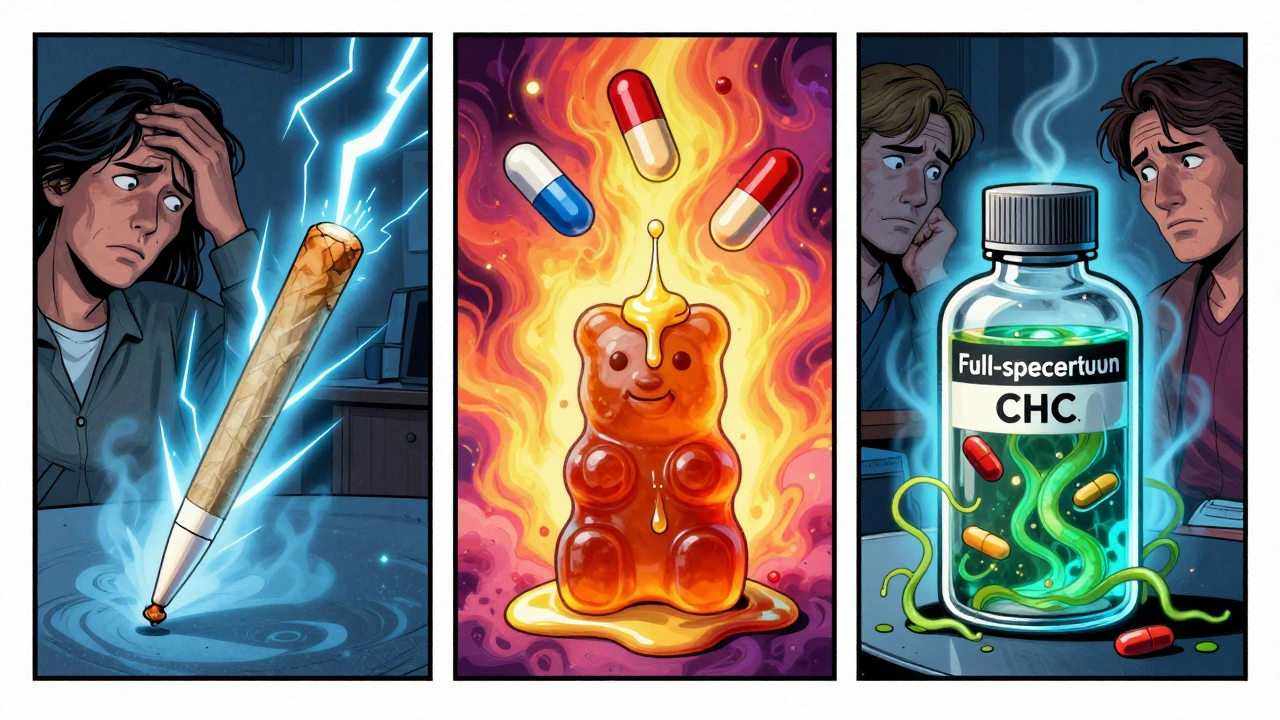
Smoking or vaping hits fast-peak THC in 6-10 minutes. That means immediate, sharp interactions with sedatives. If you smoke before bed and take a sleeping pill, you could pass out harder than expected.
Oral CBD (oils, gummies, capsules) takes 2-4 hours to peak and lasts 6-8 hours. That’s a long window for interactions with warfarin or blood pressure meds. It’s not a quick spike-it’s a slow creep.
And here’s a twist: full-spectrum CBD (with trace THC) is 22-37% more likely to block liver enzymes than pure CBD isolate. That “entourage effect” people talk about? It’s not just hype-it’s a pharmacological reality.
What You Should Do Before Using Cannabis with Medications
Don’t guess. Don’t rely on Reddit advice. Use this 5-step plan:
- Be honest with your doctor or pharmacist. Don’t say “I use weed sometimes.” Say: “I take 25mg of full-spectrum CBD oil every night for sleep.” Include frequency, dose, and product type.
- Check the interaction database. Tools like the University of Washington’s Cannabis Drug Interactions tool are updated quarterly and free to use.
- Get baseline blood tests. If you’re on warfarin, tacrolimus, or clobazam, get your levels checked before starting cannabis.
- Monitor closely after starting. Check INR or drug levels 48-72 hours after your first dose of cannabis. Watch for dizziness, excessive sleepiness, bruising, or confusion.
- Adjust slowly. If needed, reduce your medication dose by 10-25%. Never do this on your own-work with your prescriber.
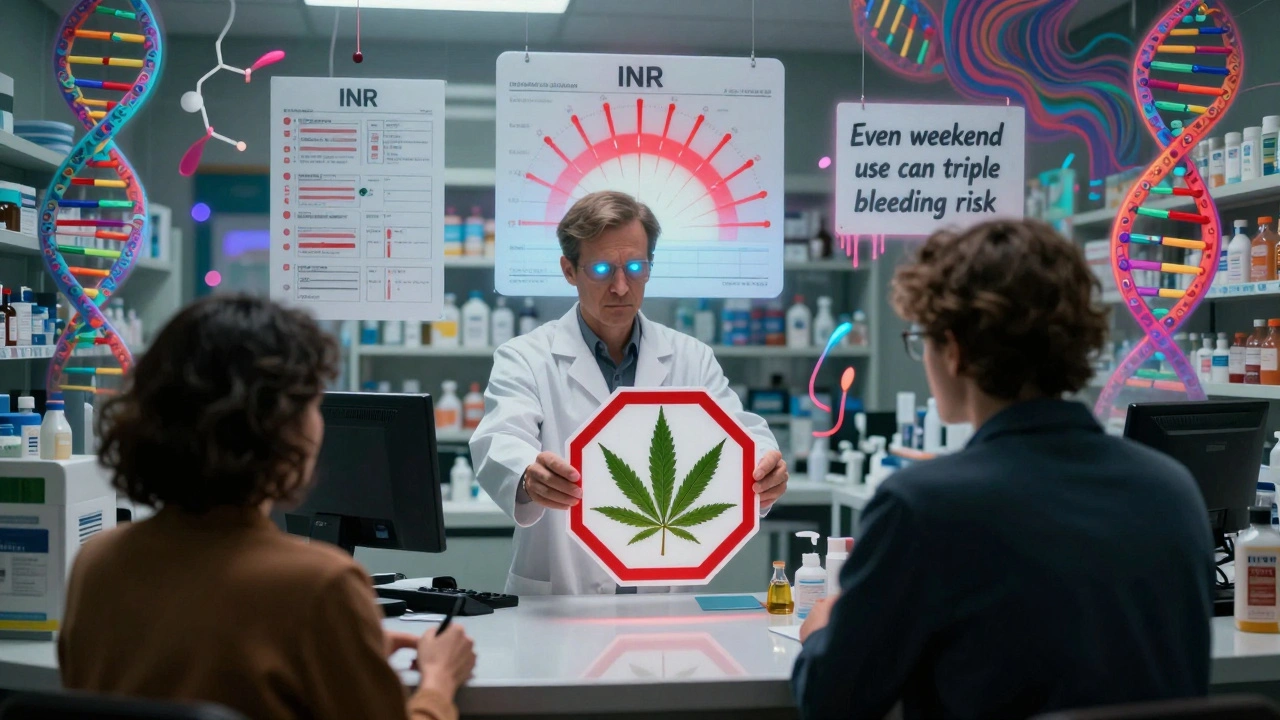
Pharmacists in Pennsylvania are now trained to warn patients: “Even weekend recreational cannabis use can increase bleeding risk by 300% within 48 hours.” That’s not exaggeration. That’s data.
Why This Is Getting Worse, Not Better
More people are using cannabis. In 2022, over 58 million Americans used it-and 42% of them were also on prescription drugs. The FDA has received over 1,300 reports of possible cannabis-drug interactions since 2018. But experts say less than 10% of real cases are reported.
Meanwhile, the market is exploding. There are now hundreds of CBD brands, each with different concentrations, extraction methods, and additives. Most aren’t regulated. A bottle labeled “10mg CBD” might actually contain 25mg-or THC you didn’t know was there.
And here’s the scary part: only 12 U.S. states require pharmacists to counsel patients on cannabis interactions. A 2023 survey found 76% of community pharmacists feel unprepared to answer questions about it.
What’s Coming Next
The FDA launched the Cannabis Clinical Trials Network in 2023. The University of Arkansas is running a $2.3 million NIH study on CBD and warfarin. Results are expected by late 2025.
But science is playing catch-up. We still have almost no data on how cannabis interacts with newer drugs like GLP-1 agonists (Ozempic, Wegovy), which millions are now using for weight loss and diabetes. A 2024 review noted only 12 studies on cannabis and diabetes meds-even though 28% of cannabis users have diabetes.
The American Society for Clinical Pharmacology and Therapeutics predicts we’ll have solid guidelines for 85% of high-risk interactions by 2027. But until then? You’re on your own.
Bottom Line: Don’t Assume It’s Safe
Cannabis isn’t a magic herb. It’s a powerful chemical that interacts with your body’s drug-processing system. Some people use it with no issues. Others end up in the hospital.
If you’re on any of these meds-warfarin, tacrolimus, clobazam, benzodiazepines, or opioids-don’t start cannabis without talking to your doctor. Even if you’re using a low-dose CBD product. Even if you think it’s “natural.”
The truth? The safest approach isn’t to avoid cannabis entirely. It’s to know exactly what you’re mixing it with-and to check before you start.
Can I take CBD with my blood pressure medication?
It depends. CBD can raise levels of calcium channel blockers like amlodipine by 30-40%, which may cause dizziness or low blood pressure. If you’re on one of these, get your blood pressure checked 48-72 hours after starting CBD. Talk to your doctor about adjusting your dose. Don’t stop your meds-just monitor closely.
Does smoking cannabis interact differently than CBD oil?
Yes. Smoking hits fast and hard, causing immediate spikes in THC that can dangerously boost sedation when mixed with alcohol, opioids, or sleeping pills. CBD oil works slower and lasts longer, creating a prolonged window for liver enzyme interference-especially with warfarin or epilepsy meds. The risk isn’t just about how much you take-it’s about how you take it.
Is full-spectrum CBD riskier than CBD isolate?
Yes. Full-spectrum CBD contains trace amounts of THC and other cannabinoids that boost enzyme inhibition. Studies show it blocks CYP3A4 22-37% more than pure CBD isolate at the same dose. If you’re on a sensitive medication, isolate is safer-but only if you’re certain it’s truly THC-free. Many products labeled “isolate” still contain traces.
Can I take CBD and warfarin if I space them out?
Spacing them out by 2 hours (as some clinics suggest) sounds logical, but there’s no strong evidence it helps. CBD and THC affect your liver enzymes for hours-sometimes days. It’s not like acid reflux where timing matters. If you’re on warfarin, avoid CBD entirely unless your doctor approves it and you’re getting frequent INR checks.
What should I do if I already took CBD with my medication?
Stop using CBD immediately and contact your doctor. Watch for signs like unusual bruising, dizziness, extreme drowsiness, confusion, or bleeding gums. If you’re on warfarin, get an INR test within 24-48 hours. Don’t wait for symptoms. Some interactions don’t show up until it’s too late.
Ali Bradshaw 4.12.2025
Been using CBD for chronic back pain for two years now, on lisinopril and a low-dose statin. No issues, but I check my BP weekly and got my liver enzymes checked last year. Just be smart about it. Not everything’s a bomb waiting to blow.
Lynette Myles 4.12.2025
They’re lying. The FDA knows this is all about controlling the market. Big Pharma doesn’t want you curing yourself with plants.
Annie Grajewski 4.12.2025
So let me get this straight… I can’t smoke weed with my Xanax because it might make me ‘walk through molasses’ but I can take 8 different pills that turn me into a zombie and that’s ‘normal’? 😂
Harry Nguyen 4.12.2025
Why are we letting unregulated cannabis products into the system? In my day, if you wanted medicine, you got a prescription-not some hippie oil from a gas station.
Jimmy Jude 4.12.2025
Let’s be real-this whole thing is a corporate scare tactic. You think they care about your liver enzymes? Nah. They care that CBD costs $20 and your blood thinner costs $400 a month. This isn’t science-it’s profit protection. Wake up.
And don’t even get me started on how they call full-spectrum ‘riskier’ like THC is some demon. It’s a molecule. It’s not magic. It’s biology. But hey, if you want to believe your body’s a fragile porcelain doll, go ahead.
My uncle took CBD with warfarin for 18 months. His INR stayed stable. He didn’t bleed out. He just slept better. Maybe the problem isn’t the weed-it’s the fear.
And don’t even get me started on how pharmacists are ‘unprepared.’ That’s not a knowledge gap-that’s a training gap. They didn’t teach this in pharmacy school because it wasn’t profitable to teach it. Now it’s a crisis? Convenient.
People are dying from SSRIs and opioids. We’re not having this conversation about those. But CBD? Oh no, the plant is the villain. Classic.
I’m not saying it’s safe for everyone. But let’s stop pretending this is some new, mysterious danger. We’ve had cannabis in medicine for 5,000 years. The science is catching up. The fear? That’s new.
And if you’re on tacrolimus? Yeah, be careful. But don’t blame the herb. Blame the lack of research funding. Blame the FDA’s 1937 attitude. Blame the fact that no one’s getting paid to study this properly.
Stop treating cannabis like it’s radioactive. It’s a plant. It’s not the devil. It’s just chemistry. And chemistry doesn’t care about your moral panic.
aditya dixit 4.12.2025
Interesting breakdown. I’ve seen this in my practice-patients on antiepileptics who start CBD and don’t tell their neurologist. The sedation is real, but so is the benefit. The key is transparency and monitoring. Not fear.
Also, the route of administration point is critical. Smoking = acute interaction risk. Oral = chronic modulation. Two different beasts. Most people don’t understand that.
And yes, full-spectrum does have higher enzyme inhibition. But that doesn’t mean isolate is always safer. Some patients need the entourage effect for symptom control. It’s not black and white.
What’s missing here is dosage context. 25mg CBD vs 250mg CBD? Huge difference. But the article treats all CBD as equal. That’s misleading.
Finally, the 12-state pharmacist counseling stat? That’s a systemic failure. Not a patient failure. We need mandatory pharmacogenomics training in pharmacy curricula. Not just ‘here’s a handout.’
ashlie perry 4.12.2025
They’re watching you. Every time you take CBD, it’s logged. They’re tracking your INR. Your sleep patterns. Your heart rate. They’re building a profile. This isn’t medicine. It’s surveillance disguised as safety.
Katie Allan 4.12.2025
Thank you for writing this. I’ve had patients come in terrified because they read something on Reddit and thought they’d have a stroke if they took a gummy. This is exactly the kind of balanced, science-backed info we need more of.
Also, props for mentioning the 5-step plan. That’s what real care looks like-not fear, not hype. Just clear steps.
Rupa DasGupta 4.12.2025
Ugh I hate how everyone acts like CBD is this magical cure-all 😤 I tried it for anxiety and it made me feel like a zombie on a trampoline 🤪
My therapist said I should stop. I did. I feel 100% better now. Maybe the problem isn’t the meds… it’s the weed.
Ada Maklagina 4.12.2025
My dad’s on warfarin. He started a 10mg CBD gummy for joint pain. Three days later he bruised like a grape. We got his INR checked. 5.8. ER visit. He’s off it now. This isn’t theoretical. It’s real.
Kylee Gregory 4.12.2025
One thing missing: what about topical CBD? Creams, balms, patches? If it’s not entering the bloodstream, does it even interact? I’ve seen people assume all CBD is the same, but topicals are a whole different ballgame.
Laura Saye 4.12.2025
I’m a nurse who works in oncology. I’ve seen patients on chemo and opioids use CBD oil for nausea and sleep. Some do great. Some crash. The difference? They told us. They didn’t hide it. That’s the key. Honesty saves lives.
Also, the ‘natural’ myth needs to die. Aspirin is natural. Botulinum toxin is natural. That doesn’t mean it’s safe in any dose.
Just because something comes from a plant doesn’t mean it’s gentle. Sometimes it’s the opposite.
an mo 4.12.2025
Let’s not pretend this is a ‘gray area.’ The CYP450 inhibition data is ironclad. The FDA has documented over 1,300 adverse events. This isn’t anecdotal. It’s epidemiological. And you’re not a ‘maverick’ if you ignore it-you’re a statistic waiting to happen.
Also, ‘full-spectrum is riskier’? No. It’s not riskier. It’s more potent. And potency isn’t a feature-it’s a liability when you’re on narrow-therapeutic-index drugs. This isn’t philosophy. It’s pharmacokinetics.
Stop romanticizing it. It’s not ‘ancient wisdom.’ It’s a drug. Treat it like one.
James Moore 4.12.2025
Okay, let’s be brutally honest here: the entire cannabis industry is built on misinformation, half-baked science, and billionaire-funded influencers selling ‘healing’ gummies for $60 a bottle. And now we’re supposed to trust these products with our life-saving meds? Please. The FDA doesn’t regulate these because they don’t want to admit they’ve been asleep at the wheel for 20 years. The fact that 76% of pharmacists feel unprepared? That’s not a gap in knowledge-that’s a failure of regulation. We’ve got 1,200 CBD brands on Amazon, none of them tested for heavy metals, pesticides, or accurate dosing. And you want me to believe that one of those ‘10mg CBD’ gummies isn’t actually 40mg with 2mg of THC hidden in it? That’s not optimism-that’s naivety.
And let’s talk about the ‘entourage effect’-that’s marketing jargon dressed up as science. It’s not that THC and CBD ‘work better together’-it’s that THC is a stronger CYP3A4 inhibitor than CBD, so you’re getting a double-whammy. And people call that ‘natural synergy’? No. That’s pharmacological chaos.
And the ‘spacing it out’ myth? That’s like saying if you take your insulin and your sugar pill two hours apart, your blood glucose won’t spike. No. The enzyme inhibition lasts for days. It’s not a timing issue-it’s a metabolic saturation issue.
And yes, I’ve seen the Reddit surveys. 41% of people ‘noticed zero changes.’ Well, guess what? Those people probably weren’t on warfarin or tacrolimus. They were on sertraline and took 5mg of CBD. Big difference. Correlation isn’t causation. And anecdotal evidence isn’t data.
The bottom line? If you’re on a drug with a narrow therapeutic index-warfarin, tacrolimus, clobazam, lithium, digoxin, carbamazepine-CBD isn’t a ‘maybe.’ It’s a ‘no.’ Period. End of story. You don’t get to be the exception. The data doesn’t care how ‘natural’ you feel. It only cares about your INR, your creatinine, your liver enzymes. And if you’re lucky, you’ll find out you’re the outlier before you bleed out.
So stop calling it ‘holistic.’ Stop calling it ‘alternative.’ Call it what it is: a drug. A potent, unpredictable, poorly regulated drug. And treat it like one.
ashlie perry 4.12.2025
They’re watching you. Every time you take CBD, it’s logged. They’re tracking your INR. Your sleep patterns. Your heart rate. They’re building a profile. This isn’t medicine. It’s surveillance disguised as safety.