
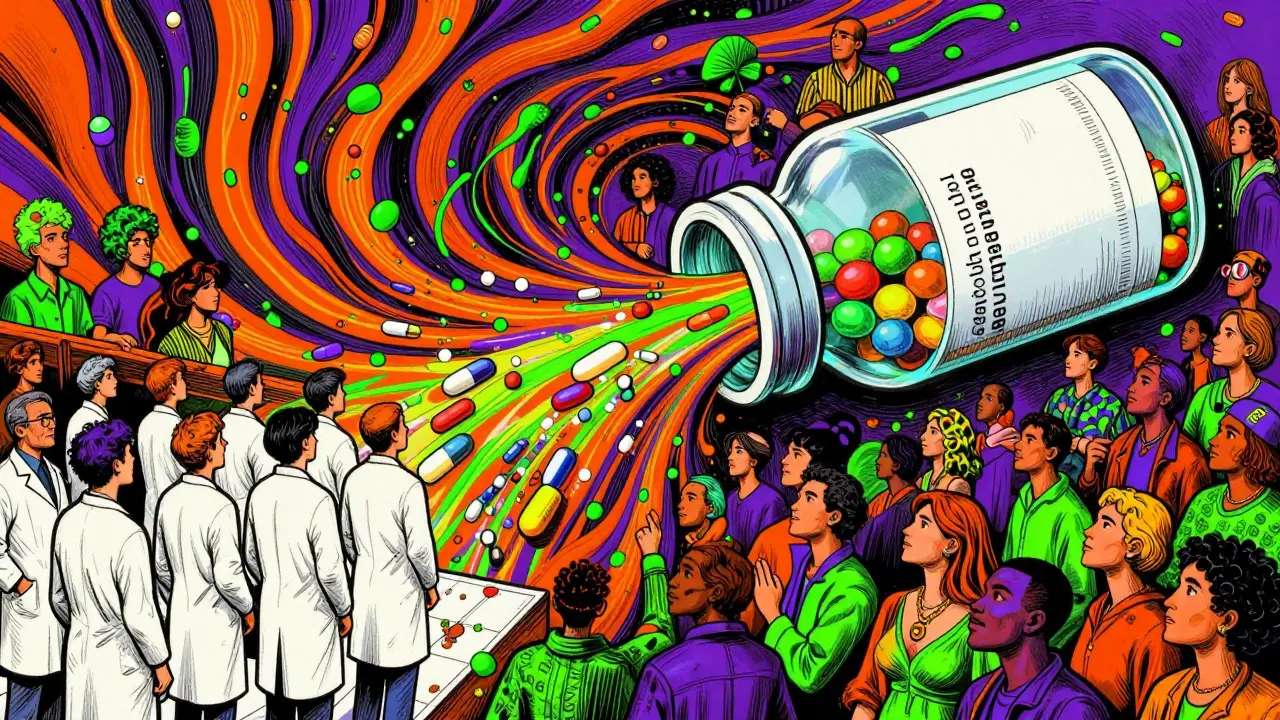
Most people assume that once a drug gets the green light from the government, the hard part is over. In reality, the Post-market surveillance phase is where the real-world testing begins. While clinical trials are great, they usually only involve a few thousand people. You can't possibly predict how a medication will react when millions of people with different genetics, diets, and existing health conditions start taking it every day. For generic drugs, this phase is even more critical because they don't go through the same massive clinical trials as the original brand-name versions.
Why Generics Need Different Monitoring
To understand why the FDA spends so much effort on monitoring generics, you first have to understand how they get approved. Under the Hatch-Waxman Act, generic manufacturers don't have to prove from scratch that a drug is safe and effective. Instead, they just need to show bioequivalence-basically proving that their version delivers the same amount of active ingredient into the bloodstream at the same rate as the Reference Listed Drug (RLD), or the brand-name original.
Because they skip the large-scale efficacy trials, the FDA relies on the "real world" to act as the final trial. If a generic drug has a subtle difference in its inactive ingredients (excipients) that causes a reaction in 1 out of 10,000 people, a pre-approval study would likely miss it. Post-market surveillance is the safety net that catches these rare but serious issues after the drug is already in medicine cabinets across the country.
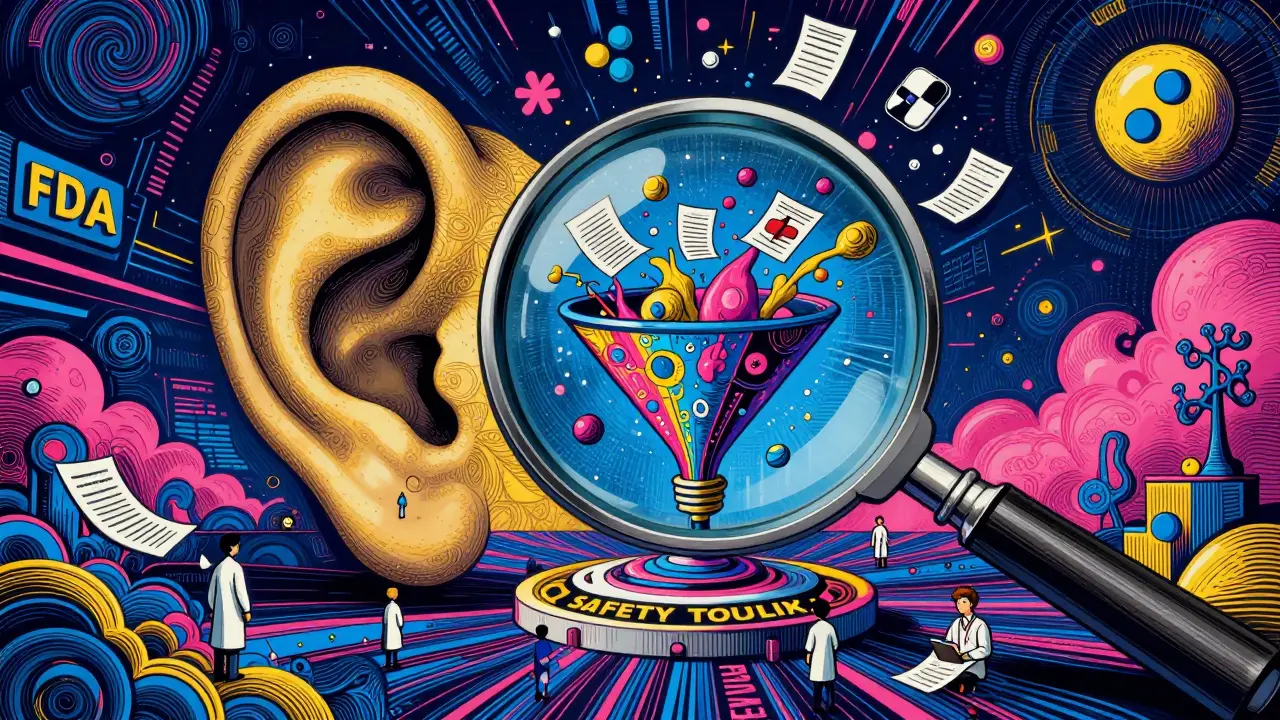
The FDA's Safety Toolkit: FAERS, MedWatch, and Sentinel
The FDA doesn't just wait for a phone call; they use a multi-layered system to spot "safety signals"-patterns that suggest a drug might be causing an unexpected problem.
- FAERS (FDA Adverse Event Reporting System) is the primary database. It's a massive digital warehouse where reports of side effects are stored and analyzed by epidemiologists to see if a specific generic is causing more issues than the brand name.
- MedWatch is the front door. It's the portal where patients, pharmacists, and doctors report everything from a weird rash to a total treatment failure. It's the most direct way for a regular person to tell the FDA that a generic isn't working.
- The Sentinel Initiative is the "proactive" arm. Instead of waiting for someone to file a report, Sentinel looks at curated healthcare data-like insurance claims and electronic health records-for millions of people. This allows the FDA to see trends in real-time across a population of over 200 million Americans.
| System | Data Source | Approach | Primary Strength |
|---|---|---|---|
| FAERS | Reports from users/doctors | Passive (Spontaneous) | Captures rare, unexpected side effects |
| MedWatch | Direct user submissions | Passive (Spontaneous) | Easy access for patients and providers |
| Sentinel | Insurance claims/EHRs | Active (Proactive) | Real-time population-level data |
The Challenge of "Complex Generics"
Not all generics are created equal. A simple tablet is easy to monitor, but Complex Generics-like inhalers, topical creams, or modified-release patches-are a different story. In these cases, the way the drug is delivered is just as important as the chemical itself. A tiny change in the plastic of an inhaler or the thickness of a cream can change how the drug absorbs, even if the active ingredient is identical.
The FDA has recognized that traditional bioequivalence isn't always enough for these products. This is why they've partnered with the Center for Research on Complex Generics (CRCG). They are currently trying to move away from just "waiting for reports" and moving toward using AI and machine learning to analyze real-world data. The goal is to detect a safety signal in weeks rather than months, which could potentially save lives by triggering a recall faster.
Dealing with the "Nocebo Effect" and Patient Perception
One of the hardest parts of monitoring generics is separating chemistry from psychology. You've probably heard of the placebo effect, where people feel better because they *believe* a treatment works. The nocebo effect is the opposite: people experience side effects because they *expect* the generic to be inferior.
A study in JAMA Internal Medicine found that about 15% of generic drug adverse event reports were actually complaints about the drug "not working as well" as the brand name, even when the chemistry was identical. This creates a noise problem for the FDA. When a patient reports a headache after switching to a generic, is it a chemical impurity in the batch, or is it stress from switching medications? To solve this, the Office of Generic Drugs (OGD) uses data mining to look for clusters. If 500 people report the same issue with one specific manufacturer's batch, it's likely a real problem. If the reports are scattered randomly across ten different manufacturers, it's more likely a perception issue.
What Happens When a Problem is Found?
If the FDA detects a genuine safety signal, they don't just send an email. Depending on the severity, they have a few different levers they can pull:
- Labeling Updates: If a new side effect is discovered, the FDA will require the manufacturer to add a warning to the packaging.
- Dear Healthcare Provider Letters: The FDA can force a company to send urgent letters to doctors warning them about a specific risk.
- Recalls: If a batch is contaminated or ineffective, the FDA can coordinate a voluntary or mandatory recall of the product from pharmacy shelves.
- Facility Inspections: FDA field investigators may conduct unannounced inspections of the manufacturing plant to ensure the company is following the rules.
The Future: AI and Real-World Evidence
The current system is good, but it's slow. The next frontier is the integration of AI and Real-World Data (RWD). By using algorithms to scan millions of health records instantly, the FDA hopes to identify "micro-trends" that humans would miss. In 2023, the agency allocated millions of dollars specifically for AI/ML research to modernize this process. The end goal is a system where the FDA knows a generic drug is causing an issue before the first dozen patients even think to file a MedWatch report.
Do generic drugs really need as much monitoring as brand-name drugs?
Yes, and in some ways, more. Because generics don't undergo the same extensive clinical trials as the original drug, the post-market phase is the first time these specific formulations are used by a massive, diverse population. This makes surveillance the primary way to ensure they are truly equivalent in real-world use.
How can I report a problem with a generic medication?
The best way is through the FDA's MedWatch program. You can submit a report online, which goes directly into the FAERS database. Whether it's a side effect, a quality issue (like a pill crumbling), or a feeling that the drug isn't working, reporting it helps the FDA spot patterns.
What is a "safety signal" in drug monitoring?
A safety signal is a reported side effect or a pattern of events that suggests a new possible causal association between a drug and an adverse event. It's not proof that the drug caused the problem, but rather a "red flag" that tells the FDA they need to investigate further using epidemiological studies.
Why are "complex generics" harder to monitor?
Complex generics-like inhalers or injectable creams-rely heavily on the delivery mechanism. A slight change in the device's design or the cream's base can change how the drug is absorbed, even if the active chemical is the same. This means the FDA can't just look at the chemical formula; they have to monitor the clinical outcomes more closely.
Can the FDA remove a generic drug from the market?
Yes. If post-market surveillance reveals that a drug is unsafe, ineffective, or manufactured in a way that violates safety standards, the FDA can request a voluntary recall or take legal action to remove the product from the market.