
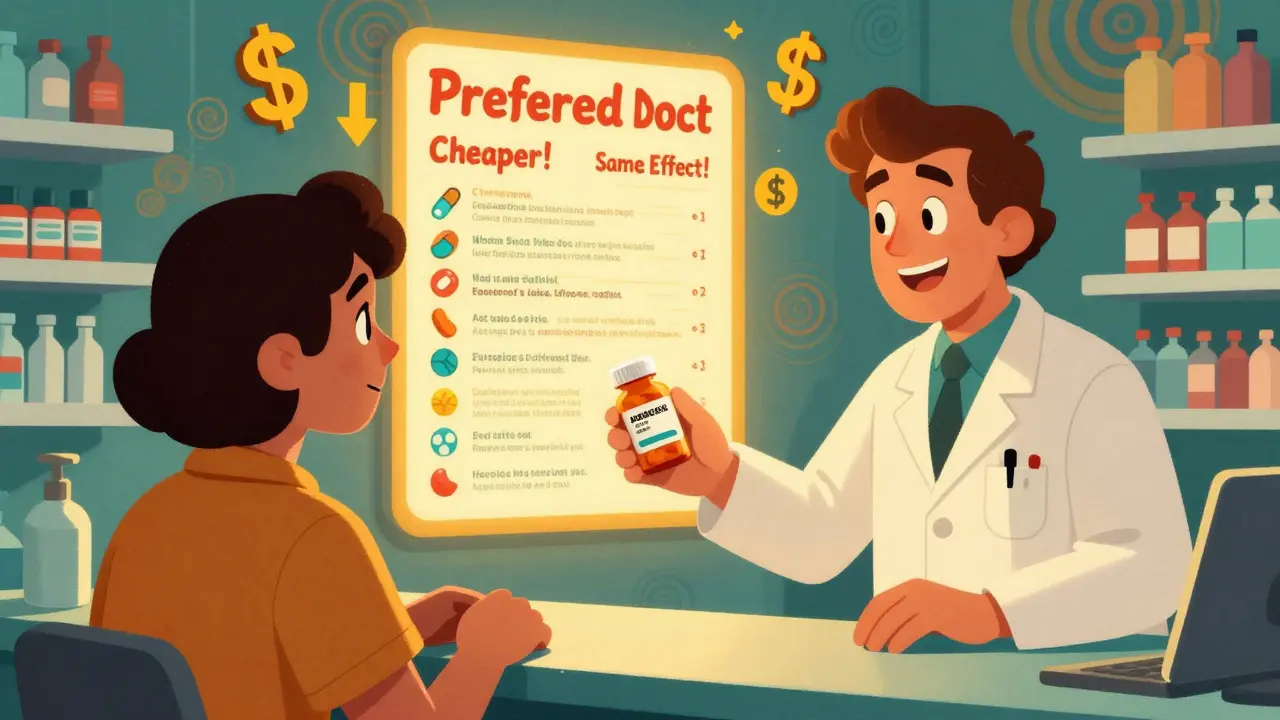
When you fill a prescription, you might not think about whether the pill you’re getting is brand name or generic. But behind the counter, there’s a whole system of rules, money, and incentives trying to make sure you get the cheaper version. In 46 out of 50 U.S. states, the government is actively pushing doctors, pharmacists, and patients to choose generic drugs over brand-name ones. It’s not just about saving money-it’s about reshaping how prescriptions work at every level.
Why States Care About Generic Drugs
Generic drugs are chemically identical to their brand-name counterparts but cost 80% to 85% less. That’s not marketing-it’s fact. In 2023, generics made up nearly 90% of all prescriptions filled in the U.S., but they only accounted for about 20% of total drug spending. That gap is why states are stepping in. Medicaid alone spends over $100 billion a year on prescriptions. If even a small percentage of that shifts from brand to generic, the savings add up fast.States don’t just hope pharmacists will swap drugs. They build rules into the system to make it happen. The most common tool? Preferred Drug Lists (PDLs). These are state-maintained lists of drugs that Medicaid will cover with the lowest copay. If your doctor prescribes something not on the list, you might pay more-or your doctor has to jump through paperwork hoops just to get it approved.
As of 2019, 46 states used PDLs. Of those, 29 let expert Pharmacy and Therapeutics (P&T) committees decide which drugs make the cut. These committees review clinical data, cost, and patient outcomes-not just price. But price still matters. States that update their lists quarterly (like 10 states do) respond faster to new generics hitting the market. Annual reviews? That’s the slow lane.
How Copay Differences Push Patients to Choose Generics
One of the most powerful levers states use is the copay difference. If your brand-name drug costs $50 to fill and the generic is $5, it’s not hard to see which one you’ll pick. In 2000, the Kaiser Family Foundation found that the gap between brand and generic copays had widened dramatically-even as pharmacy profits on generics barely changed. Pharmacies were making only 8 cents more per generic dispensed than per brand, but patients were paying $10, $20, even $30 more for the brand.That’s intentional. States realized that patients respond to direct financial pressure. If you’re paying out of pocket, you’ll choose the cheaper option. That’s why 15 states and Puerto Rico passed laws requiring insurers to set clear, steep copay differentials. Some states even cap the generic copay at $5 for Medicaid patients. No wonder generic use keeps rising.
But here’s the twist: when states tried to push doctors to prescribe generics by paying pharmacists more to dispense them, it didn’t work well. Pharmacists were already incentivized to swap generics because they made more profit. The real change came when patients felt the pinch at the register.
Presumed Consent: The Secret Weapon for Pharmacists
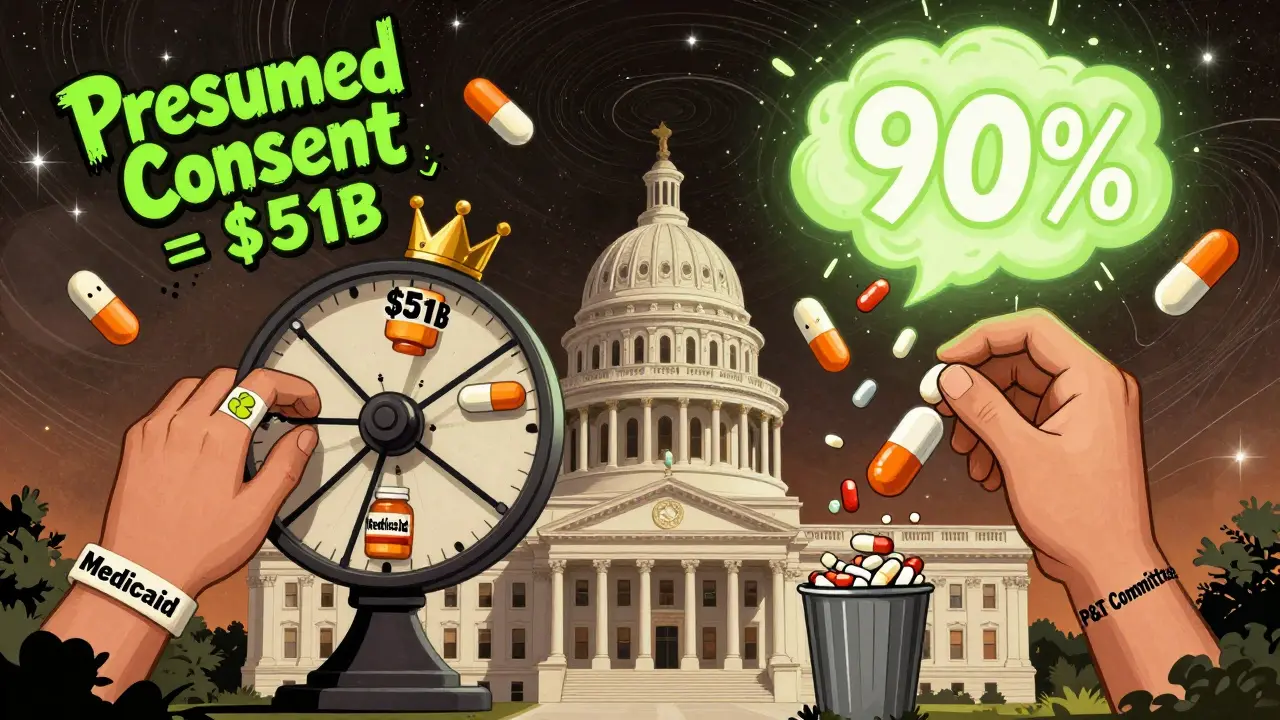
There’s another hidden rule that’s quietly shifting the market: presumed consent. In 39 states, pharmacists can swap a brand-name drug for a generic without asking you first. You walk in, they hand you the generic, and unless you say no, it’s yours. In the other 11 states, pharmacists must get your explicit permission before substituting.A 2018 NIH study found that presumed consent laws increased generic dispensing by 3.2 percentage points. That might sound small, but multiply that across millions of prescriptions, and you’re talking about $51 billion in annual savings if every state adopted it. The study also found that presumed consent had the same effect on brand-name drug use as raising the brand’s price by $3. That’s powerful.
Mandatory substitution laws-where pharmacists have to switch-didn’t move the needle much. Why? Because pharmacists were already doing it anyway. The real driver isn’t the law. It’s the lack of friction. If you don’t have to ask, you don’t have to explain. You just swap. And patients rarely object.
The 340B Program and Hidden Costs
Not all savings are created equal. The 340B Drug Pricing Program lets safety-net hospitals and clinics buy drugs at deep discounts-often 20% to 50% off. These places serve low-income patients and rely on those savings to stay open. But here’s the catch: when states reimburse pharmacies for 340B drugs, they’re supposed to pay no more than the 340B ceiling price. That’s a federal rule, set by CMS in 2016.Some states didn’t adjust their reimbursement rates fast enough. Pharmacies ended up losing money on 340B generics. So they stopped stocking them. Or they stopped accepting Medicaid patients. That’s the opposite of what states wanted.
It’s a reminder that incentives can backfire. If you don’t pay pharmacies enough to handle the paperwork and stock the right drugs, they’ll find a way out. The system only works if everyone involved gets paid fairly-even if the drug is cheap.
Why Some Generics Disappear From Medicaid
You’d think more generic use means more availability. But sometimes, the opposite happens.Avalere Health found five situations where generic manufacturers lose money in Medicaid-even if they don’t raise prices. These include:
- When a drug becomes more popular than expected, triggering higher Medicaid rebates
- When the cost of ingredients goes up but the rebate formula doesn’t adjust
- When a drug goes off-patent and suddenly 20 companies start making it, crashing prices
- When a shortage hits and supply drops, but rebates stay fixed
- When a generic has been on the market for years and the market stabilizes, but the rebate keeps climbing
In these cases, manufacturers stop making the drug for Medicaid. They still sell it elsewhere, but not to state programs. That means even if a generic is on the Preferred Drug List, it might not be available. And when that happens, patients get stuck with more expensive alternatives-or no option at all.
The Federal $2 Drug List: What’s Coming Next
CMS is testing a new idea: the Medicare $2 Drug List. It’s simple-any generic drug on the list costs $2 or less for Medicare Part D patients. No copay tiers. No confusing formularies. Just $2.This isn’t mandatory. States aren’t forced to adopt it. But it’s a blueprint. If it works for Medicare, states will copy it. Why? Because it removes complexity. Patients know what they’re paying. Pharmacies don’t need to check formularies. Doctors don’t need to write prior auths. It’s clean, predictable, and cheap.
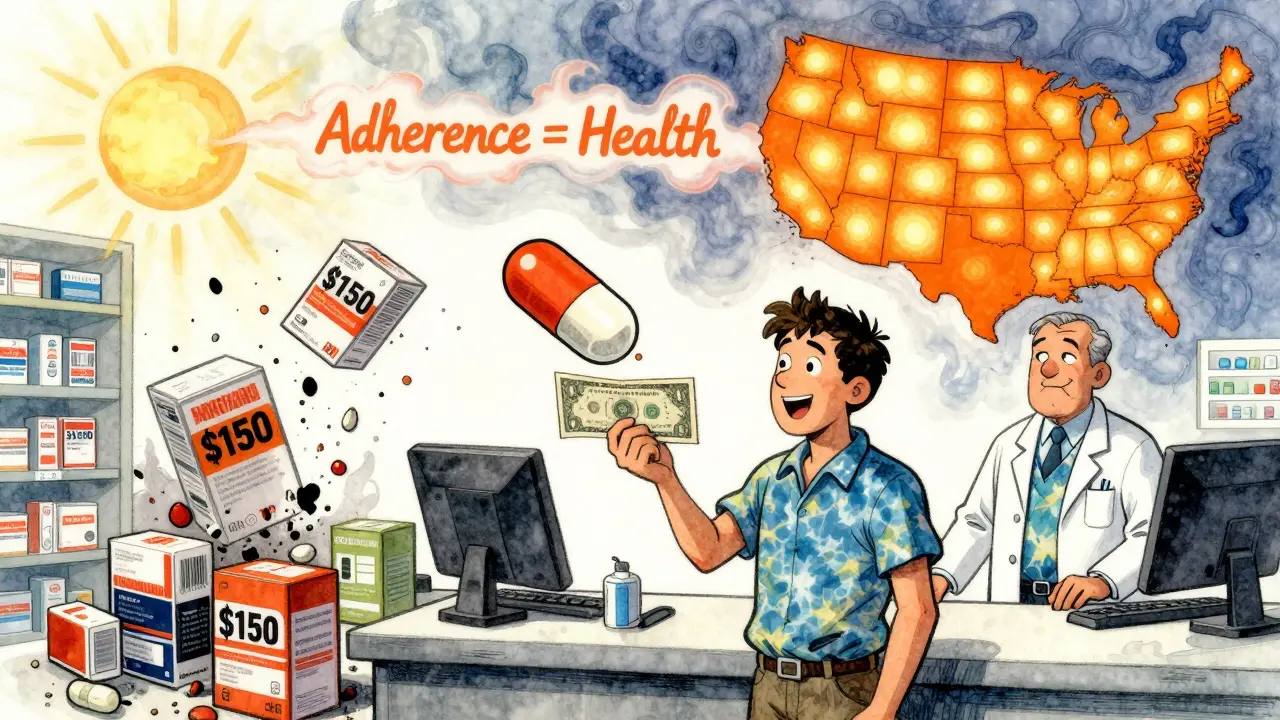
States that have tried similar models-like $5 generic copays-saw big jumps in adherence. Patients filled their prescriptions more often. Hospitalizations dropped. That’s the real win: not just lower drug costs, but better health outcomes.
What’s Working-and What’s Not
Let’s cut through the noise. Here’s what actually moves the needle:- Presumed consent laws → Big impact. Easy to implement. No pushback from patients.
- Copay differentials → Even bigger impact. Patients feel it directly. They respond.
- Preferred Drug Lists → Widely used, but only if updated regularly. Out-of-date lists lose credibility.
- Pharmacist incentives → Weak. Pharmacists already prefer generics. Paying them more doesn’t change behavior.
- Mandatory substitution → Doesn’t work. It’s redundant. Pharmacists already do it.
The states that win are the ones that combine these tools. They use PDLs to guide doctors, copays to guide patients, and presumed consent to make the swap automatic. They don’t rely on one trick. They build a system.
The Bigger Picture: Savings vs. Sustainability
The goal isn’t just to cut costs today. It’s to keep generics available tomorrow.When manufacturers pull out of Medicaid because rebates make their drugs unprofitable, the whole system suffers. States end up paying more for fewer options. That’s why some experts warn against pushing rebates too hard. You can’t squeeze a manufacturer until there’s nothing left.
The best policies balance savings with stability. They let generics thrive without crushing the companies that make them. That’s the tightrope states are walking.
And it’s working. Generic use has climbed from 33% of prescriptions in 1993 to over 90% today. But spending on generics? That’s trickier. New brand-name drugs-especially for rare diseases-cost tens of thousands of dollars. Those prices are dragging up total spending, even as generics dominate the volume.
So the real challenge isn’t getting more generics prescribed. It’s getting more affordable brand drugs off the market.
Why do pharmacists automatically give me generic drugs?
In 39 states, pharmacists are allowed to substitute a generic drug without asking you first. This is called "presumed consent." It’s legal, common, and designed to save money. Unless you say "no," the pharmacist will give you the cheaper version. It’s not a mistake-it’s policy.
Can my doctor prevent me from getting a generic drug?
Yes, but only if they write "Dispense as Written" or "Do Not Substitute" on the prescription. Otherwise, pharmacists are free to switch to the generic. Doctors usually do this only if the brand is medically necessary-for example, if the patient had a bad reaction to a generic in the past, or if the drug has narrow therapeutic windows like epilepsy or thyroid meds.
Are generic drugs really as good as brand-name drugs?
Yes. The FDA requires generics to have the same active ingredient, strength, dosage form, and route of administration as the brand. They must also be bioequivalent-meaning they work the same way in your body. The only differences are inactive ingredients (like fillers or dyes), which rarely affect how the drug works.
Why do some generic drugs cost more than others?
Price differences come from supply and demand. If only one company makes a generic, they can charge more. If five companies make it, prices drop. Also, some states have Maximum Allowable Cost (MAC) lists that cap what pharmacies can be reimbursed. If a generic costs more than the MAC, the pharmacy loses money-so they might not stock it.
Do these state programs save money for patients?
Absolutely. Patients on Medicaid or Medicare Part D often pay $5 or less for a 30-day supply of a generic. Without these programs, many would pay $50 or more. Even for people with private insurance, copay differentials can cut drug bills in half. The real savings are in adherence-when patients can afford their meds, they take them, and that reduces hospital visits and emergency care.
What Comes Next?
States aren’t slowing down. With drug prices still climbing and budgets tightening, the pressure to use generics will only grow. The federal $2 Drug List could become a national standard. More states will likely adopt presumed consent. And more will start tracking not just how many generics are dispensed-but whether patients actually keep taking them.The goal isn’t just cheaper pills. It’s healthier people. And right now, the best way to get there is to make the generic option the easiest one.
pragya mishra 18.01.2026
So let me get this straight-states are forcing doctors to prescribe generics and pharmacists to swap them without even asking? That’s not healthcare, that’s corporate dictatorship. Who gave them the right to decide what I get in my body? I’ve seen generics fail people, and now I’m supposed to just shut up and take it because it’s cheaper? No thanks.
Manoj Kumar Billigunta 18.01.2026
I’ve worked in community pharmacies for over 20 years. The real win here isn’t the savings-it’s that patients actually take their meds. When the copay’s $5 instead of $50, people don’t skip doses. I’ve seen diabetics who used to ration insulin because they couldn’t afford it-now they’re stable. That’s the quiet victory here.
Andy Thompson 18.01.2026
They say generics are the same-but they’re not. The fillers are different. The absorption rates vary. I’ve had seizures after switching to a ‘same’ generic. They don’t test for long-term effects. This is a slow poison campaign disguised as cost-saving.
sagar sanadi 18.01.2026
Oh wow, 90% of prescriptions are generics. Guess that means 90% of people are getting the cheap version of medicine. Like buying the store-brand toilet paper and expecting it to flush the same. Spoiler: sometimes it clogs. And nobody tells you why.
kumar kc 18.01.2026
Patients shouldn’t be allowed to choose. If the generic works, they should get it. End of story.
Thomas Varner 18.01.2026
It’s wild how much of this is just… common sense, right? If something costs 85% less and does the same thing, why wouldn’t you use it? But then again, people get weird about pills. Like, ‘I’ve always taken the blue one, so I need the blue one.’ It’s not magic, folks. The active ingredient doesn’t change.
Art Gar 18.01.2026
While the empirical data demonstrates a statistically significant reduction in pharmaceutical expenditure attributable to state-level formulary interventions, the ethical implications of presumed consent protocols warrant rigorous scrutiny. The autonomy of the patient, as a foundational principle of medical ethics, is potentially compromised by non-consensual substitution, regardless of fiscal efficiency.
Edith Brederode 18.01.2026
This is actually really beautiful. 💙 People are getting the medicine they need because the system finally works for them-not against them. I used to skip my blood pressure med because it cost $80. Now I pay $5 and take it every day. My doctor says my numbers are better than they’ve been in 10 years. Thank you, state programs.
clifford hoang 18.01.2026
Let’s not pretend this is about savings. It’s about control. The pharmaceutical-industrial complex needs to keep the cash flowing. Generics? Sure, they’ll let you have those-until they patent the inactive ingredients. Then you’re back to paying $200 for the same pill in a different color. This is a Trojan horse. They’re normalizing compliance so when they push the next thing-mandatory digital pill trackers, AI-prescribed meds, or even gene-editing subsidies-you won’t even blink.
Shane McGriff 18.01.2026
I’ve been a nurse for 18 years, and I’ve seen patients die because they couldn’t afford their meds. This system isn’t perfect, but it saves lives. I’ve had mothers cry because their kid’s asthma inhaler went from $120 to $5. That’s not policy-that’s dignity. The real problem is when states don’t update their lists fast enough, and a generic gets pulled because of rebate math. That’s the flaw-not the system, but the lag.
Jacob Cathro 18.01.2026
generic drugs = scam. they dont work. my uncle took one for cholesterol and ended up in the er. the doc said ‘it wasnt the same chem’. but the bottle said it was! so who’s lying? the gov? the pharma? the pharmacist? idk but i know i’m not taking no cheap pills. #trustnoone #genericfail