
When you pick up your prescription, you might notice your pill looks different than last time. Maybe it’s orange instead of blue, or it has a different shape, or even a new number stamped on it. That’s not a mistake. It’s probably the same medicine-just made by a different company. Generic drugs are supposed to work just like the brand-name version, but they don’t look the same. And that’s okay. But how do you know if the new pill is really safe and effective? And how do you tell one generic manufacturer from another?
Why Do Generic Pills Look Different?
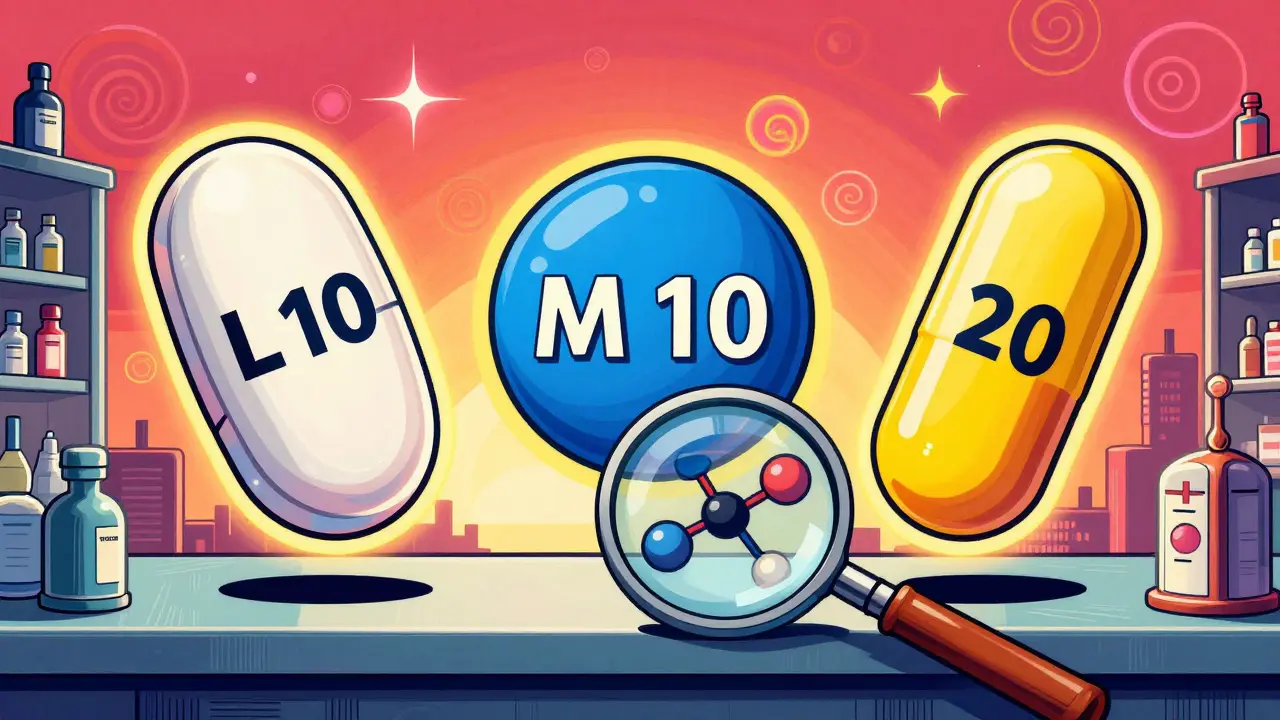
Generic drugs must contain the same active ingredient, strength, and dosage form as the brand-name drug. That’s the law. But the color, shape, size, and imprint? Those are up to the manufacturer. Why? Because trademark laws prevent generic makers from copying the exact look of brand-name pills. If they did, they’d be infringing on the original company’s design. So instead, each generic maker creates its own unique appearance. This means two pills with the exact same medicine inside can look completely different. For example, a 10mg lisinopril tablet from Teva might be white and oval with "L 10" stamped on it. The same dose from Mylan could be blue and round with "M 10". Both are correct. Both are approved by the FDA. Both will lower your blood pressure the same way. But if you’re not expecting the change, you might think you got the wrong medication.How Do You Know a Generic Is Safe?
The FDA doesn’t just approve generics because they look similar. They require proof that the drug works the same way in your body. That’s called bioequivalence. For most pills, the generic must deliver the same amount of active ingredient into your bloodstream as the brand-name version, within a range of 80% to 125%. That’s not a guess-it’s a strict test done with healthy volunteers. The FDA reviewed over 2,000 of these studies between 1996 and 2007. On average, the difference in absorption between brand and generic was just 3.5%. That’s less than the variation you’d see between two batches of the same brand-name drug. For some drugs, like warfarin or levothyroxine, the range is tighter-90% to 111%. These are called narrow therapeutic index drugs. A small change in how much enters your blood can cause problems. That’s why doctors sometimes recommend sticking with the same generic manufacturer for these medications. But even then, switching between approved generics is still safe for most people.Who Makes Generic Drugs?
Not all generic companies are the same. The biggest players are Teva, Mylan (now part of Viatris), and Sandoz. Together, they make more than half of all generic prescriptions in the U.S. But there are hundreds of others. Some specialize in simple pills. Others focus on complex ones-like extended-release capsules, inhalers, or injectables. These take longer to develop and are harder to copy. First-to-market generics often get the biggest share of sales. They might be priced at 80% of the brand-name drug. But as more companies enter the market, prices drop fast. With ten or more competitors, prices can fall to 15-20% of the original cost. That’s why your pill might change again after a few months. A new manufacturer with a lower price wins the contract at your pharmacy. Some manufacturers have better reputations for consistency. Others have had more recalls or inspection issues. The FDA publishes inspection reports online. You can’t easily check them as a patient, but your pharmacist can. If you’re on a critical medication and notice frequent changes in pill appearance, ask your pharmacist if there’s a manufacturer known for reliability.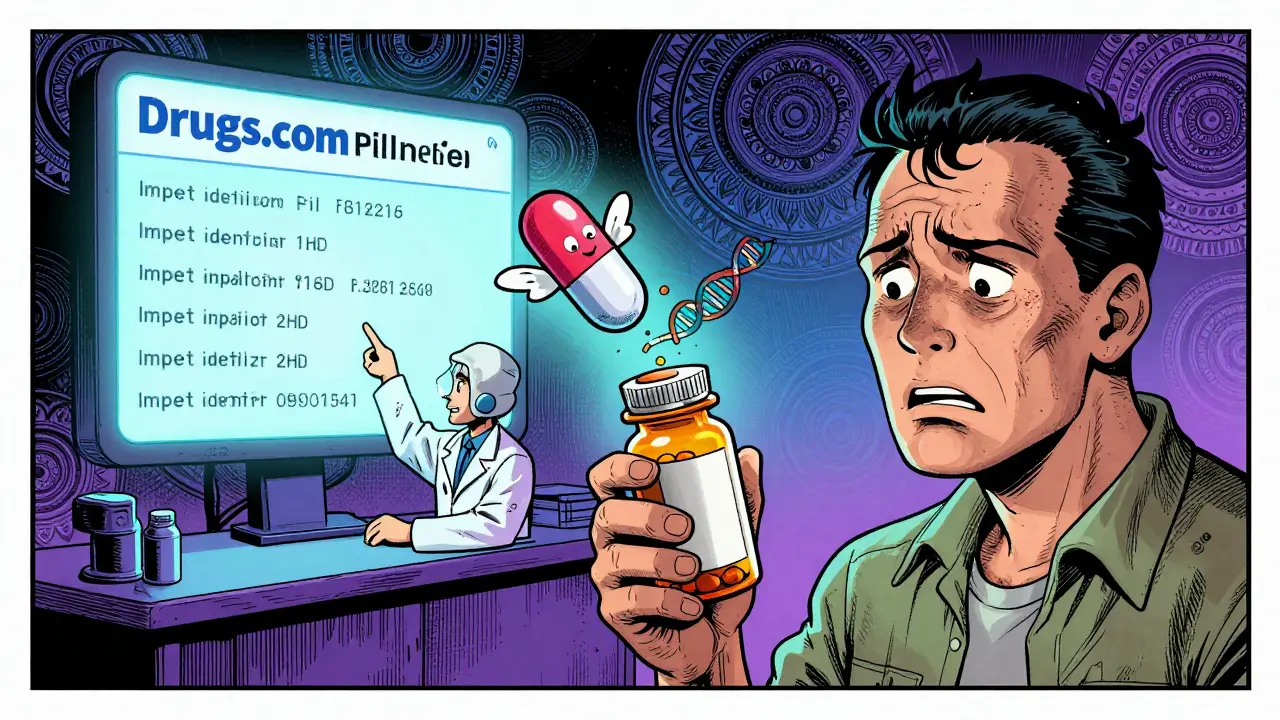
How to Identify Your Pill
The best way to confirm you have the right pill is by its imprint. Every prescription pill sold in the U.S. must have a unique code stamped or printed on it. That code is usually a combination of letters and numbers. It’s the key identifier. Use the Drugs.com Pill Identifier tool. It’s free, used by over 12 million people every month, and lets you search by color, shape, and imprint. Just enter what you see. The tool will show you the exact drug, strength, and manufacturer. You can also check the FDA’s Drugs@FDA database. It lists every approved version of a drug, including all generic versions and their physical descriptions. Your pharmacist can also look up the pill using the National Drug Code (NDC). That’s a unique 11-digit number printed on the bottle. It tells you exactly which company made it, what the drug is, and how strong it is. If you’re ever unsure, ask your pharmacist to show you the NDC on the bottle and match it to the pill.When Should You Be Concerned?
Most of the time, a change in pill appearance is harmless. But there are exceptions. If you’re taking a narrow therapeutic index drug-like warfarin, levothyroxine, phenytoin, or lithium-and you notice a change in how you feel after switching generics, tell your doctor. Some patients report changes in energy, mood, or symptoms. That doesn’t mean the drug isn’t working. But for these medications, even tiny differences in absorption can matter. In 2012, a change in the filler ingredients in Lamotrigine (used for epilepsy and bipolar disorder) caused unexpected side effects in some patients. The active ingredient was the same, but the new formulation affected how quickly it was absorbed. It’s rare, but it happened. That’s why the American Medical Association recommends sticking with the same generic manufacturer for these drugs unless your doctor says otherwise. Also, if your pill suddenly looks completely different-like a different shape, color, and imprint-and you didn’t get a new prescription-you should double-check. It could be a counterfeit. Fake pills are rare, but they exist. If you bought your medication from an unlicensed online pharmacy, you’re at higher risk.What You Can Do
You don’t need to be a pharmacist to understand your meds. Here’s what works:- Always check the label on your bottle. It should say the name of the generic manufacturer.
- Take a photo of your pill the first time you get it. That way, you can compare next time.
- Use the Drugs.com app or website to verify the pill’s imprint.
- Ask your pharmacist: "Is this the same medicine I got last time?" They’re trained to answer this.
- If you’re on a high-risk drug, ask your doctor to write "Dispense as Written" or "DAW-1" on the prescription. That stops automatic substitution.
Cost vs. Consistency
Generic drugs save Americans an average of $265 per month compared to brand-name versions. That’s huge. But if you’re on a long-term medication, consistency matters too. Frequent switches between manufacturers can cause confusion, anxiety, or even missed doses. Some pharmacies will let you request a specific generic manufacturer-even if it costs a bit more. It’s worth asking. Especially if you’ve had a bad reaction to a previous version. Your pharmacist can check if the manufacturer is available and if your insurance will cover it. And if you’re worried about the next change? Talk to your doctor. You can ask them to prescribe a brand-name drug if you’ve had trouble with generics. But that usually costs more. Most of the time, sticking with generics-and learning how to identify them-is the smartest, safest, and cheapest choice.What’s Changing in 2026?
The FDA is working on faster approvals for complex generics-like inhalers and injectables. That means more competition and lower prices. But there’s a downside: fewer manufacturers. The number of companies making generics in the U.S. dropped from 128 in 2015 to 87 in 2023. That could mean fewer options and more supply shortages. In fact, 67% of current drug shortages involve generics. The good news? The system still works. The FDA’s standards are tough. The science is solid. And for most people, switching generics is safe and saves money. The key is knowing how to check what you’re taking-and not assuming that a change in looks means a change in quality.Why do generic pills look different from brand-name pills?
Generic pills look different because trademark laws prevent them from copying the exact color, shape, or imprint of brand-name drugs. While the active ingredient and dosage are identical, manufacturers must make their versions visually distinct to avoid legal issues. These differences don’t affect how well the medicine works.
Are generic drugs as effective as brand-name drugs?
Yes, for the vast majority of drugs, generics are just as effective. The FDA requires them to meet strict bioequivalence standards-proving they deliver the same amount of active ingredient into your bloodstream as the brand-name version. Studies show average differences in absorption are less than 4%, similar to variations between batches of the same brand-name drug.
Can switching between generic manufacturers cause side effects?
For most people, no. But for drugs with a narrow therapeutic index-like warfarin, levothyroxine, or lithium-small differences in absorption can matter. A small number of patients report changes in symptoms after switching manufacturers. If you’re on one of these drugs and notice new side effects, talk to your doctor. They may recommend sticking with the same generic brand.
How do I identify a pill if I don’t know what it is?
Use the Drugs.com Pill Identifier tool. Enter the pill’s color, shape, and imprint (the letters or numbers stamped on it). The tool will show you the exact drug, strength, and manufacturer. You can also check the National Drug Code (NDC) on your prescription bottle and match it to the pill. Pharmacists can help too.
Should I always stick with the same generic manufacturer?
It’s not required, but it can help-especially for critical medications like those for epilepsy, thyroid disorders, or blood thinning. Frequent changes can cause confusion or anxiety. If you’ve had no issues with switching, it’s usually fine. But if you’re concerned, ask your doctor to write "Dispense as Written" (DAW-1) on your prescription to prevent automatic substitution.
Are generic drugs cheaper because they’re lower quality?
No. Generic drugs are cheaper because manufacturers don’t spend money on advertising, branding, or original research. They only need to prove their drug works the same way as the brand-name version. The FDA holds them to the same quality and safety standards. Many generics are made in the same factories as brand-name drugs.
How do I know if my generic drug is from a reliable manufacturer?
You can’t easily check this as a patient, but your pharmacist can. The FDA publishes inspection reports online, and major manufacturers like Teva, Mylan, and Sandoz have long track records. If you’ve had consistent results with a particular brand, you can ask your pharmacy to try to keep prescribing it-even if it costs a bit more. Consistency matters more than price for some medications.
Hilary Miller 20.01.2026
I once took a blue pill thinking it was my blood pressure med, turned out it was a generic version. Didn't feel any different, but I nearly had a heart attack from panic. Always check the imprint now.
Margaret Khaemba 20.01.2026
I love how this post breaks it down. I used to freak out every time my pill changed color. Now I just snap a pic and check Drugs.com. My pharmacist even showed me how to read the NDC code. Such a simple thing that saves so much stress.
Malik Ronquillo 20.01.2026
God bless the FDA but why do we even need to be pill detectives in 2026? My grandma didn't have to Google her meds. Now I gotta memorize imprints like it's a code. This system is broken.
Jasmine Bryant 20.01.2026
i always forget to check the imprint and just trust the bottle. last month i switched from teva to sandoz and my head felt weird for a week. turned out it was just anxiety but still. maybe i should start taking photos like everyone says.
Liberty C 20.01.2026
The fact that you need a PhD in pharmaceutical logistics just to take your daily pill is a national disgrace. We’ve outsourced our healthcare to a corporate game of musical tablets. And you call this progress? It’s not medicine-it’s a lottery.
shivani acharya 20.01.2026
You think this is bad? Wait till you find out the pills are made in China and the FDA inspections are just paperwork. My cousin’s dad got fake metformin from a "discount pharmacy" online. He ended up in the ER. The system is rigged. They want you confused so you don't ask questions. And don't even get me started on the NDC codes being recycled...
Keith Helm 20.01.2026
The FDA’s bioequivalence standards are scientifically rigorous. Any deviation from established protocols would be a regulatory failure. Patients should trust the data.
Daphne Mallari - Tolentino 20.01.2026
It is profoundly disconcerting that the average American citizen must now possess the acumen of a pharmacologist simply to ingest a prescribed medication. One wonders if this is the inevitable consequence of commodifying healthcare.
Neil Ellis 20.01.2026
Honestly? This post made me feel way less anxious about my meds. I used to think a new pill color meant something was wrong. Now I see it as a sign that the system’s working-more competition, lower prices, same results. Keep your eyes open, but don’t lose sleep over it. You’ve got this.
Kenji Gaerlan 20.01.2026
why do they even make pills look diffrent like its a game of spot the difference. i just want my headache pill to be the same every time. why is this so hard.
Brenda King 20.01.2026
I started taking photos of my pills after my pharmacist told me about a recall. Now I have a folder on my phone labeled "My Meds". It’s saved me twice. Also-yes, ask for DAW-1 if you’re on warfarin. It’s your right.
Rob Sims 20.01.2026
Let me guess-someone got a different generic and blamed the drug instead of their own anxiety. People need to stop turning every pill change into a medical emergency. The science is clear. Your mind is the problem.
arun mehta 20.01.2026
I am from India, and here generics are the only option. We don’t have brand-name drugs unless you are rich. But we trust the system because it works. The science is solid. The FDA standards? They’re global gold standard. 🙏💊