
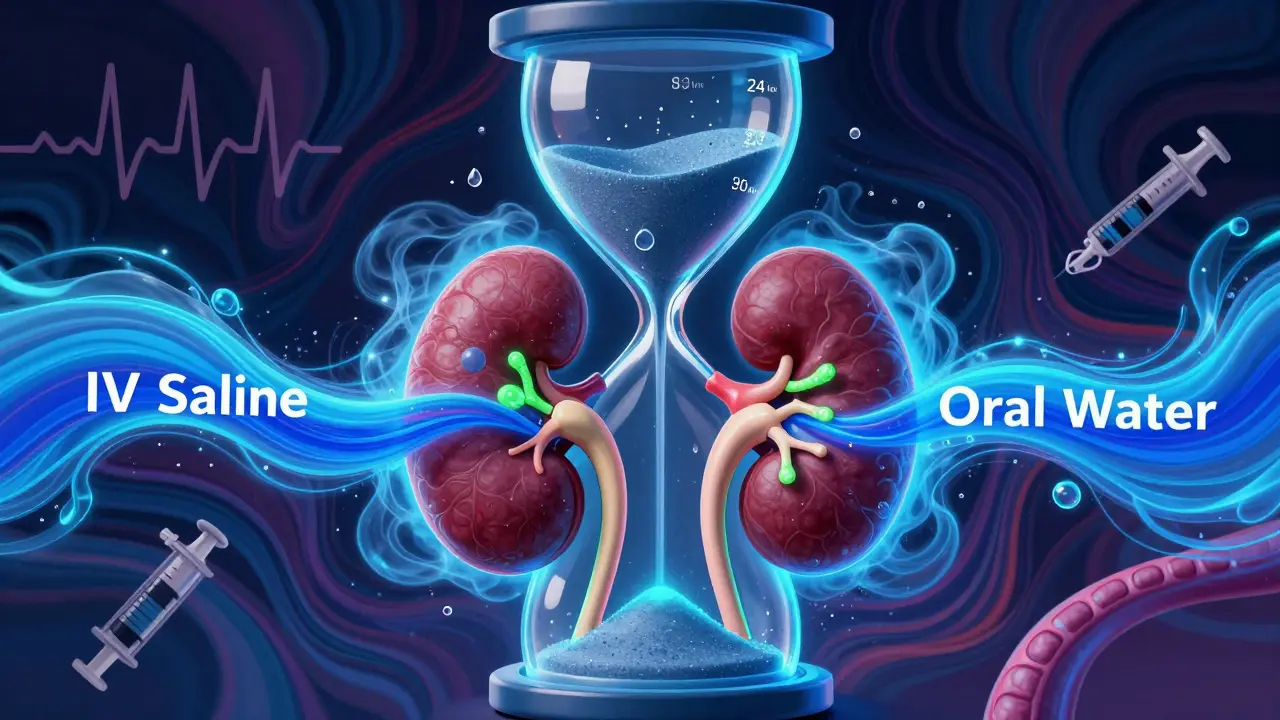
When you’re scheduled for a CT scan, angiogram, or other imaging test that uses contrast dye, your doctor might tell you to drink more water. It sounds simple - but behind that advice is a carefully designed hydration plan meant to protect your kidneys from damage. These aren’t just suggestions. They’re medical protocols backed by years of research, especially for people with existing kidney issues, diabetes, or heart disease. Skipping them can lead to serious complications - like needing dialysis or a longer hospital stay.
What Happens When Contrast Media Hits the Kidneys?
Contrast dyes used in imaging tests are lifesavers - they make blood vessels, organs, and tumors show up clearly on scans. But they’re also one of the most common causes of acute kidney injury in hospitals. This isn’t random. The kidneys filter blood, and when a concentrated dose of contrast enters the system, it can stress the tiny filtering units called nephrons. In healthy people, the kidneys bounce back. But if you already have reduced kidney function - say, from diabetes or high blood pressure - that stress can trigger a drop in kidney performance. This is called contrast-induced acute kidney injury (CI-AKI).
CI-AKI shows up as a 0.5 mg/dL rise in serum creatinine within 48 to 72 hours after the scan. Sounds small? It’s not. A 2020 study of over 21,000 patients found that CI-AKI added an average of 3.2 days to hospital stays and nearly $7,500 in extra costs per case. For someone with chronic kidney disease, this could mean permanent damage.
Hydration Isn’t One-Size-Fits-All
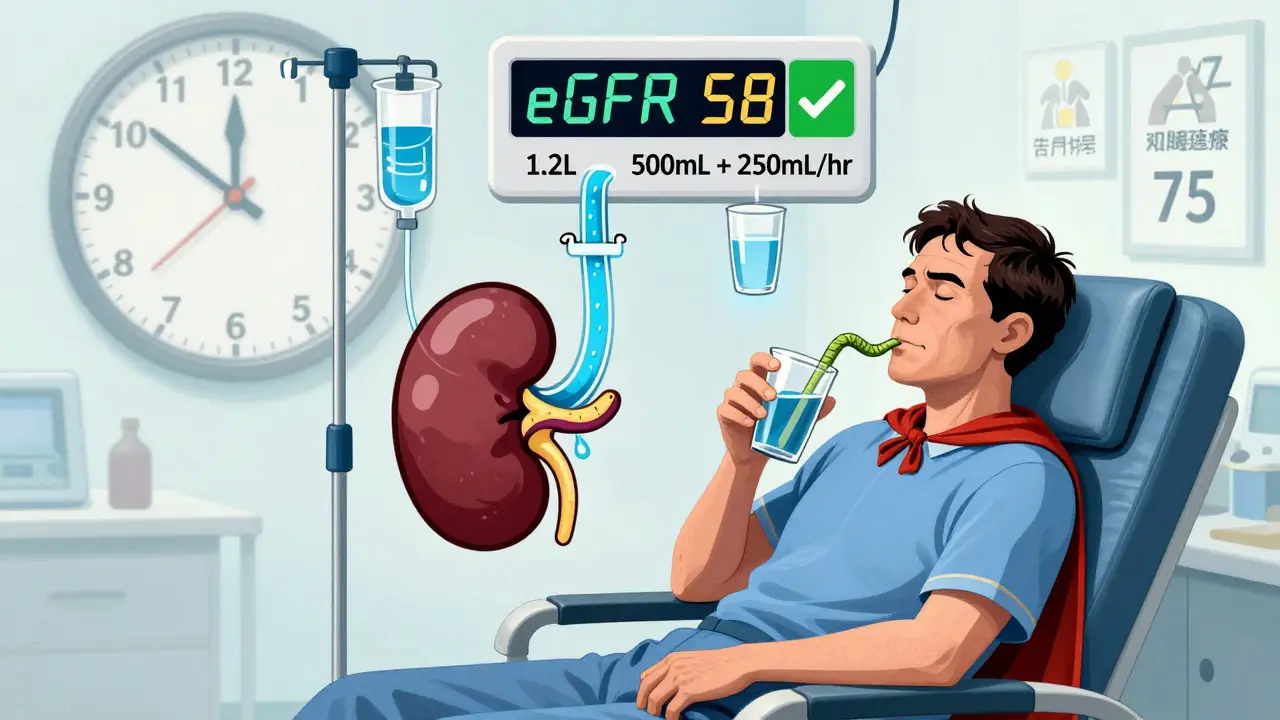
Not everyone needs the same hydration plan. The key is matching the approach to your risk level. The most common method is intravenous (IV) saline - a saltwater solution given slowly through a vein. The standard protocol? 3 to 4 mL per kilogram of body weight per hour, starting 4 hours before the scan and continuing for 4 hours after. For a 70 kg person, that’s about 1.2 liters total. But newer studies show this isn’t always enough.
For high-risk patients - those with an eGFR below 60 mL/min/1.73m² - more advanced strategies work better. One option is IV sodium bicarbonate. Instead of just saltwater, this solution helps neutralize acid buildup in kidney cells during contrast exposure. Studies show it reduces CI-AKI risk by about 26%. Another option is hemodynamic-guided hydration, where doctors monitor central venous pressure to adjust fluid levels in real time. This cuts risk by nearly 60%.
Then there’s the RenalGuard system - a closed-loop device that tracks how much urine you’re making and automatically adjusts IV fluid to keep output between 150 and 200 mL per hour. In high-risk patients, it dropped CI-AKI rates from 22% to just 7.3%. It’s precise, but it’s also expensive - adding around $1,200 per procedure. Still, when you factor in the cost of treating kidney injury, it pays for itself.
Oral Hydration Works Too - If Done Right
Not everyone needs an IV. For many people with mild kidney issues, drinking water works just as well. A 2018 study compared oral hydration (500 mL two hours before, then 250 mL every hour during the procedure) to IV saline. The results? No significant difference in kidney injury rates. Oral hydration had a 4.7% CI-AKI rate; IV had 5.1%. That’s practically the same.
But here’s the catch: oral hydration only works if you actually drink it. People forget. They get nervous. They’re in pain. They don’t like the taste. And if you have heart failure, drinking too much water can be dangerous. That’s why doctors now use a risk-based approach.
If your eGFR is above 29 mL/min/1.73m² - meaning your kidneys are still working reasonably well - you may not need any prophylactic hydration at all. A 2018 study found that withholding hydration in these patients didn’t increase CI-AKI risk. That’s a game-changer. It means you don’t have to sit for hours with an IV if you’re low-risk.
Who Needs the Most Protection?
Not all patients are equal. The biggest risk factors are:
- eGFR below 60 mL/min/1.73m² (moderate to severe kidney disease)
- Diabetes, especially with existing kidney damage
- Heart failure (reduced ejection fraction)
- Age over 75
- Dehydration before the procedure
If you have two or more of these, you’re in the high-risk group. That’s where advanced hydration - like RenalGuard or hemodynamic-guided systems - makes the most difference. The National Kidney Foundation and the VA/DOD Clinical Practice Guideline (April 2025) both recommend volume expansion with isotonic fluids for people with eGFR between 30 and 59. For those below 30, they advise avoiding contrast altogether unless absolutely necessary.
And here’s something most people don’t realize: hydration isn’t just about fluids. It’s about timing. The critical window is 6 to 12 hours before the scan and up to 24 hours after. Pushing it to the last minute doesn’t work. Your kidneys need time to adjust.
What About Heart Failure Patients?
This is where things get tricky. People with heart failure can’t handle large fluid loads. Pushing 1.5 liters of IV fluid into someone with a weak heart can trigger fluid buildup in the lungs - a life-threatening condition called pulmonary edema. Dr. Emily Chen from Massachusetts General Hospital points out that even 500 mL too much can cause decompensation.
That’s why doctors now use a balancing act. For heart failure patients, they might:
- Use lower fluid volumes - 1 mL/kg/hour instead of 3-4
- Prefer oral hydration with careful monitoring
- Choose imaging tests that don’t need contrast, like ultrasound or MRI without dye
- Monitor urine output and weight daily before and after
The goal isn’t to hydrate aggressively - it’s to hydrate smartly.
What’s New in 2026?
The field is moving fast. In 2023, the FDA updated contrast dye labels to require clear hydration instructions for patients with eGFR under 60. That’s a big step toward standardization.
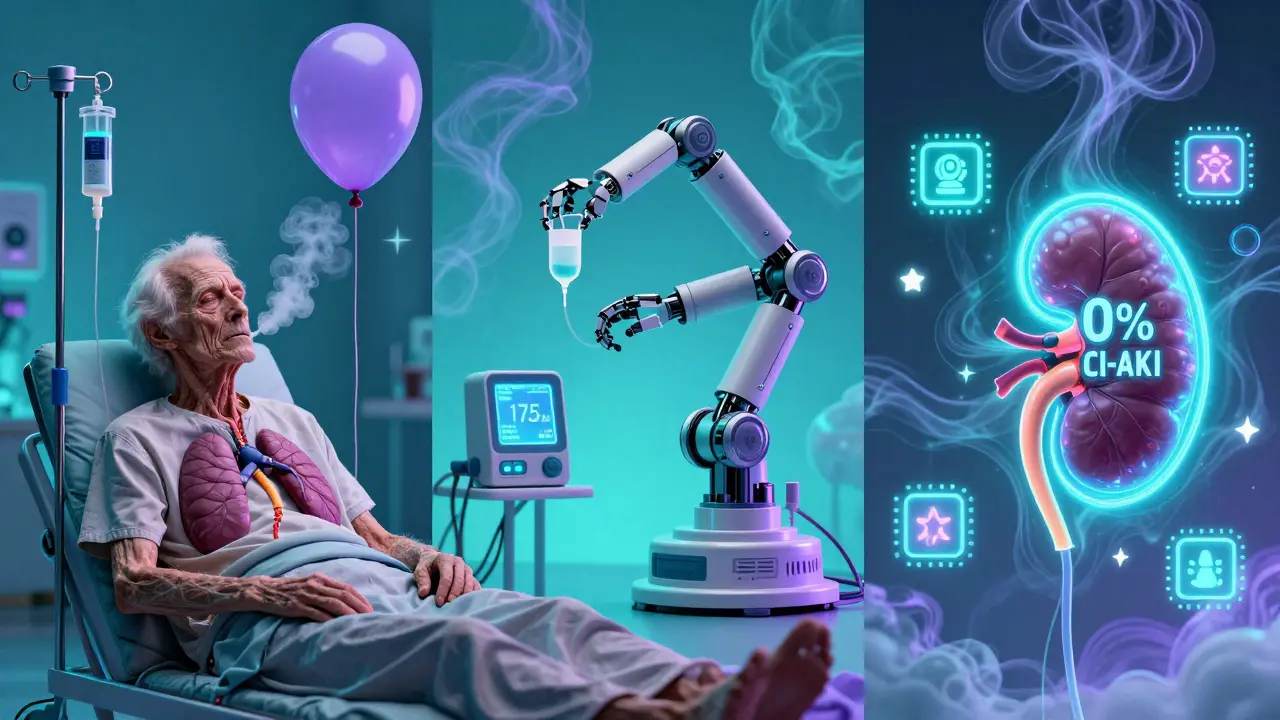
By 2025, the VA/DOD guidelines are pushing for real-time biomarkers - things like cystatin C or NGAL - to detect early kidney stress before creatinine rises. These markers can show damage within hours, not days. And researchers at Johns Hopkins are testing AI systems that adjust hydration based on your age, weight, kidney function, and even your heart rate. Early results show they could reduce CI-AKI by another 15-20%.
One thing that won’t change? The role of N-acetylcysteine (NAC). For years, people thought this antioxidant might help. But the 2020 meta-analysis showed no benefit when used with proper hydration. It’s not worth the extra pill.
What You Can Do
If you’re scheduled for a scan with contrast:
- Ask your doctor for your eGFR. Know your number.
- Find out if you’re high-risk. If you’re not, you might not need IV fluids.
- Follow hydration instructions exactly. Don’t skip drinks. Don’t overdo it.
- Let your care team know if you have heart failure, swelling, or trouble breathing.
- Ask if oral hydration is an option - it’s often just as effective and much more comfortable.
Hydration isn’t about drinking as much as you can. It’s about drinking the right amount, at the right time, for your body. A well-timed plan can mean the difference between walking out of the hospital the same day - or coming back for dialysis.
Why This Matters
Kidneys don’t heal easily. Once they’re damaged by contrast, the risk of long-term decline increases. Every episode of CI-AKI raises your chance of needing dialysis later. That’s why prevention isn’t optional - it’s essential. And hydration is the most effective, lowest-cost tool we have.
Health systems that standardized their protocols - like the Mayo Clinic - cut CI-AKI rates from 12.3% to 5.7% in just one year. That’s not magic. That’s science. And it’s happening right now in hospitals across the country.
Do I need IV fluids if I’m having a CT scan with contrast?
It depends on your kidney function. If your eGFR is above 60 mL/min/1.73m² and you’re otherwise healthy, oral hydration with water may be enough. If your eGFR is below 60 - especially if you have diabetes or heart disease - IV hydration is strongly recommended. Always check with your doctor based on your personal risk.
Can I just drink more water instead of getting an IV?
Yes, for many people. Studies show oral hydration (500 mL two hours before, then 250 mL every hour during the procedure) works just as well as IV saline for low- to moderate-risk patients. But if you’re vomiting, nauseous, have heart failure, or can’t drink enough, IV is safer and more reliable.
Is hydration needed if I have chronic kidney disease?
Yes - but carefully. For people with eGFR between 30 and 59, isotonic IV fluids (like 0.9% saline) at 1-1.5 mL/kg/hour for 3-12 hours before and after are recommended. For those below 30, doctors usually avoid contrast unless absolutely necessary. Always discuss alternatives like ultrasound or non-contrast MRI.
How long should I hydrate before and after a scan?
The critical window is 6 to 12 hours before and up to 24 hours after contrast exposure. Most protocols start 4-12 hours before and continue for 4-12 hours after. Shorter hydration (like just 1 hour) doesn’t work. Your kidneys need time to flush out the dye safely.
Do medications like NAC help protect the kidneys?
No - not if you’re already properly hydrated. A major 2020 analysis of 60 trials found no benefit from N-acetylcysteine (NAC) when used alongside adequate fluid intake. It’s not harmful, but it’s not helpful either. Focus on hydration, not supplements.