
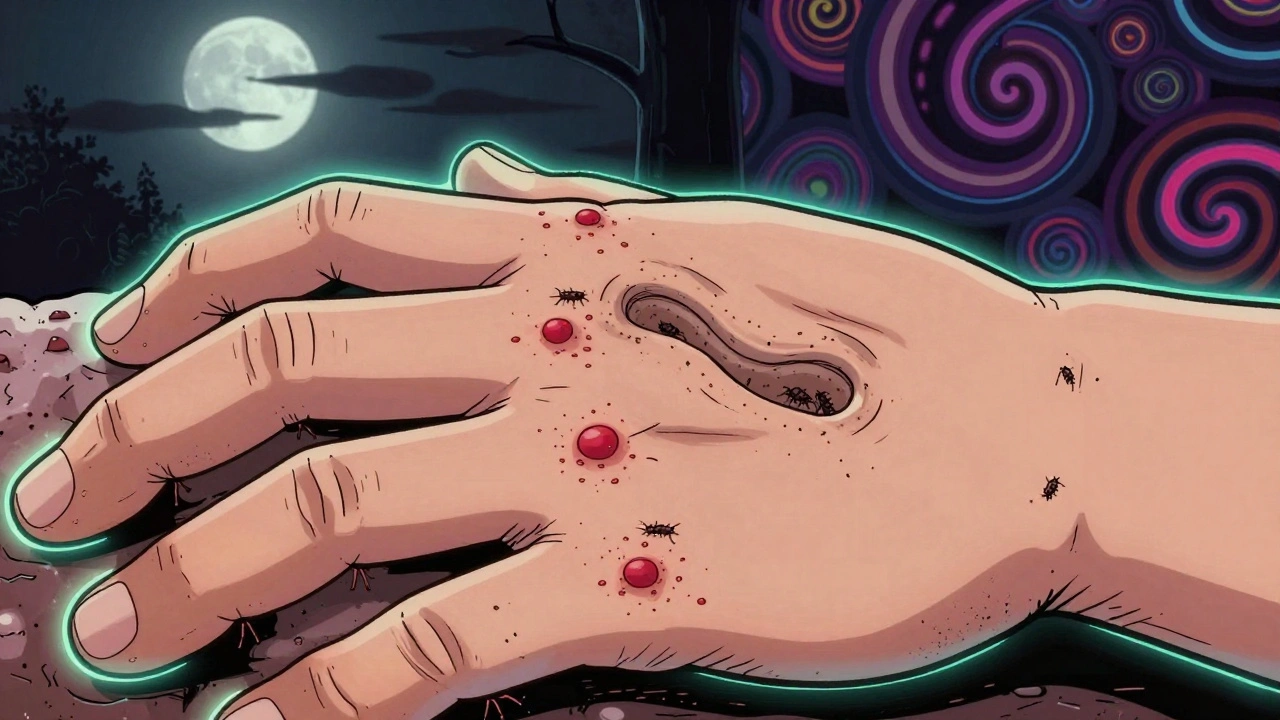
Itching that won’t quit. Red bumps that spread. Tiny bugs you can’t see but feel everywhere. If you’ve ever woken up covered in bites or noticed your child scratching their scalp nonstop, you’re not alone. Scabies and lice are two of the most common parasitic infestations affecting millions every year - and both are treatable, if you know how.
What Exactly Are Scabies and Lice?
Scabies isn’t caused by dirt or poor hygiene. It’s caused by a microscopic mite called Sarcoptes scabiei var. hominis. These mites burrow under your skin to lay eggs, triggering a fierce allergic reaction that makes your skin itch - especially at night. The burrows look like wavy, grayish lines, often between fingers, on wrists, around the waist, or on the genitals. In severe cases, especially in older adults or people with weakened immune systems, crusted scabies can develop, where thousands of mites overwhelm the skin.
Lice, on the other hand, are visible to the naked eye and come in three types. Head lice live on the scalp and are common in school-aged kids. Body lice live in clothing and only move to the skin to feed - they’re linked to poor hygiene or homelessness. Pubic lice, often called crabs, cling to coarse body hair and spread through close physical contact. Unlike scabies mites, lice don’t burrow. They cling to hair shafts and feed on blood.
Both are contagious - not because you’re dirty, but because they spread easily through close contact. Sharing a bed, clothes, or even a hat can pass them along. Scabies affects an estimated 204 million people globally each year, according to the World Health Organization. In the U.S. alone, 6 to 12 million children get head lice annually.
How to Tell Them Apart
Itching is the big clue for both, but the pattern matters.
With scabies, the itch is worse at night. You’ll often see thin, raised lines on the skin - these are mite tunnels. Common spots: finger webs, armpits, inner wrists, belt line, genitals, and between toes. Babies might have rashes on their palms or soles. The rash looks like tiny red bumps or blisters, sometimes mistaken for eczema or insect bites.
Lice don’t leave tunnels. Instead, you’ll see small, oval-shaped eggs (nits) glued tightly to hair shafts, usually within ¼ inch of the scalp. Live lice are grayish-white and move fast. Nits are easier to spot - they look like dandruff but won’t brush off. Head lice cause itching on the scalp, neck, and ears. Body lice cause itching where clothes press against the skin - waistband, armpits, groin. Pubic lice cause itching in the pubic area and sometimes the eyebrows or eyelashes.
One key difference: scabies spreads rapidly through households. If one person has it, others likely do too - even if they’re not itching yet. Lice spread slower, mostly through direct head-to-head contact.
First-Line Treatments: Permethrin and Ivermectin
For scabies, the gold standard is permethrin 5% cream. It’s safe, effective, and available over the counter in many countries. Apply it from the neck down to every part of the body - including between fingers, under nails, and around the genitals. Leave it on for 8 to 14 hours, then wash it off. A second application is needed seven days later because permethrin doesn’t kill all the eggs. That’s why two doses are standard.
For people who can’t use topical treatments - like those with widespread infestations, elderly patients, or those in group settings - oral ivermectin is a powerful alternative. It’s not FDA-approved specifically for scabies, but doctors use it off-label all the time. You take it as a pill, with food to help absorption. One dose works for most, but a second dose 7 to 14 days later is often needed. Studies show cure rates jump from 86% after one dose to nearly 100% after two.
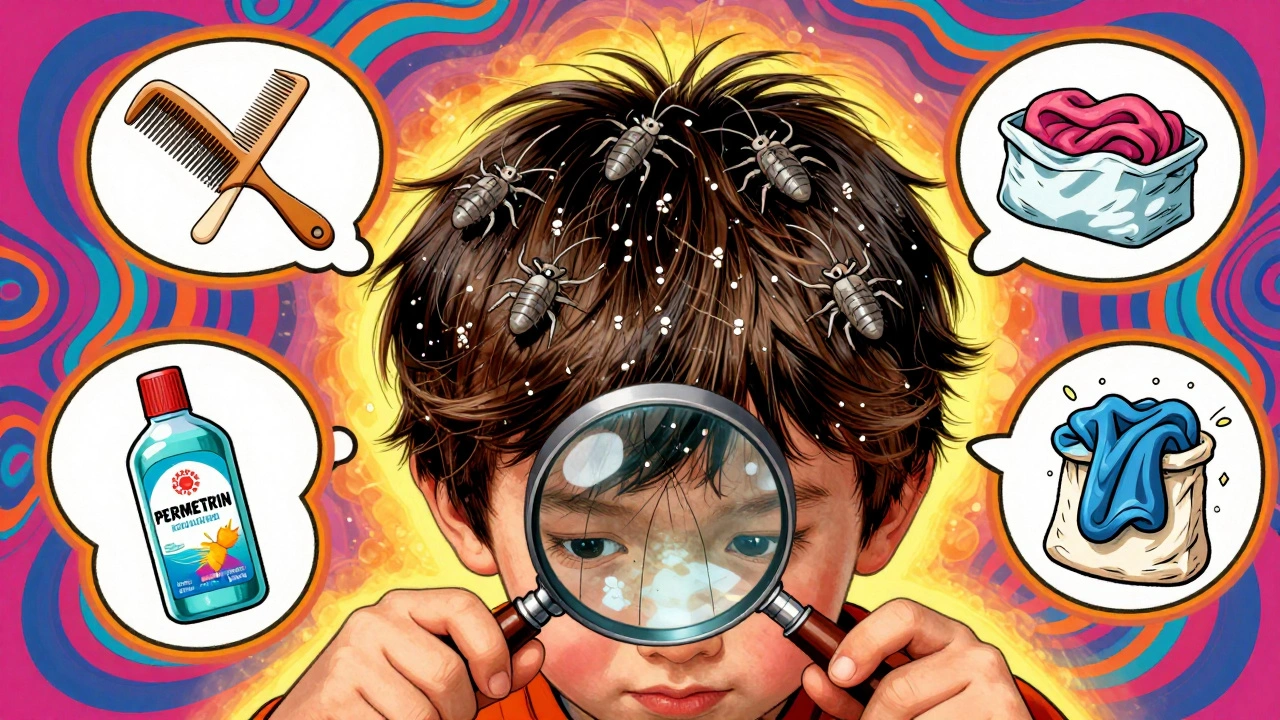
For lice, permethrin 1% lotion or shampoo is the first choice. Apply it to dry hair, leave it on for 10 minutes, then rinse. Use a fine-toothed comb afterward to remove nits. If it doesn’t work after two applications, resistance is likely. In the U.S., up to 30% of head lice are now resistant to permethrin.
That’s where newer options come in. Spinosad 0.9% liquid, approved by the FDA in 2019, kills both lice and eggs in one application. It’s safe for kids as young as 6 months. Oral ivermectin is also used for stubborn lice - especially when applied at a higher dose (0.4 mg/kg), which studies show clears infestations in over 95% of cases.
Why Some Treatments Fail
Most treatment failures aren’t because the drug doesn’t work - they’re because of mistakes in application.
With permethrin for scabies, people often miss spots. The mites hide in the folds of skin. If you skip behind the ears, under the nails, or between the toes, you’re leaving survivors. One study found 12% of treatment failures happened because people washed off the cream too early - before the 8-hour mark.
With lice, parents often stop treatment after the first application, thinking they’ve got them all. But nits hatch in 7 to 10 days. If you don’t comb them out or reapply treatment, the cycle starts again. And if you don’t wash bedding, hats, or towels in hot water (at least 130°F), you’re just re-exposing yourself.
Another big mistake: not treating everyone at once. Scabies spreads fast. If only one person in the household gets treated, the mites come back - often worse. The same goes for lice. If one kid has them and their sibling doesn’t get checked, the lice will hop back.
When to Use Combination Therapy
For crusted scabies - the most severe form - you need more than one treatment. Doctors combine oral ivermectin with topical permethrin. This approach is backed by the American Academy of Family Physicians and used in hospitals and nursing homes.
Even in regular cases, combining treatments can help. A 2020 study in the Solomon Islands showed that giving both ivermectin and azithromycin together cleared scabies in 95-100% of cases - and also treated other infections like trachoma. This kind of mass treatment is now being used in remote areas where multiple diseases overlap.
For lice that won’t die, combining spinosad with manual nit removal gives the best results. Some dermatologists even recommend using ivermectin as a backup if topical treatments fail.

What Doesn’t Work - And Why
Home remedies like mayonnaise, olive oil, or tea tree oil? They might suffocate a few lice, but they don’t kill eggs reliably. And they don’t touch scabies mites at all.
Lindane lotion? It’s banned in many places, including the U.S., because it’s toxic to the nervous system. The FDA doesn’t recommend it as a first-line treatment anymore.
And no, shaving your head won’t cure lice - you still need to kill the eggs. And no, you don’t need to fumigate your house. Mites and lice can’t survive more than 24-48 hours off the human body. Washing clothes, bedding, and towels in hot water and drying them on high heat is enough.
Preventing Reinfestation
Here’s the truth: treating the person isn’t enough. You have to break the chain.
- Wash all clothing, bedding, and towels used in the last 3 days in hot water (130°F or higher) and dry on high heat.
- Items that can’t be washed? Seal them in a plastic bag for 72 hours. Mites and lice die without a host.
- Don’t share combs, brushes, hats, or pillows.
- Treat everyone in the household at the same time - even if they’re not itchy.
- Check family members for 2 weeks after treatment. Nits can hatch late.
For schools and daycare centers, the CDC says kids shouldn’t be excluded for lice. The risk of spread in classrooms is low. Focus on treating the child and their close contacts, not panic.
What’s New in Treatment
Researchers are working on better drugs. Three new compounds are in clinical trials as of late 2023, designed specifically to kill mite eggs - something current treatments can’t do reliably. These could change the game by cutting treatment from two rounds to one.
Also, the global market for scabies treatments is growing. The World Health Organization now sees mass drug administration - giving ivermectin to entire communities - as the best way to reduce scabies in poor or crowded areas. In places like the Solomon Islands, these programs have cut scabies rates by more than half in just a few years.
For now, the tools we have work - if used right. Permethrin, ivermectin, and spinosad are proven. The real challenge isn’t finding the right medicine. It’s using it correctly, completely, and together.
Can scabies be cured without prescription medicine?
No. Over-the-counter remedies like tea tree oil or neem oil may soothe itching, but they won’t kill the mites or their eggs. Only FDA-approved treatments like permethrin cream or oral ivermectin have been proven to cure scabies. Delaying proper treatment can lead to worse outbreaks and secondary infections.
Is ivermectin safe for children?
Oral ivermectin is generally safe for children weighing over 15 kg (about 33 pounds). It’s commonly used off-label for scabies and lice in kids. For younger children, topical permethrin or spinosad are preferred. Always consult a doctor before giving ivermectin to a child - dosing is based on weight, and safety hasn’t been established for infants or pregnant women.
How long does it take for itching to stop after treatment?
Itching can last for weeks after the mites or lice are dead. That’s because your body is still reacting to the dead parasites and their waste. Antihistamines or hydrocortisone cream can help. If itching continues beyond 2-4 weeks, or new bumps appear, you may still have live mites or lice - see a doctor.
Do I need to throw away my mattress or furniture?
No. Scabies mites and lice can’t live long off the human body - usually less than 48 hours. Vacuuming your mattress and furniture is enough. Seal items you can’t wash in plastic bags for 3 days. There’s no need to replace bedding or furniture unless it’s heavily soiled and can’t be cleaned.
Can pets give me scabies or lice?
No. The mites that cause scabies in animals (like dogs and cats) are different from the ones that infect humans. They might cause temporary itching if you come in contact, but they can’t live or reproduce on human skin. Lice are species-specific too - human lice only live on humans. You don’t need to treat your pets for human scabies or lice.
How do I know if the treatment worked?
Look for new burrows or live lice. If no new bumps, burrows, or bugs appear after 2 weeks, the treatment worked. Itching may linger, but that’s not a sign of live parasites. If you see new activity - like crawling lice or fresh tunnels - you need to re-treat and check for missed contacts or improper application.
Noah Raines 9.12.2025
This post saved my life last year when my kid came home with head lice. Permethrin worked like a charm after I stopped panicking and actually followed the instructions. Don't forget the combing! <3
Katie Harrison 9.12.2025
I appreciate the clarity here... but I must note: the CDC's stance on not excluding children with lice is often ignored in North American schools. It's not just about science-it's about stigma. Let's stop punishing kids for biology.
Andrea DeWinter 9.12.2025
For anyone struggling with resistant lice try spinosad. One application. No nit combing required. I used it on my daughter and she was lice-free in 48 hours. Save yourself the stress.
Ajit Kumar Singh 9.12.2025
In India we use neem oil and combing for lice and it works fine why do we need fancy chemicals? People overcomplicate everything
om guru 9.12.2025
The scientific accuracy of this article is commendable and the emphasis on proper application is critical. Treatment failure is almost always due to incomplete adherence not drug inefficacy. A model of public health communication
Mona Schmidt 9.12.2025
I've seen too many parents panic and throw away pillows, mattresses, even stuffed animals. The truth is simple: mites die in 48 hours off the host. Wash what you touched. Bag the rest. No fumigation needed. This post gets it right.
Maria Elisha 9.12.2025
I tried the permethrin twice. Still itchy. Guess I'm just one of those people who never gets it right. Maybe I should just move to a monastery.
Sarah Gray 9.12.2025
I'm shocked anyone still uses permethrin. There are far superior treatments now. This feels like reading a 2010 textbook. Where's the data on newer agents? This is lazy.
Andrea Beilstein 9.12.2025
It's interesting how we treat parasites like moral failures. Scabies doesn't care if you're rich or poor. Lice don't judge your hygiene. Yet society shames the infected. Maybe the real infestation is our stigma.
Guylaine Lapointe 9.12.2025
I'm sorry but if you're using ivermectin off-label for your child you're playing Russian roulette with their neurology. This article is dangerously irresponsible. You're not a doctor. Don't treat like one.
Angela R. Cartes 9.12.2025
I'm just here because my therapist told me to 'engage with educational content'... I still think tea tree oil works better than all this science stuff. 🤷♀️