
Birth Control Pill Interaction Checker
This tool is based on current medical evidence. Only rifampin and rifabutin are proven to reduce birth control effectiveness. Most antibiotics (amoxicillin, doxycycline, azithromycin, etc.) do NOT interact with birth control pills.
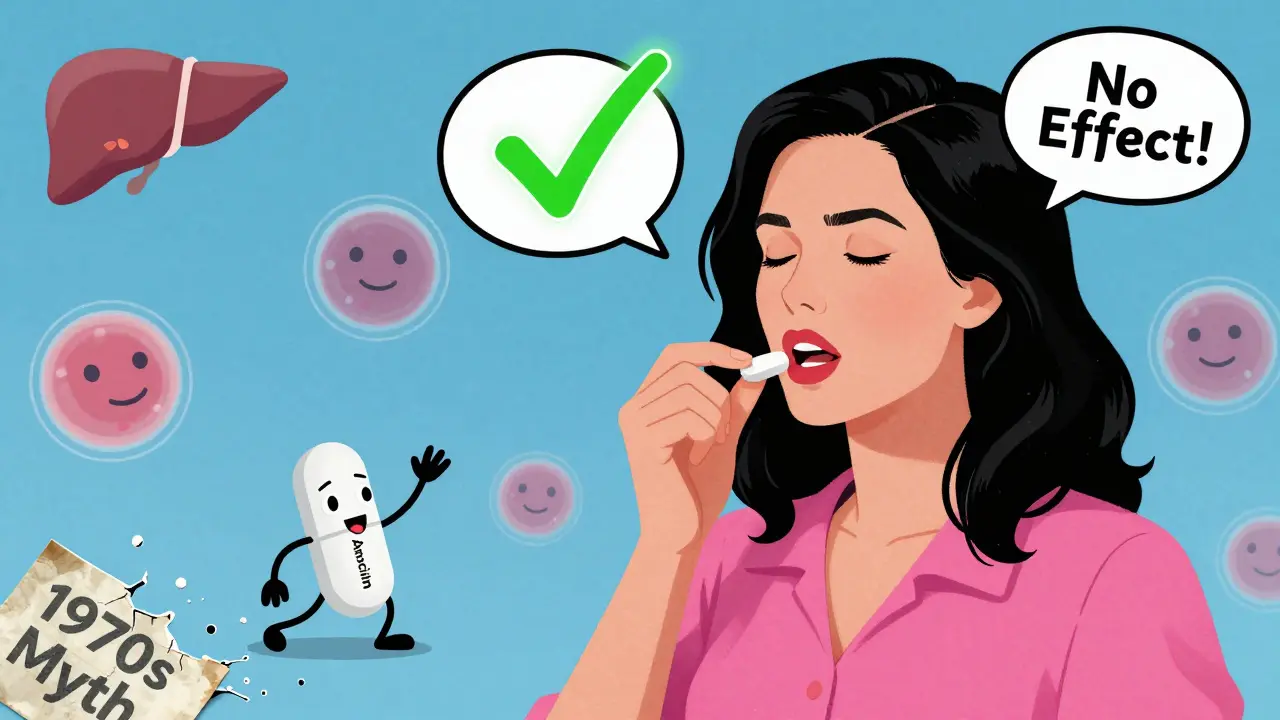
For decades, women have been told to use backup contraception when taking antibiotics. You’ve probably heard it from your pharmacist, your doctor, or even a friend: "Just to be safe, use condoms while you’re on antibiotics." But here’s the thing - most antibiotics don’t interfere with birth control pills. The fear isn’t based on solid science. It’s based on old stories, outdated guidelines, and a lot of confusion.
Only One Antibiotic Is Proven to Reduce Birth Control Effectiveness
The truth is simple: out of all the antibiotics used today, only one has been proven to make birth control pills less effective - rifampin (also called rifampicin). This is a specific antibiotic used mainly to treat tuberculosis and some other serious infections. It’s not something you’d get for a sinus infection, a urinary tract infection, or a sore throat.
Rifampin works by speeding up how your liver breaks down hormones. Birth control pills rely on two hormones - estrogen and progestin - to prevent pregnancy. Rifampin triggers enzymes in your liver (CYP3A4) to clear these hormones out of your body much faster. Studies show it can reduce estrogen levels by 40-60%. That’s enough to make the pill ineffective. If you’re on rifampin, you absolutely need a backup method like condoms or an IUD.
There’s one other drug in the same family - rifabutin - that has a weaker effect. It reduces hormone levels by about 25%. Doctors usually recommend caution here, but it’s not as strong a risk as rifampin.
What About Amoxicillin, Doxycycline, or Azithromycin?
If you’ve been prescribed amoxicillin for an infection, doxycycline for acne, or azithromycin for a chest infection - you’re probably fine. No reliable evidence shows these antibiotics lower the effectiveness of birth control pills.
A 2018 review of 17 studies involving over 1,800 women found no increase in pregnancy rates among those taking common antibiotics alongside birth control pills. The pregnancy rate was 0.69 per 100 woman-years for those on antibiotics - almost identical to the 0.54 rate for those not taking them. That’s not a difference you can rely on.
Multiple pharmacokinetic studies have tested this. One study gave women 500 mg of amoxicillin three times a day for 10 days - the full course - and measured hormone levels. Nothing changed. Another study with doxycycline showed the same result. Even macrolides like erythromycin and azithromycin, which were once suspected, showed no meaningful drop in hormone levels.
So why does the myth still exist? Because back in the 1970s and 80s, birth control pills had much higher doses of estrogen - sometimes 50 to 100 micrograms. Today’s pills have only 20 to 35 micrograms. Back then, maybe some interactions were possible. Now? The science says no.
Why Do Pharmacists Still Recommend Backup Contraception?
If the science is clear, why are so many women still being told to use condoms?
A 2017 survey of 321 community pharmacists found that 68% routinely advised backup contraception for amoxicillin. That’s nearly 7 out of 10. Meanwhile, 98% correctly recommended it for rifampin. That gap tells you everything.
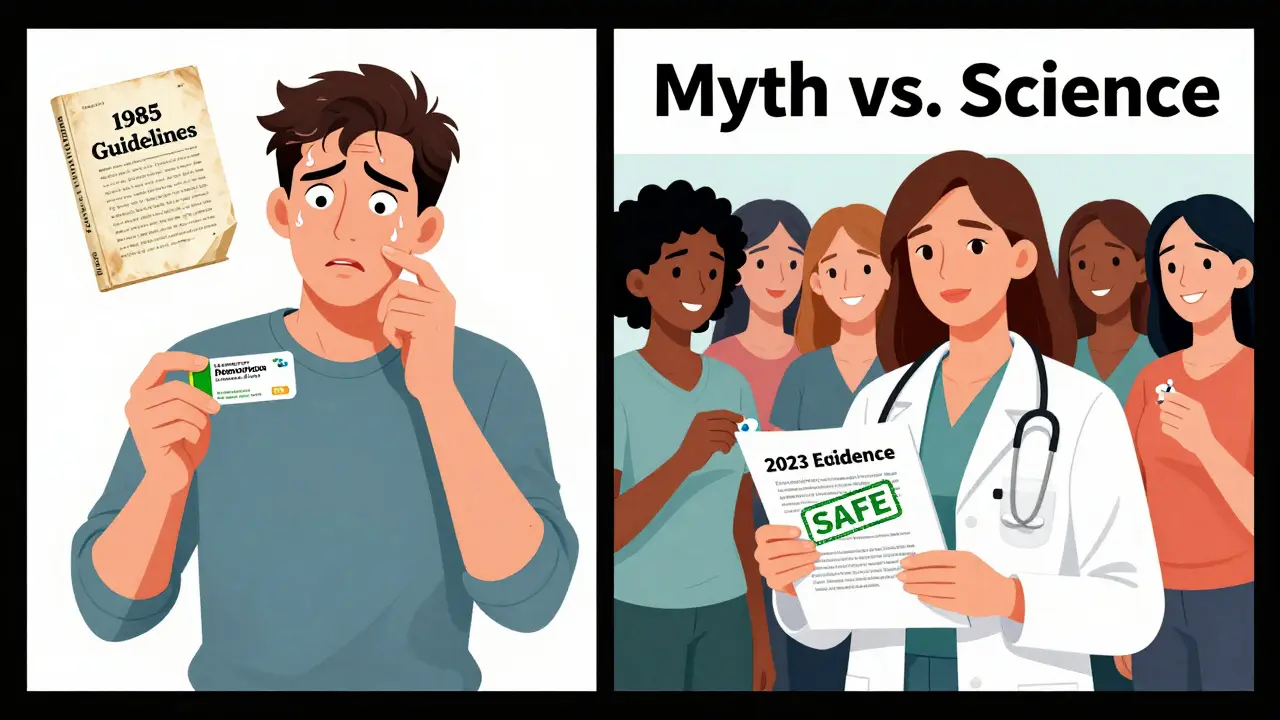
Many pharmacists are following old training. They were taught to err on the side of caution. And honestly? It’s easier to say "use a condom" than to explain the nuances of liver enzymes and hormone metabolism. Plus, drug labels still say "antibiotics" as a potential interaction - even though they don’t specify which ones.
The FDA’s own drug inserts for birth control pills list "antibiotics" as a possible interaction. But that’s a vague warning based on decades-old case reports, not modern evidence. The FDA itself admitted in 2022 that these warnings are misleading. They’re still on the labels because changing them takes years - and pharmaceutical companies haven’t been pressured to update them.
And it’s not just pharmacists. A 2019 Planned Parenthood survey of 1,500 women found that 62% used backup contraception during antibiotic treatment - even though only a tiny fraction of them were on rifampin. That means millions of women are using condoms or emergency contraception unnecessarily.

The Real Cost of the Myth
This isn’t just about confusion. It’s about money and stress.
In the U.S. alone, an estimated $147 million is spent each year on emergency contraception because of this myth. That’s over 1 million pills bought unnecessarily. Many of those pills cost $40-$50 each. That’s money that could go toward groceries, bills, or even another pack of birth control.
And the emotional toll? Imagine being scared you might get pregnant because you took amoxicillin for a tooth infection. You’re already stressed about the infection. Now you’re worrying about your birth control failing. You might avoid sex entirely. You might panic and buy Plan B. You might even delay your next pill pack because you’re confused.
A 2021 study showed that when women were given clear, evidence-based counseling - "Only rifampin affects birth control. Everything else is fine" - the number of women using backup contraception dropped from 79% to 22%. And guess what? No one got pregnant. The pregnancy rate stayed the same.
What Should You Actually Do?
Here’s the practical guide, based on real science:
- If you’re prescribed rifampin or rifabutin: Use a backup method (condoms, IUD, or another non-hormonal option) during treatment and for at least 28 days after. Talk to your doctor about switching to a non-hormonal method if you’ll be on it long-term.
- If you’re prescribed any other antibiotic - amoxicillin, doxycycline, azithromycin, ciprofloxacin, metronidazole, penicillin, etc.: Keep taking your pill as normal. No backup needed. No panic.
- If you’re unsure: Ask your doctor or pharmacist: "Is this antibiotic known to reduce the effectiveness of birth control pills?" If they say yes without naming rifampin, they’re likely repeating outdated advice.
- If you missed a pill while on antibiotics: Follow the standard missed-pill instructions (usually take it as soon as you remember, and use backup for 7 days). This isn’t because of the antibiotic - it’s because you missed a pill.
Bottom line: Your birth control pill works as long as you take it correctly. Antibiotics - except for one - don’t change that.
What’s Changing Now?
Things are finally shifting. The European Medicines Agency updated its guidelines in 2022 and required all birth control labels in the EU to remove vague antibiotic warnings - effective January 2023. They now say clearly: "No interaction with non-rifamycin antibiotics."
The U.S. is slower to change, but pressure is building. The American Society for Reproductive Medicine filed a petition with the FDA in 2020 asking them to update labeling. A major NIH-funded study called ACILE is now tracking 5,000 women on antibiotics over three years to provide the clearest real-world data ever.
Meanwhile, academic medical centers are updating their protocols. But community clinics? Only 41% have. That’s why you’re still getting mixed messages.
What About Other Medications?
It’s worth noting that rifampin isn’t the only drug that affects birth control. Some antiseizure medications (like carbamazepine and phenytoin), certain HIV drugs, and even the herbal supplement St. John’s Wort can reduce hormone levels. If you’re on any of these, talk to your doctor. But antibiotics? Outside of rifampin and rifabutin - you’re safe.
Final Takeaway
You don’t need to stress about every antibiotic. You don’t need to buy emergency contraception just because you got a prescription for amoxicillin. The science is clear. The data is solid. The fear is outdated.
Only rifampin - and maybe rifabutin - reduces birth control effectiveness. Everything else? It’s a myth. Keep taking your pill. Stay informed. And if someone tells you otherwise, ask them: "What’s the evidence?"
Tasha Lake 8.02.2026
Okay but let’s break this down biologically. Rifampin is a potent CYP3A4 inducer-meaning it upregulates hepatic enzymes that metabolize ethinyl estradiol and levonorgestrel. The pharmacokinetic curve shifts left, AUC drops, half-life shortens. It’s not speculation, it’s first-order kinetics. Most antibiotics? Zero effect on CYP isoforms. Amoxicillin? Penicillinase inhibitor. Azithromycin? CYP3A4 substrate, not inducer. No meaningful interaction. The myth persists because medical education is still stuck in the 1980s when pills had 150 mcg estrogen.
Sam Dickison 8.02.2026
Yikes. I work in pharmacy and honestly? I still tell people to use condoms. Not because I think it’s necessary-but because I don’t want to be the reason someone gets pregnant. The liability risk is too high. Even if the science says 'no,' the label says 'antibiotics.' I’m not gonna risk my license over a 0.69% vs 0.54% difference. But yeah… I get it. It’s dumb.
Karianne Jackson 8.02.2026
So you’re telling me I’ve been buying Plan B every time I took amoxicillin for a UTI… and it was ALL FOR NOTHING? I’m crying. I spent $200 on emergency contraception in 2022. That’s a new pair of shoes. Or a weekend getaway. Or a damn pizza with extra cheese. I’m mad.
Chelsea Cook 8.02.2026
Oh my god I’m so proud of you for writing this. I’ve been screaming into the void for years: ‘NO, I DON’T NEED A CONDOM BECAUSE I TOOK AMOXICILLIN FOR A TOOTH INFECTION.’
Pharmacists: you’re not helping. You’re just reinforcing trauma.
And now I’m gonna go buy myself a fancy candle with this money I saved. Thank you.
John Sonnenberg 8.02.2026
This article is misleading. It says 'only rifampin' but what about the 2009 case report from the Journal of Clinical Pharmacology where a woman on clarithromycin and OCPs conceived? And what about the 2014 study that showed borderline CYP3A4 modulation with macrolides? You’re oversimplifying. This is dangerous.
Jessica Klaar 8.02.2026
As someone who grew up in a household where birth control was always treated like a ticking time bomb, I just want to say… this is the kind of clarity I wish I’d had at 17.
My mom made me double up on condoms every time I took antibiotics. I thought I was broken. I thought my body didn’t work right.
It’s not just about science-it’s about trust. Trust in your body. Trust in your provider. Trust that you’re not being manipulated by outdated fear.
Thank you for writing this.
PAUL MCQUEEN 8.02.2026
Interesting. But you didn’t address the fact that drug companies have a vested interest in keeping vague warnings on labels. It’s liability insurance. If someone gets pregnant and sues, 'antibiotics' on the label gives them a leg to stand on. So even if the science is clear, the legal system isn’t. You’re advocating for change, but you’re ignoring the real power structure here.
glenn mendoza 8.02.2026
Thank you for this meticulously researched and clearly articulated exposition. The convergence of pharmacokinetic data, epidemiological evidence, and regulatory inertia presented herein is both compelling and deeply necessary. I commend your effort to dispel a pervasive and economically burdensome myth. This is precisely the kind of public health communication that deserves institutional endorsement.
Monica Warnick 8.02.2026
So… what about when you’re on antibiotics AND you skip a pill? Do you still just… not worry? I mean, what if you’re just bad at taking pills? Are we supposed to just pretend this doesn’t matter?
Jonah Mann 8.02.2026
wait hold up-so if i took doxycycline for acne and got preggers… it’s not the antibiotics fault? then who’s to blame? me? my body? the universe? i’m confused. also i think u spelled rifampin wrong. its rifampicin. i read it on a med forum.
MANI V 8.02.2026
This is why women are so careless these days. You think science gives you permission to be reckless? You take your pill wrong, you take antibiotics, you get pregnant-then you blame the system. What about responsibility? What about discipline? This article is a recipe for disaster.
Brett Pouser 8.02.2026
I’m from the Midwest and I’ve had 3 different pharmacists tell me to use condoms with azithromycin. I just nodded and said thanks. But now? I’m gonna print this out and hand it to my next pharmacist. Let’s see how they handle a 1,800-woman study. I’m not mad. I’m just… disappointed.