
Asthma/COPD Medication Interaction Checker
Check for dangerous interactions between your respiratory medications and common non-respiratory drugs. Important: This tool is for informational purposes only and does not replace professional medical advice.
Results will appear here after checking medication interactions.
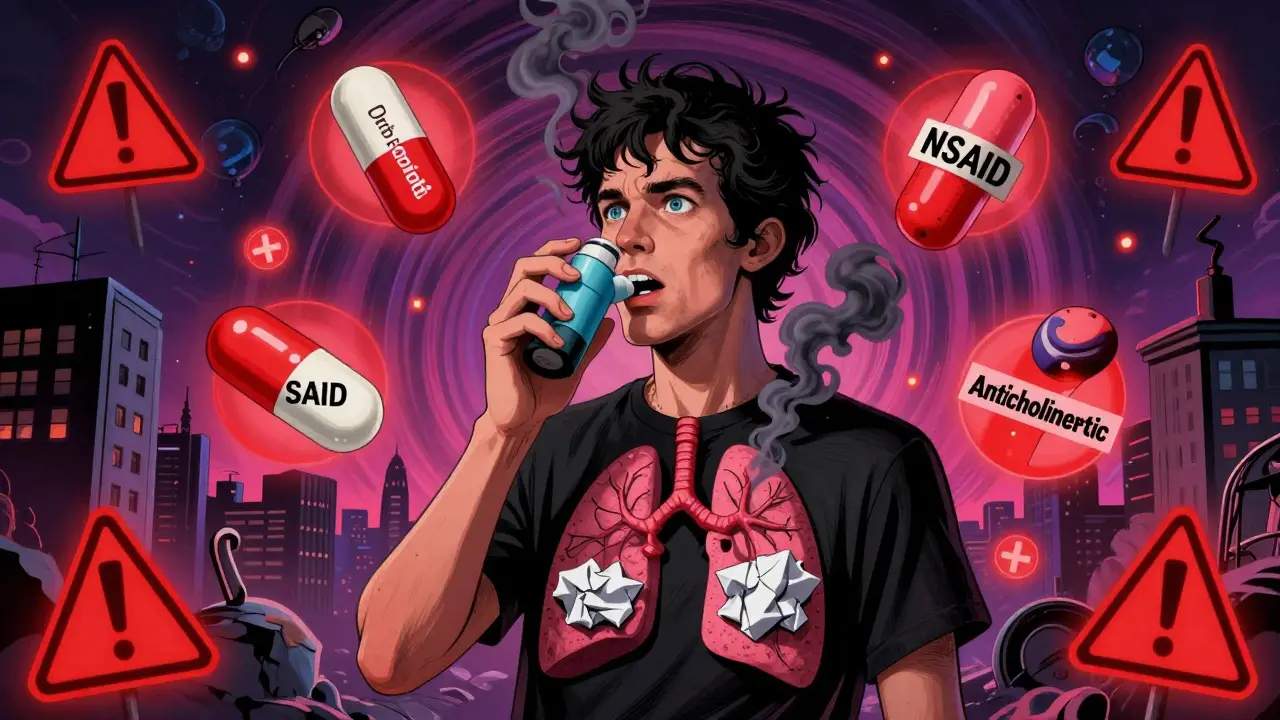
When you’re managing asthma or COPD, your inhaler isn’t the only thing that affects your breathing. Many of the medications you take for other conditions - painkillers, antidepressants, even cold remedies - can quietly interfere with your respiratory treatment. These aren’t rare side effects. They’re common, dangerous, and often missed. In fact, drug interactions are behind 15-20% of COPD hospitalizations, according to the International Journal of Chronic Obstructive Pulmonary Disease (2022). If you’re on more than one medication, you’re at risk - and most people don’t even realize it.
How Asthma and COPD Medications Work
Asthma and COPD both involve narrowed airways, but they’re not the same disease. Asthma is often triggered by allergies or exercise, with inflammation playing a big role. COPD, usually from smoking, damages the lungs permanently. That’s why their medications overlap but aren’t interchangeable.
The main tools are:
- Bronchodilators - relax the muscles around your airways. These come in two types: beta-2 agonists (like albuterol and formoterol) and anticholinergics (like tiotropium and glycopyrrolate).
- Inhaled corticosteroids - reduce inflammation. Often paired with LABAs (long-acting beta-agonists) in combo inhalers like fluticasone/salmeterol.
- Biologics - newer injectable drugs (like omalizumab or mepolizumab) for severe asthma with specific triggers like eosinophils.
Combination inhalers are common now. For example, Anoro Ellipta combines vilanterol (a LABA) and umeclidinium (a LAMA). These work better together than alone - but only if they’re matched correctly. Mixing the wrong ones? That’s where things go wrong.
Most Dangerous Interactions You Might Not Know About
Not all drug interactions are obvious. Some come from medications you think are harmless.
1. Opioids + Benzodiazepines + COPD
If you have COPD and take opioids like oxycodone or hydrocodone for pain, you’re already at higher risk for breathing trouble. Add a sleep aid or anxiety med like diazepam (Valium) or lorazepam (Ativan), and your risk of respiratory failure jumps by 300%. That’s not a typo. A 2023 LPt Medical analysis found that combining these two classes cuts your oxygen levels dangerously low - especially if you’re already using oxygen at home.
Even more alarming: the FDA’s Adverse Event Reporting System shows 17% of opioid-related hospitalizations in COPD patients involved over-the-counter antihistamines like diphenhydramine (Benadryl). These drugs slow breathing too - and they’re in dozens of cold and sleep meds.
2. Nonselective Beta-Blockers + Asthma
Beta-blockers are used for high blood pressure, heart rhythm issues, and even migraines. But not all are safe. Nonselective ones - like propranolol and nadolol - block beta-2 receptors in the lungs. That’s bad news if you have asthma. They can trigger a severe bronchospasm, dropping FEV1 (a key lung function number) by 15-25% in susceptible people.
Selective beta-blockers like metoprolol or atenolol are safer. A 2021 BLOCK-COPD trial showed they actually reduced COPD exacerbations by 14% in patients with heart disease. But you still need to be monitored. Never start a beta-blocker without telling your pulmonologist.
3. NSAIDs and Aspirin + Asthma
One in 10 adults with asthma react badly to NSAIDs like ibuprofen (Advil), naproxen (Aleve), or aspirin. It’s called NSAID-exacerbated respiratory disease. Symptoms? Wheezing, tight chest, sometimes full-blown asthma attack - usually within 30 to 120 minutes.
This is especially common in people with nasal polyps or chronic sinusitis. A Reddit user from r/asthma in 2023 described a near-fatal attack after taking ibuprofen for a headache. It’s not rare. Asthma + Lung UK’s 2023 survey found 9% of adult asthmatics had this reaction. If you’ve ever had breathing trouble after painkillers, stop taking them. Talk to your doctor about acetaminophen (Tylenol) instead.
4. Anticholinergic Overload
LAMAs like tiotropium (Spiriva) are great for COPD. But they’re anticholinergics - meaning they dry up secretions and relax smooth muscle. Now imagine you’re also taking oxybutynin for an overactive bladder, or diphenhydramine for allergies, or amitriptyline for nerve pain. All of these are anticholinergics too.
Combine them, and you get double or triple the side effects: dry mouth, constipation, urinary retention. For men with COPD, the European Respiratory Society found a 28% higher risk of acute urinary retention when LAMA inhalers were paired with bladder meds. And yes - this can lead to hospitalization.
5. Antibiotics and Antifungals That Slow Down Your Meds
Some drugs change how your body processes others. Clarithromycin (an antibiotic) and ketoconazole (an antifungal) block a liver enzyme called CYP3A4. That enzyme breaks down many inhaled bronchodilators. When it’s blocked, those drugs build up in your system.
Result? You get too much of your own medication. Side effects like rapid heartbeat, tremors, or even heart rhythm problems can happen. This isn’t theoretical. The American Lung Association’s 2022 materials warn that patients on salmeterol or formoterol have been hospitalized after taking clarithromycin for a sinus infection.
What You Can Do: A Real-World Action Plan
You don’t need to be a pharmacist to protect yourself. Here’s what actually works:
- Keep a current medication list - every pill, inhaler, patch, supplement, and OTC drug. Include dosage and why you take it. Update it after every doctor visit.
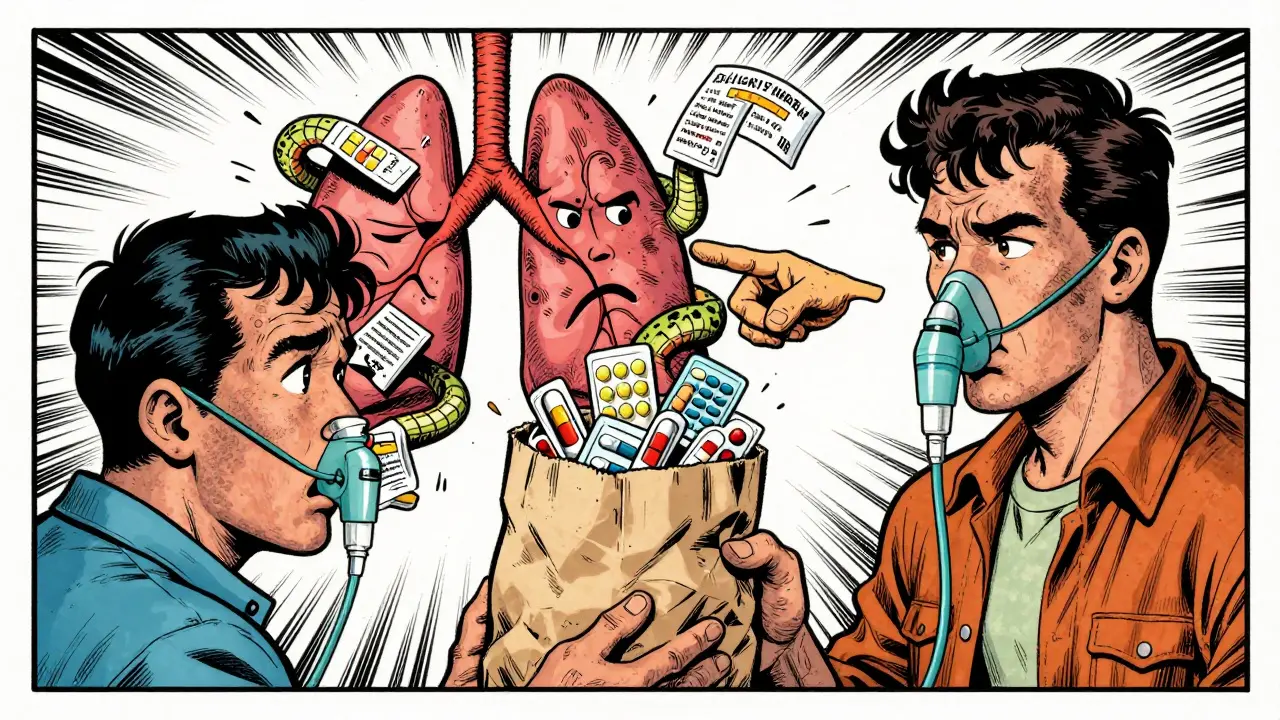
- Do the brown bag test - once a year, bring all your meds (in the original containers) to your doctor or pharmacist. Let them see everything. This is a GOLD 2023 recommendation - and it’s the single most effective way to catch hidden interactions.
- Ask your pharmacist - not just when you pick up a new prescription. Ask: “Could this interact with my asthma or COPD meds?” Pharmacists are trained for this. A 2022 study in the Journal of the American Pharmacists Association showed pharmacist-led reviews cut dangerous combinations by 43% in a year.
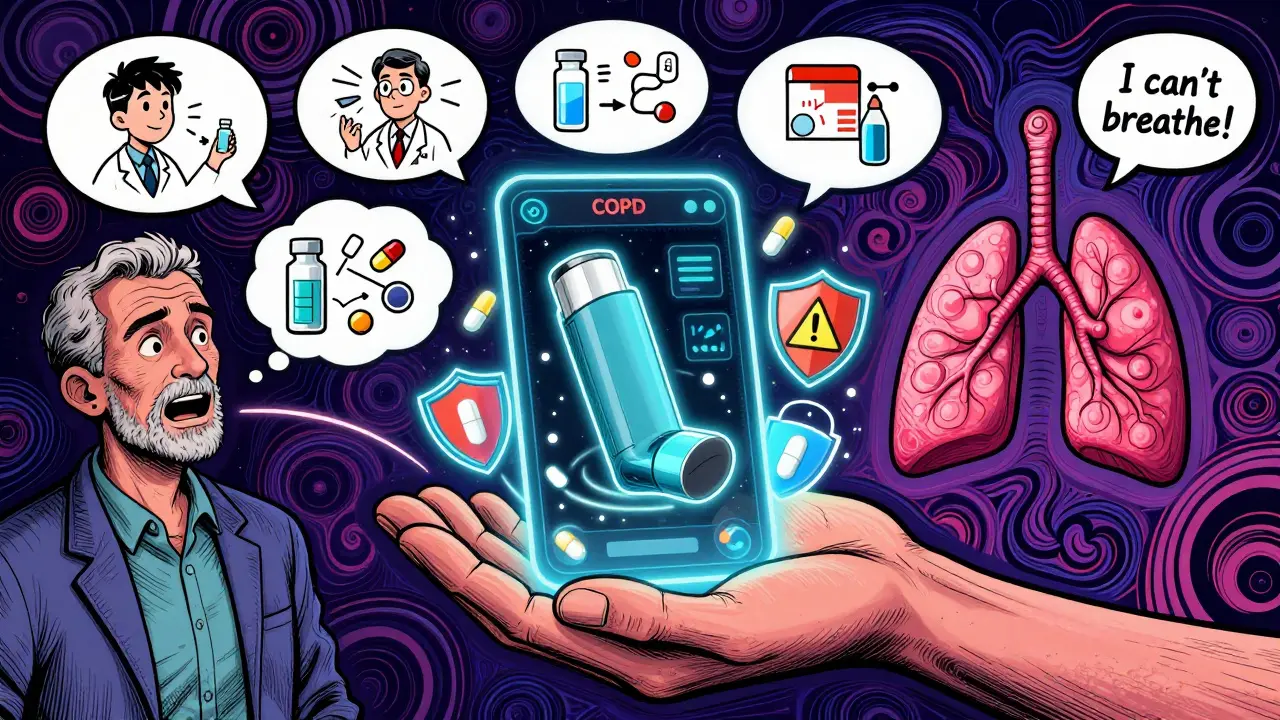
- Use the COPD Medication Safety App - launched in 2023 by the COPD Foundation. It checks interactions between 95% of commonly used respiratory and non-respiratory drugs. Scan your pills or type them in. It’s free and works offline.
- Watch for warning signs - worsening shortness of breath, faster heartbeat, dizziness, trouble urinating, or confusion after starting a new drug. Don’t wait. Call your doctor immediately.
Why Most Patients Miss This
Doctors don’t always ask about every medication. Patients don’t realize their allergy pill or painkiller is a problem. One 2023 survey by Asthma + Lung UK found 31% of respondents had breathing problems linked to non-respiratory meds - and 68% didn’t connect the dots.
It’s not about forgetting. It’s about assumptions. “It’s just a cold medicine.” “I’ve taken this for years.” “My heart doctor said it was fine.” But respiratory systems are fragile. A drug that’s safe for someone with healthy lungs can be deadly for someone with COPD.
And it’s getting worse. The population is aging. More people have multiple chronic conditions. More prescriptions. More combinations. The European Medicines Agency flagged respiratory drug interactions as a priority in 2023, with new labeling rules coming in 2024. That’s because the problem is growing - not shrinking.
The Future: Smarter, Safer Medication Use
Researchers are moving beyond one-size-fits-all warnings. Dr. MeiLan Han from the University of Michigan says the next step is personalized risk scoring. Imagine an app that knows your age, lung function, kidney health, and current meds - then tells you exactly which combinations to avoid.
Electronic health records are getting better too. A 2021 CHEST study showed that when EHRs had built-in alerts for asthma/COPD interactions, dangerous prescriptions dropped by 29%. But not all systems have them yet.
Meanwhile, new drugs like ensifentrine (a dual PDE3/4 inhibitor) are being tested in combo with LAMAs - not LABAs - because only certain pairings work safely. Science is catching up. But you can’t wait for the future. You need to act now.
Final Word: Your Lungs Don’t Lie
If your breathing gets worse after starting a new pill, it’s not just a coincidence. It’s a signal. Too many people ignore it. Too many doctors don’t ask the right questions. But you can change that.
Take control. Keep your list. Bring your brown bag. Ask your pharmacist. Use the app. Don’t assume. Don’t wait. Your next breath might depend on it.
Can I take ibuprofen if I have asthma?
About 10% of adults with asthma react badly to ibuprofen and other NSAIDs. If you have nasal polyps or chronic sinusitis, your risk is higher. Signs include wheezing, chest tightness, or trouble breathing within 30-120 minutes of taking it. If you’ve ever had this reaction, avoid NSAIDs. Use acetaminophen (Tylenol) instead. Always check with your doctor before trying any new pain reliever.
Are beta-blockers safe for asthma patients?
Nonselective beta-blockers like propranolol can trigger severe bronchospasm in asthma patients and should be avoided. Selective beta-blockers like metoprolol or atenolol are generally safer - especially for those with heart disease. Studies show they may even reduce COPD exacerbations. But you still need close monitoring. Never start a beta-blocker without consulting your pulmonologist and cardiologist together.
Can I use Benadryl if I have COPD?
Diphenhydramine (Benadryl) is an anticholinergic and a sedative. In COPD patients, it can slow breathing and interact dangerously with LAMA inhalers like tiotropium. It also increases the risk of urinary retention and confusion. Avoid it unless absolutely necessary. Use non-sedating antihistamines like loratadine (Claritin) or cetirizine (Zyrtec) instead. Always check labels - diphenhydramine is in many sleep aids and cold medicines.
What should I do if I’m on opioids for pain?
Opioids like oxycodone or hydrocodone carry a high risk of respiratory depression in COPD patients. If you’re on them, avoid combining them with benzodiazepines (like Xanax or Valium), sleep aids, or anticholinergics (like Benadryl). Talk to your doctor about non-opioid pain options. If opioids are necessary, use the lowest dose possible and monitor your breathing closely. Consider using a pulse oximeter at home and have naloxone on hand if prescribed.
How often should I review my medications?
At least every 6 months - or every time you see a new doctor, start a new medication, or notice a change in your breathing. The GOLD 2023 guidelines recommend the "brown bag test" once a year. But if you’re on 5 or more medications (common in COPD), do it every 3-4 months. Bring your list, your inhalers, your supplements, and your OTC drugs. Your pharmacist can spot risks your doctor might miss.
For more information, refer to the Global Initiative for Asthma (GINA) 2023 guidelines and the Global Initiative for Chronic Obstructive Lung Disease (GOLD) 2023 report. These are the most current, evidence-based standards used by respiratory specialists worldwide.
Betty Kirby 15.02.2026
The sheer negligence in how doctors dismiss these interactions is criminal. Patients are left to connect the dots themselves while polypharmacy becomes a silent killer. I’ve seen it firsthand: a 68-year-old woman on tiotropium, oxybutynin, and amitriptyline who ended up in the ER with acute urinary retention and confusion. No one asked about her bladder meds. No one. This isn’t an edge case-it’s standard care failure.
Pharmacists are the last line of defense, and even they’re overwhelmed. The system is broken, not the patients.
Josiah Demara 15.02.2026
Let’s be brutally honest: if you’re on more than three medications and you haven’t had a full med review with a clinical pharmacist, you’re playing Russian roulette with your lungs. The 43% reduction stat isn’t a suggestion-it’s a lifeline. And yet, 70% of primary care docs still don’t refer patients for this. Why? Because it takes 20 minutes and they get paid for 7-minute visits. Profit over prevention. Classic.
Also, ‘just use Tylenol’ is not a solution. It’s a bandaid. The real issue is the pharmaceutical industry’s refusal to label anticholinergic burden clearly. If a drug has 3+ anticholinergic properties, it should come with a damn skull and crossbones on the bottle. But no-marketing wins again.
And don’t get me started on the FDA’s passive-aggressive reporting system. 17% of opioid hospitalizations in COPD involve Benadryl? That’s not a coincidence. That’s negligence wrapped in bureaucracy.
Stop blaming patients. Start holding prescribers accountable.
Kaye Alcaraz 15.02.2026
Thank you for this comprehensive, vital breakdown. Every point you’ve made is grounded in evidence, and the action plan is practical, clear, and urgently needed. I work with older adults who are managing asthma, COPD, heart disease, and diabetes-all while taking 8–10 medications daily. They don’t know what’s interacting, and they’re terrified to ask.
The brown bag test is not just a recommendation-it’s a ritual of survival. I’ve seen patients cry when their pharmacist points out a dangerous combo they didn’t even know was risky. Knowledge is power, and you’ve given us a map to navigate this minefield.
Please keep sharing this. We need more voices like yours.
Sarah Barrett 15.02.2026
Interesting how the article focuses on drug interactions but doesn’t mention the role of polypharmacy in accelerating cognitive decline. Anticholinergic burden doesn’t just cause urinary retention-it’s linked to dementia in long-term users. That’s the silent epidemic no one talks about. Patients with COPD are often on these meds for decades. We’re trading short-term symptom control for long-term brain damage. The trade-off isn’t being evaluated.
And yet, the solution isn’t just stopping meds-it’s redesigning care. We need geriatric pulmonologists, not generalists.
Erica Banatao Darilag 15.02.2026
i just wanted to say thank you for writing this. i have copd and was on benadryl for years because i thought it was harmless. i had no idea it was making my breathing worse. my doctor never told me. i only found out after i switched to zyrtec and noticed i could actually sleep without waking up gasping. i wish more people knew this. please keep raising awareness.
Charlotte Dacre 15.02.2026
So let me get this straight. We’ve got a medical system that prescribes 12 drugs for 7 conditions, then acts shocked when the patient starts hallucinating and can’t pee? Brilliant. Truly. The future of healthcare: make them pay for the ER visit after you’ve poisoned them.
At least in the UK, we have NHS pharmacists who actually look at your meds. In the US? You’re on your own. And you wonder why people are dying.
Esha Pathak 15.02.2026
There is a deeper truth here: we live in an age of fragmented care. One doctor treats the heart, another the lungs, another the bladder-and no one sees the whole organism. The body is not a machine with separate parts. It is a symphony. And when we play too many instruments at once, the music turns to noise.
Perhaps the real solution is not more apps or more labels, but a return to holistic medicine. To the healer who listens. To the practitioner who sees the person, not the pathology.
Or maybe we just need to stop treating symptoms and start treating life.
Mike Hammer 15.02.2026
Man, I had no idea Benadryl was that bad for COPD. I’ve been using it for years to help me sleep. I just thought it was a harmless nightcap. Guess I’m gonna switch to Zyrtec. Also, the COPD app sounds legit-I’m downloading it right now. Thanks for the heads up.
Daniel Dover 15.02.2026
Brown bag test. Do it. Every year. Non-negotiable.
Chiruvella Pardha Krishna 15.02.2026
It is not the drugs that are dangerous. It is the lack of wisdom in their use. Modern medicine has become a temple of quantity over quality. We have more pills than ever, but less understanding. The body does not speak in prescriptions. It speaks in breath, in silence, in struggle. We must learn to listen again.
And perhaps, in this moment of crisis, we are being called back to humility.
Joe Grushkin 15.02.2026
Oh wow, a 2023 app? That’s so last year. Real innovation would be a wearable that monitors your lung function and auto-adjusts your meds. Or better yet, gene therapy that fixes the root cause. But no-we’re stuck with brown bags and pharmacists. How quaint.
Also, ‘Tylenol instead’? That’s like saying ‘use a spoon instead of a fork’ when you’re starving. The real problem is the entire pharmaceutical-industrial complex. We need systemic overhaul, not band-aids.
Virginia Kimball 15.02.2026
This is exactly the kind of info we need to spread. I’m sharing this with my mom who’s on 7 meds and has COPD. She didn’t even know her sleep aid was making her breath worse. I’m so glad there are people out there breaking this down in plain language. You’re helping real lives. Keep going!
Kapil Verma 15.02.2026
How can you trust Western medicine when it’s controlled by corporations that profit from your illness? In India, we use turmeric, ginger, and yoga to heal. No pills. No interactions. No hospital bills. You think this is progress? This is slavery to Big Pharma. Your ‘app’ is just another trap. Go back to nature. Your lungs will thank you.