
Wearing contact lenses can give you freedom from glasses, but it also comes with real risks if you skip the basics. Every year, around 1 in every 1,000 contact lens wearers gets an eye infection serious enough to threaten their vision. That might sound rare, but multiply that across millions of users - and you’re looking at tens of thousands of preventable cases. The worst part? Most of these infections happen because of simple, avoidable mistakes. You don’t need fancy gadgets or expensive products. You just need to follow a few clear rules - every single time you handle your lenses.
Hand Hygiene: Your First Line of Defense
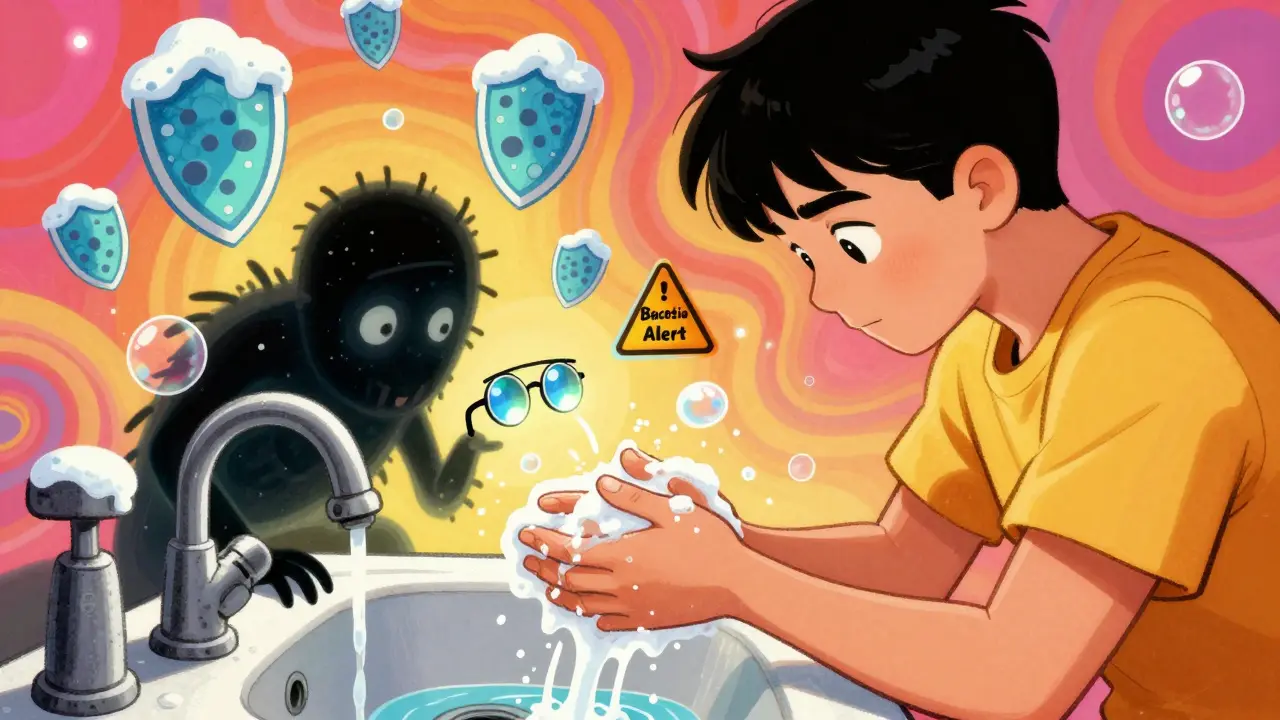
Before you even touch your lenses, wash your hands. Not just a quick rinse. Not a wipe with hand sanitizer. You need soap and water, scrubbing for at least 20 to 30 seconds. That’s the same amount of time it takes to sing "Happy Birthday" twice. The CDC and NIH both say this is the single most important step in preventing eye infections. Why? Because your fingers carry bacteria, dirt, and oils - even if they look clean. Studies show only 53% to 77% of contact lens wearers actually do this right. The rest are putting themselves at risk.
And here’s something most people don’t know: alcohol-based hand sanitizers are a bad idea for lens handling. They can leave residues that damage your lenses or irritate your eyes. Stick to plain soap and water. Dry your hands with a lint-free towel - paper towels work better than cloth ones, which can shed fibers. Never touch your lenses with wet or damp fingers. Water left on your skin can transfer to the lens and carry harmful microbes into your eye.
Lens Solutions: What Works, What Doesn’t
Your lens solution isn’t just a cleaning agent - it’s your disinfectant. And not all solutions are made equal. The American Optometric Association says you should only use the solution your eye care professional recommends. Why? Because some lenses are designed to work with specific chemical formulas. Using the wrong one can break down the lens material or cause painful inflammation.
Saline solution? It’s for rinsing only. It doesn’t disinfect. Rewetting drops? They help with dryness, not cleanliness. Never use either as a substitute for your disinfecting solution. And never, ever top off your solution. That means don’t add fresh solution to leftover solution in your case. Studies show this cuts disinfection effectiveness by 30% to 50%. Always empty the case, rinse it with fresh solution, and refill it completely each time.
Hydrogen peroxide systems are popular because they’re strong disinfectants, but they require extra care. If you use them, wait 4 to 6 hours after disinfection before putting your lenses in. Never rinse lenses with hydrogen peroxide right before insertion - it can burn your cornea. Always use the neutralizing case that comes with the system. Skip the step, and you risk serious eye damage.
Lens Cases: The Hidden Danger Zone
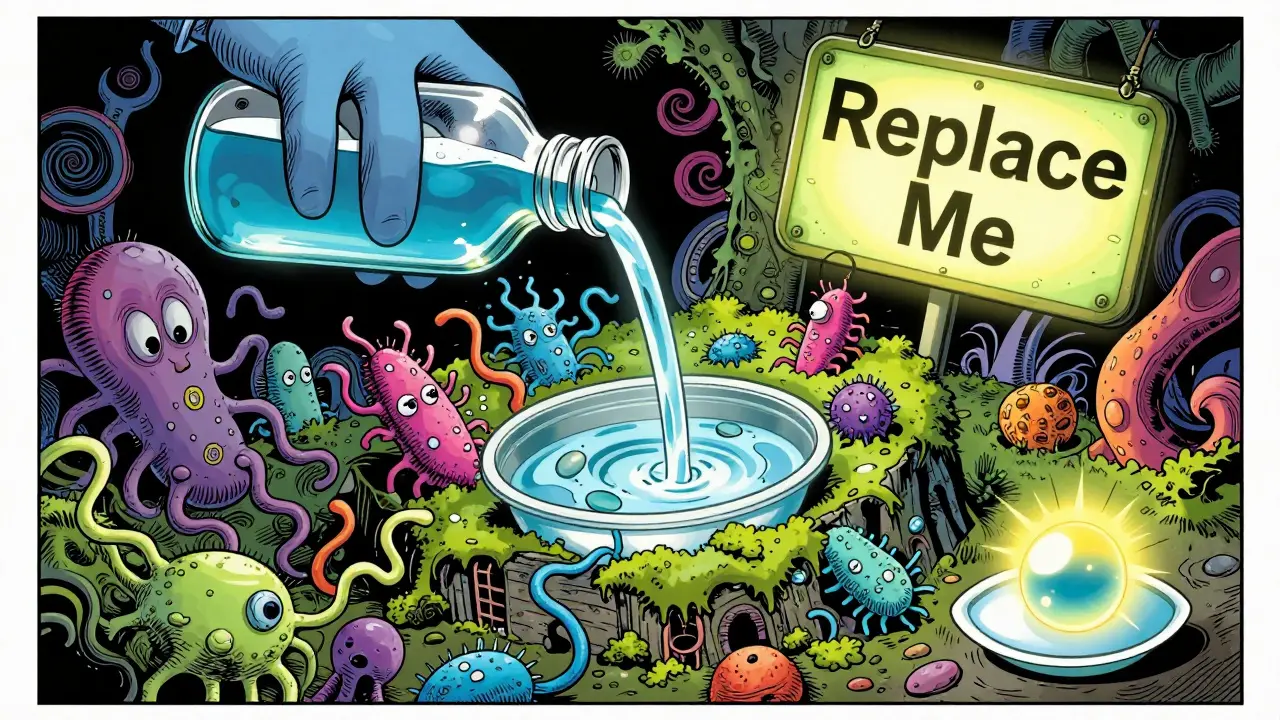
Your lens case is where contamination hides. It’s not just dirty - it’s a breeding ground for bacteria if you treat it like a disposable item. The CDC and AOA agree: replace your case at least every three months. But many people wait six months or longer. That’s asking for trouble.
Here’s how to clean it right: After you take out your lenses, empty the case. Rinse it with fresh solution - never tap water. Tap water contains tiny organisms like Acanthamoeba, which can cause a rare but devastating infection called Acanthamoeba keratitis. Treatment costs an average of $7,500 per case, and in severe cases, it can lead to permanent vision loss. After rinsing, leave the case open and upside down on a clean tissue. Let it air dry. A damp case is a germ factory.
Some users switch to daily disposables to avoid this whole problem. And it’s working. In the U.S., 65% of contact lens wearers now use daily disposables - up from just 45% in 2018. No case. No solution. No cleaning. Just throw them out at the end of the day. If you’re tired of managing cases and solutions, this might be the easiest safety upgrade you can make.
Wear Time: When to Take Them Out
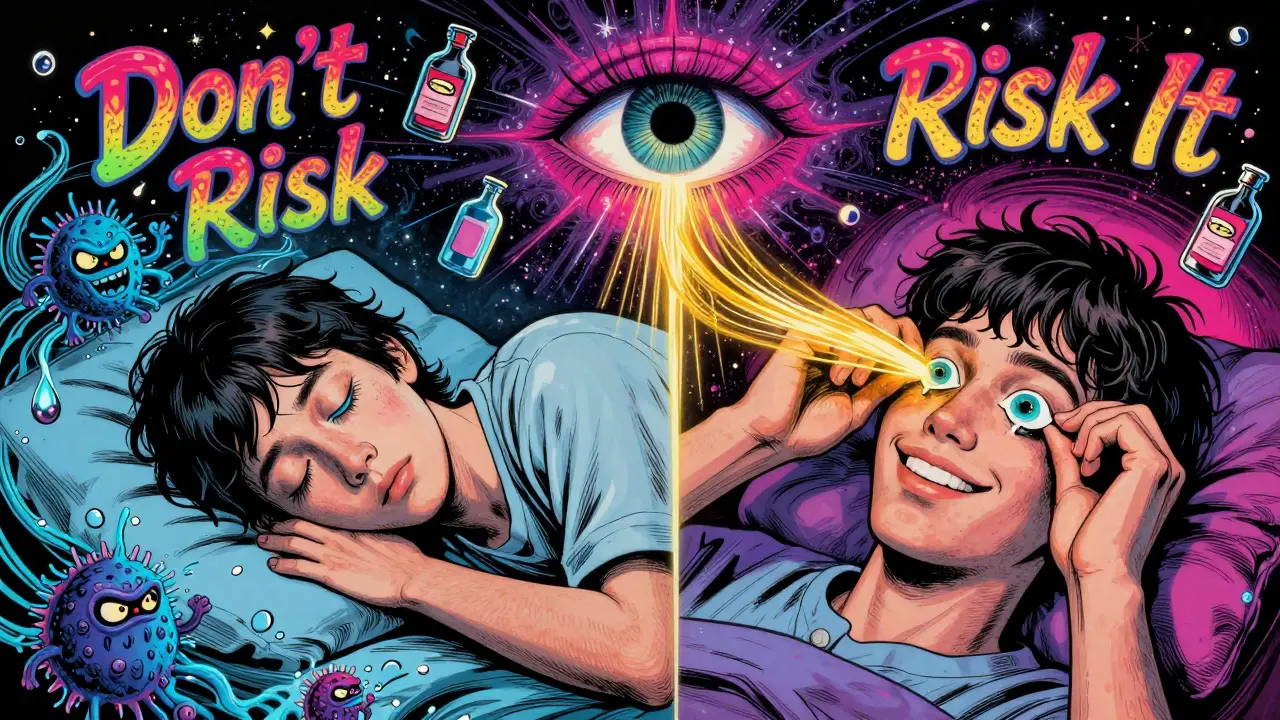
Wearing your lenses too long is one of the most common mistakes. Even if your lenses feel fine, your cornea needs oxygen. Extended wear can starve it, leading to swelling, redness, and increased infection risk. The rule is simple: remove your lenses before you sleep - unless your eye doctor specifically prescribed them for overnight use. Only 10% to 15% of contact lenses are approved for sleeping in. Most aren’t.
And don’t wear them in the shower, while swimming, or even if you’re just near water. Water is a major source of infection. The FDA says swimming with contacts increases your risk of eye infection by 10 to 15 times. Chlorine doesn’t kill all microbes - and tap water carries bacteria and amoebas. If your lenses get wet, take them out, clean them thoroughly with solution, and disinfect them. If you’re unsure, throw them away. Better safe than blind.
Also stick to your replacement schedule. Daily, biweekly, monthly - each type has a lifespan. Wearing a lens past its expiration date doesn’t just make your vision blurry. It increases the buildup of proteins and bacteria on the lens surface. That buildup triggers inflammation and raises your chance of infection.
Who’s at Highest Risk?
It’s not just about how you care for your lenses - it’s also about who you are. The FDA reports that 85% of contact lens complications happen in people aged 18 to 24. Why? Younger users are more likely to sleep in lenses, swim with them, skip handwashing, and reuse solutions. Social habits, convenience, and overconfidence all play a role.
Reddit threads from r/ContactLenses are full of stories. One user woke up with a painful, red eye after sleeping in daily lenses once. “Never doing that again,” they wrote. Another said they’ve had zero infections in two years - because they replaced their case every month and never topped off solution. The difference isn’t luck. It’s consistency.
Even if you’ve worn lenses for years without problems, that doesn’t mean you’re immune. Infections can strike suddenly. Acanthamoeba keratitis doesn’t come with warning signs - it just shows up, often after water exposure, and it’s hard to treat. There’s no vaccine. No quick fix. Prevention is your only defense.
What’s Changing in 2026?
New research is offering hope. In 2023, clinical trials showed a new type of lens material reduced bacterial adhesion by 70% compared to traditional hydrogel lenses. These antimicrobial lenses are still in testing, but they could be available within the next few years. That’s a big step forward.
Meanwhile, awareness campaigns are slowly making headway. Educational efforts targeting teens and young adults are improving compliance by 5% to 7% each year. That’s slow - but it’s progress. The CDC still expects infection rates to stay flat through 2025 unless more people follow the basics.
For now, the tools you need are simple: soap, water, fresh solution, and discipline. You don’t need to be perfect. But you do need to be consistent. Every time you wash your hands. Every time you refill your case. Every time you take your lenses out before bed.
Your vision isn’t something you can afford to gamble with. One moment of laziness can cost you more than just a few days of discomfort. It can cost you your sight.
Can I sleep in my contact lenses?
Only if your eye care professional specifically prescribed lenses for extended wear. Most contact lenses - even if they’re labeled "daily wear" - are not approved for sleeping. Sleeping in lenses not designed for it increases your risk of corneal ulcers and infections by up to 5 times. If you’re unsure, check the packaging or ask your optometrist.
Can I use water to clean my lenses or case?
Never. Tap water, bottled water, and even distilled water contain microorganisms like Acanthamoeba, which can cause a rare but severe eye infection called Acanthamoeba keratitis. This infection is hard to treat, often requires months of medication, and can lead to permanent vision loss. Always rinse your lenses and case with fresh contact lens solution - never water.
Is it safe to reuse contact lens solution?
No. Reusing or topping off solution reduces its disinfecting power by 30% to 50%. The solution becomes contaminated with debris and bacteria from your lenses and case. Always use fresh solution every time you store your lenses. Empty the case completely, rinse it with solution, and refill it. Don’t save money by stretching your solution - it’s not worth the risk to your eyes.
How often should I replace my lens case?
Replace your lens case at least every three months. Some eye care professionals recommend replacing it monthly, especially if you’ve had an eye infection before. A dirty case is one of the top sources of contamination. Even if it looks clean, biofilm - a slimy layer of bacteria - builds up over time and can’t be washed away with water or solution alone.
Are daily disposable lenses safer than monthly ones?
Yes, by a wide margin. Daily disposables eliminate the need for cleaning, storing, and replacing cases. Since you throw them out every day, there’s no buildup of proteins, bacteria, or solution residue. Studies show daily wearers have significantly lower rates of eye infections compared to those using monthly or biweekly lenses. If you struggle with hygiene routines, switching to daily disposables is the easiest way to improve safety.
What should I do if my eyes feel irritated while wearing lenses?
Take your lenses out immediately. Don’t try to push through the discomfort. Rinse your eyes with sterile saline if you have it. Avoid rubbing your eyes. If irritation continues for more than a few hours, or if you notice redness, pain, blurred vision, or sensitivity to light, see your eye care professional right away. These could be signs of an infection. Early treatment makes a big difference.
Can I wear contacts while swimming or showering?
It’s not recommended. Water - whether from pools, showers, lakes, or oceans - carries harmful microbes that can get trapped under your lenses. The FDA says swimming with contacts increases infection risk by 10 to 15 times. If you must wear them, use waterproof goggles. After water exposure, remove your lenses, clean them thoroughly with solution, and disinfect them. If you’re unsure, discard them.
Andy Cortez 7.02.2026
lol so you're telling me I can't just spit on my lenses and shove 'em in? I've been doing that for 5 years and my eyes are fine. Also, I reuse my solution because why buy more when the bottle still has 2ml left? My dog licks my case sometimes but he's a good boy. 🐶
Joseph Charles Colin 7.02.2026
From a clinical perspective, the biofilm accumulation in lens cases is primarily dominated by Pseudomonas aeruginosa and Serratia marcescens, which form quorum-sensing-mediated matrices resistant to standard disinfectants. The CDC's recommendation of quarterly case replacement is conservative; studies using scanning electron microscopy show significant biofilm formation as early as 30 days post-initial use. Hydrogen peroxide systems, when properly neutralized, reduce microbial load by >99.9% - but improper neutralization (i.e., <4 hours) leads to cytotoxic H2O2 residuals, which induce corneal epithelial apoptosis. Daily disposables eliminate reservoir contamination entirely, making them the gold standard for immunocompromised or recurrent keratitis patients.
Randy Harkins 7.02.2026
I really appreciate how clear and practical this is. 🙌 I used to be the person who’d skip handwashing if I was in a rush - until I got a nasty infection last year. Took 3 months of antibiotics and a scary trip to the ophthalmologist. Now I sing ‘Happy Birthday’ twice every single time. No exceptions. It’s not about being perfect - it’s about showing up for your eyes. You’ve got this.
Tori Thenazi 7.02.2026
Wait… so you’re saying tap water is dangerous? But what about the fact that the government is secretly adding fluoride to our water to control our vision? I read this on a forum where a guy claimed he saw a 2022 FDA memo… and then there was that guy in Nebraska who lost his sight after showering… and his case was from Costco… and Costco is owned by Amazon… which is owned by… oh no… I think my contacts are spying on me. I’m taking them out. Right now. And I’m burning the case. 🔥
Frank Baumann 7.02.2026
I’ve been wearing contacts for 17 years and I’ve never once washed my hands before putting them in. I just wipe them on my jeans. And I sleep in them. Every night. I’ve had red eyes a few times, sure, but I just put in some drops and it goes away. I’ve read the CDC guidelines. I’ve read the AOA pamphlets. I’ve read the studies. And I’ve concluded that science is just a social construct designed by big pharma to sell more solution. My eyes are tougher than your algorithm. I’ve got a 100% success rate. 17 years. No infections. Just redness. Which is normal. You’re just scared of what you don’t understand.
Alex Ogle 7.02.2026
I don’t know. I get it. Handwashing is important. Cases should be replaced. But I’ve been lazy for so long, I don’t even remember the last time I cleaned my case. I just rinse it with water when it looks dirty. I’ve never had an infection. Maybe I’m just lucky? Or maybe the whole risk thing is exaggerated? I mean, people die from slipping in the shower too. Should we stop showering? I don’t know. I just… I guess I’ll try to do better. But I’m not gonna make a big deal out of it.
Brandon Osborne 7.02.2026
You people are pathetic. You’re scared of a few bacteria. You think you’re so safe because you wash your hands? HA. You still touch your face. You still use your phone. You still breathe air that has mold spores in it. You’re not protecting your eyes - you’re protecting your ego. And you’re wasting money on daily disposables because you’re too lazy to clean a case. I’ve worn the same pair for 11 months. They’re still clear. My vision is fine. Your fear is a product. Stop buying it.
Lyle Whyatt 7.02.2026
I’ve been using daily disposables since 2021 after reading this exact guide. I used to be the guy who topped off solution and slept in lenses. Then I had a red eye that lasted 10 days. Turned out it was a mild keratitis. Scared the hell out of me. Now I throw them out every night. No case. No solution. No stress. I know it sounds expensive, but honestly? It’s cheaper than a corneal transplant. And I sleep better. My wife says I’m less grouchy. Maybe it’s the contacts. Maybe it’s the peace of mind. Either way, I’m not going back.
Random Guy 7.02.2026
so like… i just put my contacts in my mouth before inserting? i heard that saliva is sterile? is that true? or am i just a genius? 🤔
Chelsea Cook 7.02.2026
I used to be that person who’d wear lenses for 16 hours straight, sleep in them, and clean the case with tap water. Then I got a 24-hour emergency visit to the eye doctor because my cornea looked like a crater. I cried. I apologized to my eyes. I bought a new case. I started washing my hands. I switched to dailies. And you know what? I feel like a new person. You don’t need to be perfect. Just try. One day. One step. One handwash. You’re worth it.
John Sonnenberg 7.02.2026
The CDC says replace your case every three months. The AOA says monthly. The FDA says don’t sleep in lenses. The manufacturers say their solution works for 30 days. The optometrist says listen to your body. The Reddit thread says trust no one. The guy in the comments says spit on them. The guy in the study says hydrogen peroxide is best. The guy who lost his vision says water is evil. So which one do I believe? I don’t know. I just put them in. And hope.
Jessica Klaar 7.02.2026
As someone who grew up in a country where clean water isn’t guaranteed, I never thought I’d be so careful about water near my eyes. But after seeing how easily Acanthamoeba spreads - even in bottled water - I changed everything. I don’t just use solution. I store my case in a dry, sunlit spot. I wash my hands with soap I brought from home. I don’t touch my lenses unless I’ve washed and dried them thoroughly. It’s not paranoia. It’s respect. Your eyes don’t ask for much. Just a little care. Give it to them.