
Going out to eat with diabetes doesn’t mean you have to skip the fun. But it does mean you need to make smarter choices - not because you can’t enjoy food, but because you know exactly what your body needs to stay steady. The truth is, most restaurant meals are loaded with hidden carbs, oversized portions, and sugary sauces that can spike your blood sugar faster than you realize. You don’t need to eat bland food or avoid social gatherings. You just need a simple plan.
Use the Plate Method - No Math Required
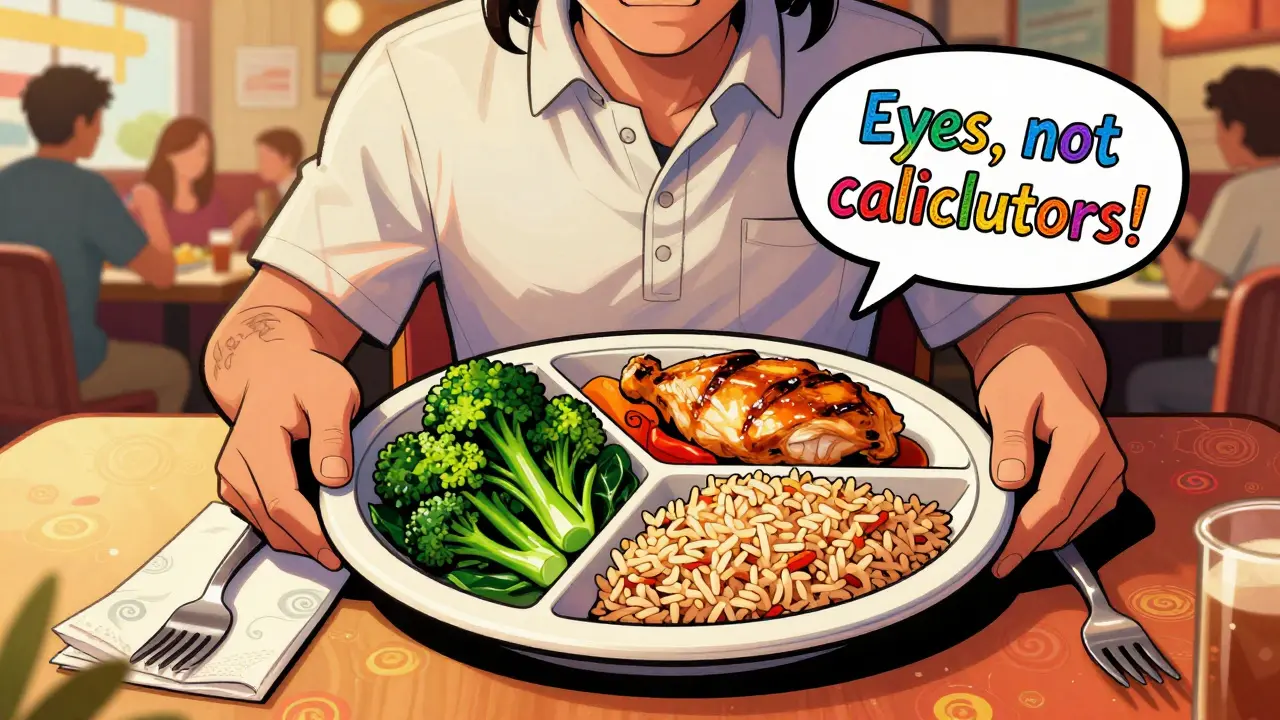
The easiest way to control your meal at any restaurant is the Diabetes Plate Method. It’s not a diet. It’s a visual tool. Grab a regular nine-inch plate. Fill half with non-starchy vegetables - think broccoli, spinach, peppers, mushrooms, or zucchini. These are low in carbs and high in fiber, so they fill you up without the spike. Then, put one-quarter of the plate with lean protein: grilled chicken, fish, tofu, or lean beef. Skip the fried or breaded versions. The last quarter? That’s your carb zone. Stick to 15-30 grams of carbs here. That’s about half a cup of rice, one small potato, or a small slice of whole-grain bread.
This method works because it doesn’t require counting grams or using apps. You’re using your eyes, not a calculator. It’s been tested in real restaurants across the U.S. and Australia, and people who use it regularly see better blood sugar control within weeks. Even if the server brings you a giant plate of pasta, you can still eat your way around it. Take half the pasta off to the side. Fill the rest with vegetables from the bread basket. You’re still enjoying the meal - just on your terms.
Watch Out for the Hidden Carbs
Sometimes the biggest carb traps aren’t obvious. That salad? The dressing on top could have 10-15 grams of carbs in just two tablespoons. The grilled chicken? It might be basted in a honey-glaze or sugary marinade. The stir-fry? The sauce is often loaded with cornstarch and sugar. These aren’t mistakes - they’re standard restaurant practices.
Here’s how to spot them:
- Words like crispy, breaded, creamed, au gratin, or glazed mean extra carbs - often 10-15 grams per serving.
- Asian dishes like sweet and sour chicken, teriyaki, or General Tso’s can have 40-60 grams of carbs in one plate - mostly from sugar in the sauce.
- Gravies and sauces served over mashed potatoes or rice? Ask for them on the side. Pour only what you need. A little goes a long way.
- "Healthy" options like chicken parmesan or veggie pasta bowls? They often have hidden carbs in the breading, sauce, or pasta. Always ask how it’s prepared.
Don’t be shy about asking. Servers are used to questions. Most kitchens have nutrition info on file. If they don’t, just say: "Can you tell me what’s in the sauce?" It’s not weird. It’s smart.
Portion Control Is Your Best Friend
Restaurant portions today are huge - sometimes two or three times what you’d eat at home. A typical steak dinner might come with a 12-ounce portion of meat and a full cup of mashed potatoes. That’s 80-100 grams of carbs right there. No wonder your blood sugar spikes.
Here’s how to fix it:
- Ask for a half portion of starchy sides. Most places will do it - especially if you say you’re watching your carbs.
- Share your main dish. Order one entree between two people. You get to enjoy the meal, and you cut your carb intake in half.
- Pack up half your meal before you start eating. That way, you’re not tempted to finish everything just because it’s there.
- Order an appetizer as your main. Grilled shrimp, a small salad with protein, or a bowl of broth-based soup can be a perfect low-carb meal.
One study from the Journal of Nutrition Education and Behavior found that restaurant entrées average 1,200 calories - more than double what’s recommended for a single meal if you have diabetes. You’re not being picky. You’re being strategic.

Plan Ahead - It Makes All the Difference
The most successful people with diabetes who eat out regularly don’t wing it. They plan. Before you even leave the house, check the restaurant’s website. Look at the menu. Find your options. Know what to ask for. You’ll feel more in control and less tempted to grab the first thing you see.
Research shows that people who review menus online before arriving cut their impulsive choices by 42%. That’s huge. You’re not just eating. You’re making a decision based on your health goals.
Also, don’t show up starving. If you’re ravenous, you’re more likely to grab the bread basket, the fries, or the dessert. Eat a small snack before you go - a handful of nuts, a hard-boiled egg, or a piece of cheese. That takes the edge off. You’ll be calm, clear-headed, and ready to make good choices.
Know Your Tools - Apps, Meters, and Backup
Technology helps. The American Diabetes Association launched a free app called Restaurant Ready in 2023. It has verified carb counts for over 15,000 menu items across 500+ chains. It’s accurate, updated regularly, and works offline. Download it. Use it.
Also, bring your glucose meter. And don’t forget your fast-acting glucose tablets. Why? Because restaurants can be slow. If your insulin is peaking and your food takes 20 minutes to arrive, you could dip too low. Carry 15 grams of fast carbs - like glucose tabs or juice - just in case. One in five people with diabetes has had a low-blood-sugar episode while dining out. You don’t need to be one of them.

What About Buffets and Fast Food?
Buffets are the hardest. Unlimited access means unlimited temptation. The research is clear: people with diabetes have blood sugar spikes 65 mg/dL higher after buffet meals than after a standard restaurant meal. If you must go, stick to the salad bar, grilled proteins, and steamed veggies. Skip the pasta station, the fried chicken, and the dessert table. Fill your plate once. Walk away. Don’t go back.
Fast food? It’s not ideal, but it’s doable. Skip the burger bun. Order a grilled chicken sandwich without the bun. Add a side salad (with dressing on the side). Choose water or unsweetened tea. A Big Mac has 46 grams of carbs. A grilled chicken salad with no croutons? Around 18 grams. That’s a 60% drop. You can still eat fast - just smarter.
It’s Not About Perfection - It’s About Progress
You’re not going to get it right every time. Some meals will spike your numbers. That’s okay. What matters is that you’re trying. People who stick with these habits for six months often see their HbA1c drop by 0.8% to 1.2%. That’s the difference between prediabetes and normal, or between poorly controlled and well-controlled diabetes.
And you’re not alone. Over 74% of people with diabetes say eating out is their biggest challenge. You’re not weird for asking questions. You’re not being difficult for asking for half portions. You’re taking charge of your health.
Start small. Pick one restaurant this week. Use the plate method. Ask for sauce on the side. Pack half your meal. Test your blood sugar two hours after eating. See what happens. You might be surprised.
Can I still eat pasta when I have diabetes?
Yes, but portion size matters. One cup of cooked pasta has about 45 grams of carbs - that’s your entire meal’s carb allowance. Stick to half a cup, pair it with a large portion of vegetables and lean protein, and choose whole-grain or legume-based pasta when possible. Avoid creamy sauces - they add hidden carbs and fat. Tomato-based sauces with herbs are better.
Do I need to count carbs every time I eat out?
Not necessarily. The Diabetes Plate Method works without counting. But if you use insulin, especially rapid-acting, carb counting gives you more precision. A good middle ground? Estimate. Use the plate method as your guide, then check your blood sugar after meals. Over time, you’ll learn what portion sizes work for you.
Are there restaurant chains that are better for people with diabetes?
Yes. Chains like Chipotle, Panera Bread, and Sweetgreen offer customizable meals with clear carb counts. Many now use the ADA’s "Dine Smart" symbol - a green circle that means the meal has 45 grams of carbs or less. Apps like Restaurant Ready can tell you which ones are safest. Avoid chains that rely on fried foods, heavy sauces, or large portion sizes - like most traditional steakhouses or all-you-can-eat buffets.
What if my friends or family don’t understand my choices?
It’s normal to feel self-conscious. But most people are supportive once they understand. Try saying: "I’m working on keeping my blood sugar steady, so I’m trying to watch my carbs and portions. I’d love your help - maybe we can share an appetizer?" Often, others will join you. You’re not saying no to fun - you’re changing how you enjoy it.
Is it okay to have dessert occasionally?
Yes - but plan for it. Skip the bread and starchy sides that meal. Choose a small dessert - like one scoop of sorbet or a few dark chocolate squares. Test your blood sugar before and after. If you’re on insulin, you may need to adjust your dose. If you’re not, just be aware that dessert will raise your numbers. It’s not forbidden. It’s just a choice you make with awareness.