
By the time you pick up a prescription at the pharmacy, there’s a better than 90% chance it’s a generic drug. You might not even notice the difference - same pill, same dose, same results. But behind that simple swap is a century-long battle over patents, profits, safety, and access. The story of generic drugs in the U.S. isn’t just about cost savings. It’s about how the system was rewritten to put patients first - and how it’s still being fought over today.
The First Rules for Medicine
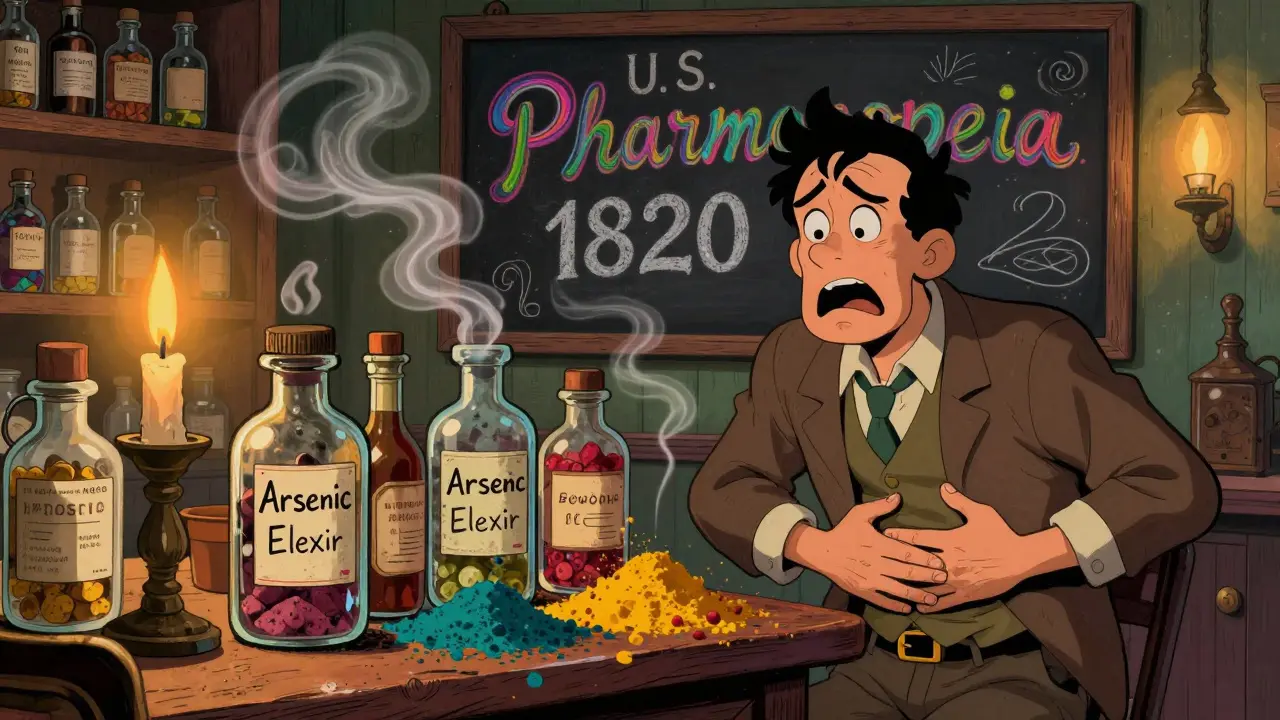
Long before there were FDA-approved pills on every shelf, there was chaos. In the 1800s, anyone could sell medicine. Labels lied. Ingredients varied. Some products contained arsenic, mercury, or alcohol - and nobody checked. In 1820, eleven doctors met in Washington, D.C., and created the U.S. Pharmacopeia. It was the first official list of what drugs should actually contain. This wasn’t law yet, but it was the first step toward standardization. By 1888, the American Pharmaceutical Association added the National Formulary, another attempt to stop counterfeit drugs from killing people.When Poison Killed 107 Children
The real turning point came in 1937. A pharmaceutical company marketed a new antibiotic called Elixir Sulfanilamide. To make it liquid, they used diethylene glycol - a toxic chemical found in antifreeze. No safety tests. No warnings. More than 100 people, mostly children, died. Public outrage forced Congress to act. In 1938, President Roosevelt signed the Federal Food, Drug, and Cosmetic Act. For the first time, drugmakers had to prove their products were safe before selling them. The FDA, which had been around since 1906, finally got real power.Prescriptions Only - and the Birth of the Modern System
In 1951, the Durham-Humphrey Amendment split drugs into two categories: over-the-counter and prescription-only. That change made sense. Some medicines were too risky to be sold freely. But it also locked patients into doctor visits for even simple treatments. Then, in 1962, the Kefauver-Harris Drug Amendments changed everything. After the thalidomide tragedy in Europe - where a drug caused severe birth defects - Congress demanded proof not just of safety, but of effectiveness. Every drug on the market since 1938 had to prove it worked. That meant brand-name companies spent millions on clinical trials. And it set the stage for generics to enter the game.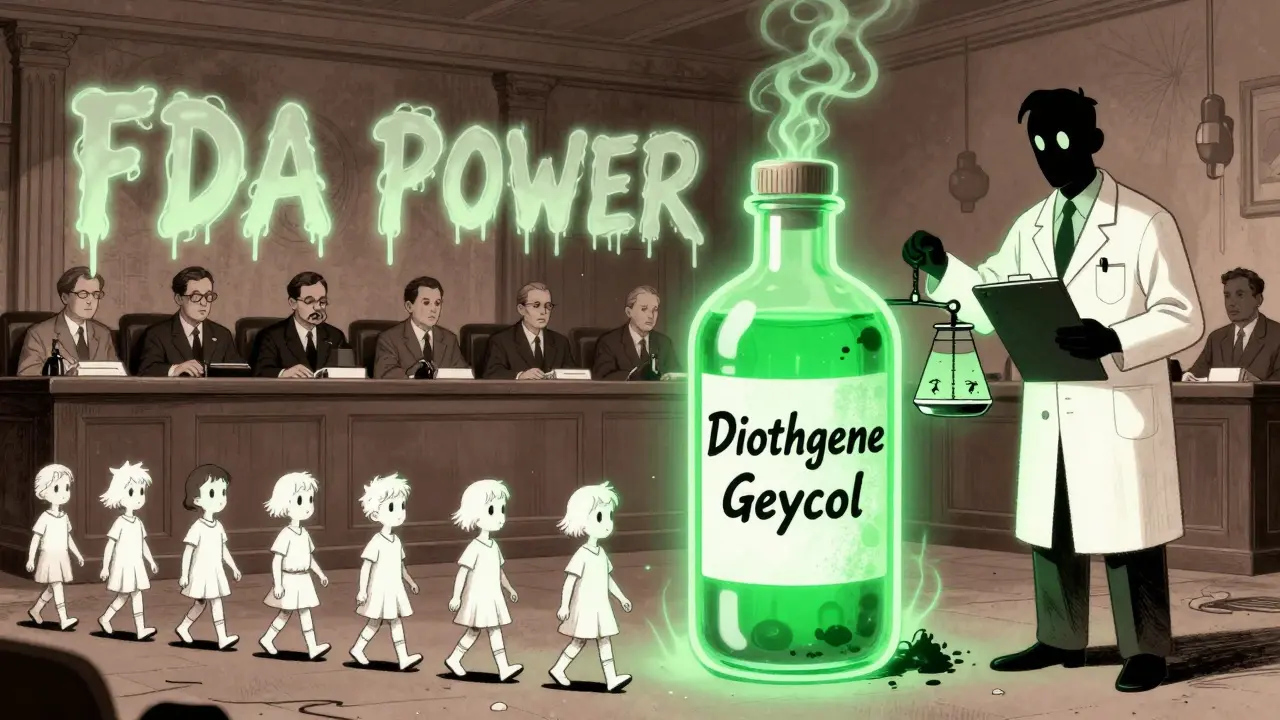
The Hatch-Waxman Act: The Game Changer
Before 1984, only 19% of prescriptions filled in the U.S. were generics. Why? Because the process to get one approved was a mess. Generic makers had to repeat the same expensive clinical trials as the original drugmaker - even though they were using the exact same chemical. That made generics too costly to produce. In 1984, Congress passed the Drug Price Competition and Patent Term Restoration Act, better known as the Hatch-Waxman Act. It created the Abbreviated New Drug Application (ANDA) process. Generic companies no longer had to prove safety and effectiveness again. They just had to show their drug worked the same way in the body - bioequivalence. That cut approval time and costs dramatically.The law also gave brand-name companies a 30-month patent extension if they sued a generic maker. That loophole became a tool. Instead of waiting for patents to expire, big pharma companies started filing lawsuits - often with weak claims - just to delay competition. That’s still happening today.
Generics Take Over
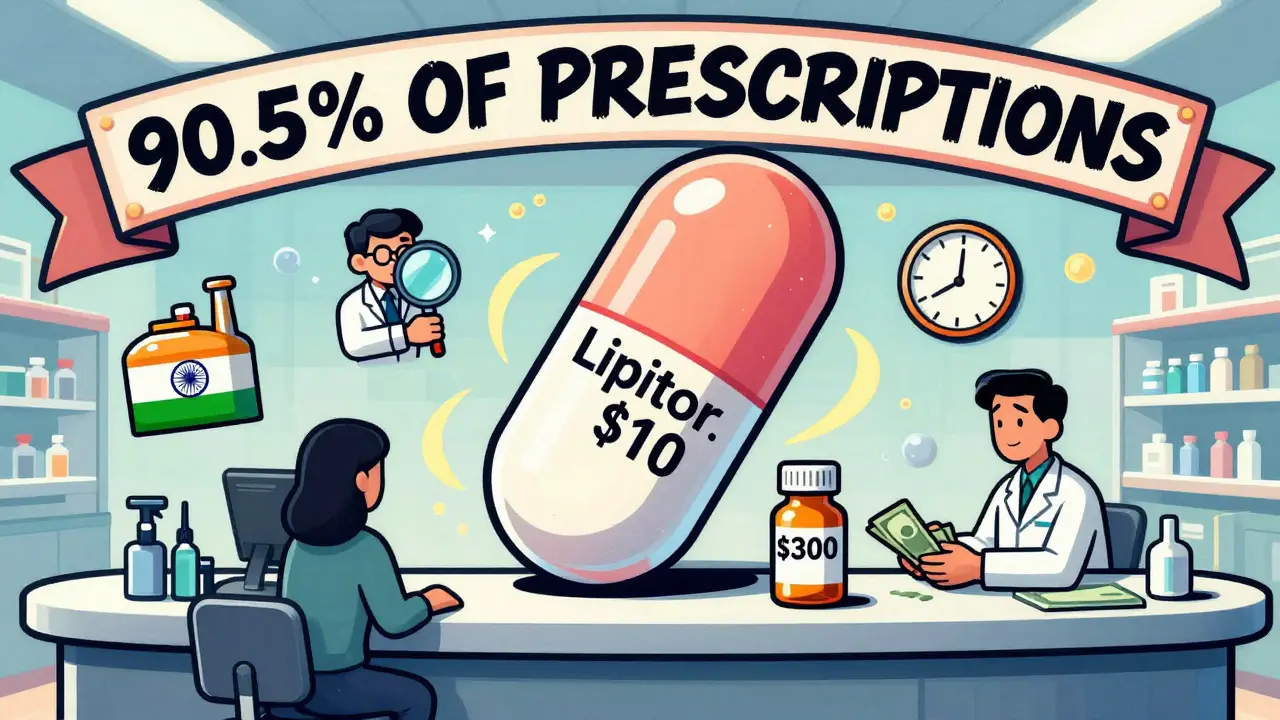
The results were immediate. By 1990, generic prescriptions hit 30%. By 2000, they were at 50%. Today, they make up over 90% of all prescriptions filled. In 2022, the FDA reported generics accounted for 90.5% of prescriptions - but only 23.4% of total drug spending. That’s the power of competition. A 30-day supply of brand-name Lipitor once cost $300. The generic version? Around $10. The Association for Accessible Medicines says generics saved the U.S. healthcare system $373 billion in 2021 alone. Over the last decade, that number crossed $3.7 trillion.The Congressional Budget Office found generics cut prescription costs by 80% to 85%. That’s not a small saving. That’s life-changing for people on fixed incomes, seniors, and families without good insurance.
Where the System Breaks Down
But here’s the problem: not all generics are created equal - and not all are affordable. Between 2013 and 2017, prices for 15% of generic drugs jumped more than 100%. Some drugs, like doxycycline or insulin, went from $20 to $600 in a few years. Why? When only one or two companies make a drug, there’s no competition. And if those companies decide to raise prices, patients have no choice.Drug shortages became another crisis. Between 2018 and 2022, the FDA recorded 1,234 shortages. Two-thirds involved generic drugs. Why? Because many generic manufacturers operate on razor-thin margins. If a factory has a quality issue - or if raw materials from India or China get delayed - production stops. And there’s no backup.
Eighty percent of active pharmaceutical ingredients (APIs) - the actual medicine inside the pill - are made overseas. The FDA inspects over 13,000 facilities worldwide, but many are in countries with weaker oversight. That’s why quality control remains a constant concern.
Fixing the Gaps
In 2012, the FDA launched the Generic Drug User Fee Amendments (GDUFA). For the first time, generic companies paid fees to fund faster reviews. Before GDUFA, it took 30 months to approve an ANDA. Now, it’s down to 10 months. Approval rates jumped from 45% to 95%. That’s progress.In 2019, Congress passed the CREATES Act to stop brand-name companies from blocking generic access. Some brand-name makers would refuse to sell samples to generic companies - making it impossible to test bioequivalence. The CREATES Act lets the FDA step in. As of late 2022, the agency had taken 27 enforcement actions under this law.
What’s Next? Biosimilars and Beyond
The next frontier isn’t small-molecule generics anymore. It’s biosimilars. These are copies of complex biologic drugs - like Humira or Enbrel - that are made from living cells. They’re harder to copy than aspirin. But they cost tens of thousands of dollars a year. The first biosimilar was approved in 2015. Today, only a handful are on the market. But experts predict biosimilars will be the next big wave of savings. By 2027, they could save the U.S. system over $100 billion annually.Generics didn’t just lower prices. They changed how we think about medicine. They proved that competition works. That patients don’t need fancy branding to get the same results. That saving money doesn’t mean saving lives at risk.
But the system isn’t finished. It still needs better oversight. Fairer pricing. Stronger supply chains. And more pressure on companies that game the rules. Because in the end, a generic pill isn’t just cheaper. It’s a promise - that healthcare shouldn’t be a luxury.
Are generic drugs as safe and effective as brand-name drugs?
Yes. The FDA requires generic drugs to have the same active ingredient, strength, dosage form, and route of administration as the brand-name version. They must also meet the same strict standards for purity, quality, and performance. Bioequivalence studies prove they work the same way in the body. Millions of people use generics every day without any difference in results.
Why are some generic drugs so expensive?
When only one or two companies make a generic drug, there’s little competition. That allows them to raise prices. This often happens with older drugs that have low profit margins - like antibiotics or blood pressure meds. If a manufacturer stops making it, or if there’s a shortage, prices can spike. The FDA tracks these cases and tries to encourage new manufacturers to enter the market.
Do generic drugs come from the same factories as brand-name drugs?
Yes. Many brand-name and generic drugs are made in the same factories. The FDA inspects all facilities equally, whether they produce brand-name or generic products. In fact, about half of all generic drugs are made by companies that also produce brand-name versions. The difference isn’t where they’re made - it’s who owns the brand and how much they charge for it.
Why do generic pills look different from brand-name pills?
By law, generic drugs can’t look exactly like the brand-name version - that would violate trademark rules. So they might be a different color, shape, or size. But the active ingredient is identical. The inactive ingredients - like fillers or dyes - can differ, but they don’t affect how the drug works. If you’re concerned about allergies or sensitivities, talk to your pharmacist.
How does the FDA ensure generic drugs are safe?
The FDA requires generic manufacturers to prove their products are bioequivalent - meaning they release the same amount of medicine into the bloodstream at the same rate as the brand-name drug. They also inspect manufacturing sites regularly, review quality control data, and monitor adverse events. Any safety issue with a generic drug is treated the same as one with a brand-name drug.
Can I trust generics if they’re made in other countries?
Yes. The FDA inspects foreign manufacturing facilities just like U.S. ones. About 80% of active ingredients come from India and China, but those facilities must meet the same standards. The FDA has offices in those countries to conduct inspections. If a facility fails an inspection, the FDA can block imports. No country is exempt from quality rules.
astrid cook 26.01.2026
I swear if I see one more person act like generics are some kind of miracle cure while ignoring the fact that 80% of the active ingredients come from countries with zero oversight, I'm gonna scream. This isn't progress, it's a gamble with people's lives.
Kirstin Santiago 26.01.2026
It's wild how much of this history gets erased. People think generics are just 'cheap meds' but they don't realize the FDA's entire power structure was built on tragedies like Elixir Sulfanilamide. That law didn't come from corporate goodwill - it came from dead children.
Candice Hartley 26.01.2026
I take generics every day and have never had an issue 😊
Kathy McDaniel 26.01.2026
so like... i didnt even know generics were so old? and the part about the 107 kids? that just broke my heart. i hope things get better
Paul Taylor 26.01.2026
The Hatch-Waxman Act was brilliant in theory but in practice it created a system where brand-name companies just sit on patents and sue every generic that shows up just to delay competition for another year or two. It's not about innovation anymore it's about legal harassment and the FDA is too understaffed to keep up. And don't even get me started on the supply chain being entirely dependent on India and China where inspections are basically a joke
Desaundrea Morton-Pusey 26.01.2026
This whole thing is just a socialist plot to make Americans weak. Why should we let foreigners make our medicine? This is why our country is falling apart. The FDA is a puppet of Big Pharma and the Chinese government.
Murphy Game 26.01.2026
You ever wonder why every single generic drug shortage happens right after a new administration takes office? Coincidence? Or is it a controlled demolition to make people desperate for expensive brand-name drugs? The FDA has been compromised since 2009. I've seen the documents.
John O'Brien 26.01.2026
Bro the fact that a 30-day supply of Lipitor went from $300 to $10 is insane. My grandma takes that shit and she's saving $100 a month. That's groceries for a week. People who hate generics are either rich or don't have a clue what real life looks like.
Kegan Powell 26.01.2026
Generics aren't just about money they're about dignity. The idea that you have to be wealthy to be healthy is the real sickness. When you can afford your meds without choosing between rent and refills that's not a policy win that's a moral one. We're not just talking about pills here we're talking about whether people get to live
April Williams 26.01.2026
I've been on the same generic blood pressure med for 8 years and my doctor switched me to a different manufacturer last year. Within two weeks I had panic attacks, dizziness, and my BP spiked. This isn't placebo. This is dangerous. The FDA says they're bioequivalent but I know my body and mine is telling me they're not the same. Stop gaslighting people who've had bad experiences.
Harry Henderson 26.01.2026
We need to nationalize pharmaceutical manufacturing. Stop outsourcing. Stop letting billionaires profit off sick people. If you want to save lives start by taking the profit out of medicine. Period.
suhail ahmed 26.01.2026
In India we call generics 'life-savers' - not because they're cheap but because they're the only thing keeping millions alive. I remember my uncle in Delhi getting his heart meds for $2 a month while his cousin in Chicago paid $200 for the same pill. The real scandal isn't the price gap - it's that we accept it as normal.
Andrew Clausen 26.01.2026
The claim that generics save 80-85% on prescription costs is misleading. It's based on volume, not value. When a drug has only one manufacturer, the price skyrockets and the average savings evaporate. Also, bioequivalence studies are often conducted on healthy young adults, not elderly patients with multiple comorbidities. The data is cherry-picked.
Anjula Jyala 26.01.2026
The GDUFA program is a classic regulatory capture. Generic manufacturers pay fees to the FDA to expedite reviews which creates a conflict of interest. The agency is incentivized to approve faster not safer. Also the term bioequivalence is meaningless without pharmacokinetic data across diverse populations. This is regulatory theater disguised as science
Paul Taylor 26.01.2026
You're right about the bioequivalence studies being done on young adults. I've seen the FDA's own internal memos - they admit the elderly and those with liver/kidney issues aren't properly represented. That's not oversight. That's negligence. And now they're pushing biosimilars without even fixing the core problems with small-molecule generics.