
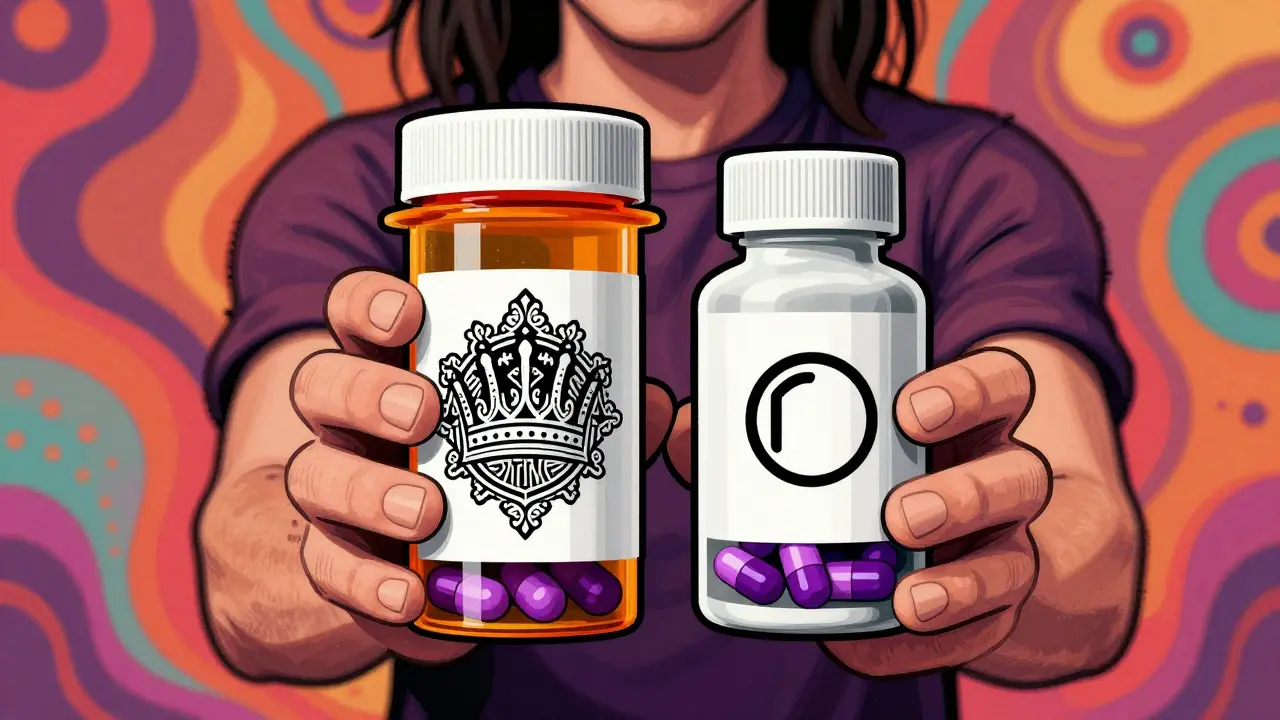
You've just picked up a prescription, but the pills look different than usual. Is this a problem? Or maybe you're shopping for a cheaper option and wonder if the generic is legit. This is where authorized generics come in-they're the bridge between brand-name drugs and traditional generics. But how do you tell them apart? Let's break it down simply.
Authorized Generics are a specific type of generic drug produced by the original brand manufacturer but sold under a different label. They contain identical active and inactive ingredients to the brand-name product, differing only in packaging and labeling. This distinction is defined by the Federal Food, Drug, and Cosmetic Act. Unlike regular generics, authorized generics aren't made by separate companies-they're produced by the brand company itself, just with different packaging to avoid trademark issues.
How packaging and labeling reveal the truth
When you hold a prescription bottle, look for these clues. The brand-name drug will have the company's logo and trademarked name (like "Pfizer" for Lyrica). An authorized generic will remove that brand name entirely. Instead, you'll see a distributor name like "Greenstone LLC" or "Dr. Reddy's Laboratories". This happens because U.S. trademark laws don't allow generic drugs to copy the brand's exact appearance. But here's the key: the pills themselves will look nearly identical. For example, Pfizer's authorized generic for Lyrica has the same purple capsule shape as the brand version, but the label says "Distributed by Greenstone LLC" instead of "Pfizer".
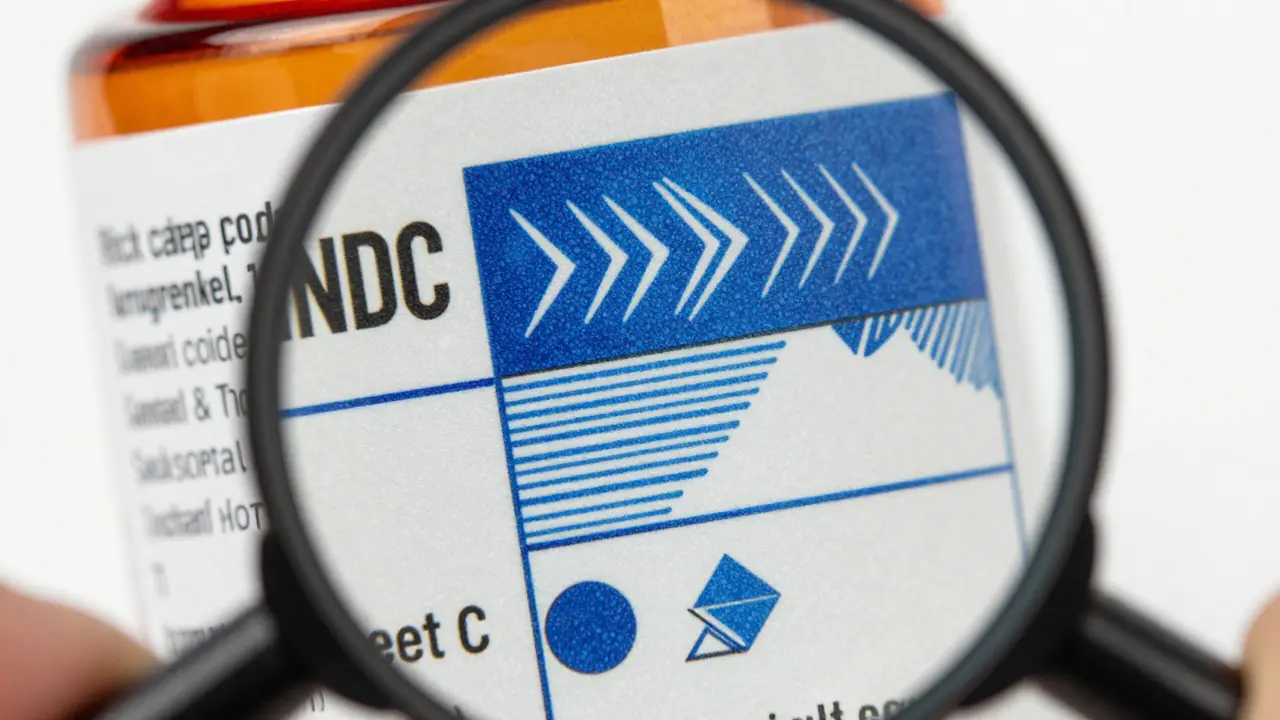
The National Drug Code (NDC) is your best tool for verification. Every medication has a unique 11-digit NDC number. For authorized generics, the first part (labeler code) changes, but the product and package codes stay the same as the brand. Take Protonix (pantoprazole): the brand version has NDC 00071-0551-01. Its authorized generic from Dr. Reddy's uses NDC 55111-0551-01. Notice how only the first segment differs? That's the giveaway.
Comparison of Authorized Generics vs Traditional Generics
| Feature | Authorized Generics | Traditional Generics |
|---|---|---|
| Active Ingredients | Identical to brand-name product | Same active ingredients, but may have different inactive ingredients |
| Packaging | Manufacturer name replaced (e.g., "Greenstone LLC"), no brand logo | Different packaging design, may resemble brand but not identical |
| NDC Number | Labeler code differs; product/package codes match brand | All NDC segments different from brand |
| Manufacturer | Made in same facility as brand, labeled as distributor | Different manufacturing facility |
| FDA Listing | Only in FDA's Authorized Generic Drug List | Listed in FDA Orange Book |
Your step-by-step guide to identifying them
Here's how to verify an authorized generic in three easy steps:
- Check the NDC number on the packaging. Compare it to the FDA's Quarterly Authorized Generic List. If the product and package codes match the brand but the labeler code is different, it's authorized.
- Look for "Distributed by" instead of "Manufactured by". For example, you'll see "Distributed by Greenstone LLC" on Lyrica's authorized generic, not "Manufactured by Pfizer".
- Verify the manufacturer's location. Authorized generics are made in the same factory as the brand. If the label shows the same facility address as the brand (like Pfizer's New York factory for Lyrica), it's a strong sign.
Pharmacists can access real-time verification through systems like First Databank or Medi-Span, which flag authorized generics in drug databases. If you're unsure, ask your pharmacist to check the NDC against the FDA list. They're trained to spot these differences-but even they get confused sometimes. A 2022 survey found 63.4% of pharmacists needed extra time to confirm authorized generic status.
Common mistakes and how to avoid them
Many people mix up authorized generics with counterfeit drugs. Here's what to watch for:
- Confusing "authorized" with "brand": Some products look like the brand but have "generic" on the label. These are usually traditional generics, not authorized. Authorized generics have no brand name at all.
- Ignoring the NDC: If the pill looks identical to the brand, don't assume it's the real thing. Always check the NDC number. Counterfeit drugs often copy the pill shape but have different NDC codes.
- Trusting "AG" on the label: Some manufacturers add "AG" (Authorized Generic) to packaging, but this isn't required. Rely on the NDC and manufacturer info instead.
The FDA's 2022 report shows 42.7% of labeling errors involved misidentifying authorized generics. Always cross-reference with the official FDA list. You can find it updated quarterly on the FDA website-most recently on October 2, 2023. It lists 147 active authorized generics across 68 drugs.
Why this knowledge matters for your health and wallet
Authorized generics offer real savings without compromising safety. They're typically 15-25% cheaper than brand-name drugs but only 5-15% less expensive than traditional generics. For chronic conditions like high blood pressure or diabetes, this adds up fast. A 30-day supply of authorized generic Protonix costs about $50, while the brand costs $120. That's a 60% savings.
More importantly, they're chemically identical to the brand. A 2022 Medscape survey of 1,200 patients found 92.6% reported no difference in effectiveness between authorized generics and brand drugs. This matters because some people worry generics are "weaker"-but with authorized generics, that's not true. They're made in the same factory, with the same quality control.
For older adults on fixed incomes, this knowledge is lifesaving. Seniors often take multiple medications, and switching to authorized generics can save hundreds annually. A National Community Pharmacists Association survey showed 78% of seniors who switched to authorized generics saved money without side effects.
Frequently Asked Questions
Are authorized generics as effective as brand-name drugs?
Yes, absolutely. Authorized generics contain identical active and inactive ingredients to the brand-name product. They're made in the same facility using the same processes, so they deliver exactly the same therapeutic effect. A 2022 Medscape survey found 92.6% of patients reported identical outcomes between authorized generics and brand drugs.
How can I check if my medication is an authorized generic?
Check three things: 1) The NDC number-compare it to the FDA's Authorized Generic List. 2) The label says "Distributed by [Company Name]" instead of the brand. 3) The manufacturer's address matches the brand's facility. For example, if the brand is made in New York, the authorized generic label should show the same location.
Why do authorized generics have different packaging?
U.S. trademark laws prevent generic drugs from copying a brand's exact appearance. So even though the pills inside are identical, the packaging must look different. This avoids confusion and protects the brand's intellectual property. The FDA requires authorized generics to clearly state "Distributed by" instead of using the brand name.
Is there a cost difference between authorized generics and regular generics?
Yes. Authorized generics usually cost more than traditional generics but less than brand-name drugs. For example, authorized generic Lyrica might cost $45 for a 30-day supply, while traditional generics cost $35. The brand version is $120. This pricing reflects that authorized generics are made by the brand company itself, so they're closer to the original product.
Where can I find the official list of authorized generics?
The FDA publishes a Quarterly Authorized Generic List updated on the first business day of January, April, July, and October. The latest version (October 2, 2023) lists 147 products. You can access it directly on FDA.gov under "Drug Safety" > "Authorized Generic Drugs". Pharmacists also use this list to verify prescriptions.
jan civil 5.02.2026
Authorized generics save money without sacrificing quality. Just check the NDC number and distributor name.
Jennifer Aronson 5.02.2026
The FDA's Quarterly Authorized Generic List is an essential tool for verifying medication authenticity. It's crucial for both healthcare professionals and patients to utilize this resource regularly.
lance black 5.02.2026
Yes! This is so helpful. Saved me a ton on my prescriptions. Always check the distributor name first.
Pamela Power 5.02.2026
Most people don't even know what they're taking. This article is basic but necessary for the clueless masses. The FDA list is useless if you don't know how to read it.
anjar maike 5.02.2026
Check NDC easy 😍 No brand name on label 🤔 Distributor name is key 💯
Bella Cullen 5.02.2026
Just trust the pharmacist.
Sam Salameh 5.02.2026
U.S. made all the way! No foreign generics for me. Safety first. Always check the NDC for American manufacturers.
Cullen Bausman 5.02.2026
Traditional generics are inferior. Only authorized generics are safe. The FDA list is clear. Don't compromise on health.
Cole Streeper 5.02.2026
Wait a minute. What if the FDA list is fake? They're all in cahoots with the drug companies. How do we know the NDC numbers aren't manipulated? This whole thing smells fishy.
Dina Santorelli 5.02.2026
Pharmacists are clueless. I've had so many issues with generics. They're never the same. This article is just more corporate propaganda.
Arjun Paul 5.02.2026
It's appalling that people don't take the time to check the NDC. This is basic healthcare literacy. Shame on the public for not being informed.
divya shetty 5.02.2026
Authorized generics are the only way to go. Traditional generics are risky. You should always verify the manufacturer's location. It's your responsibility to know this.
Nancy Maneely 5.02.2026
OMG this is sooo important! I was totally confused until I read this. Check the NDC like, duh. So easy to miss but so crucial. Like, why don't more people know this?!
Phoebe Norman 5.02.2026
The pharmacokinetic profile of authorized generics is identical to brand-name products this is critical for therapeutic equivalence patients should be aware of
Albert Lua 5.02.2026
As someone who's traveled a lot, I've noticed how different countries handle generics. But here in the US, authorized generics are a great way to save money without sacrificing quality. Always check those NDC numbers!