
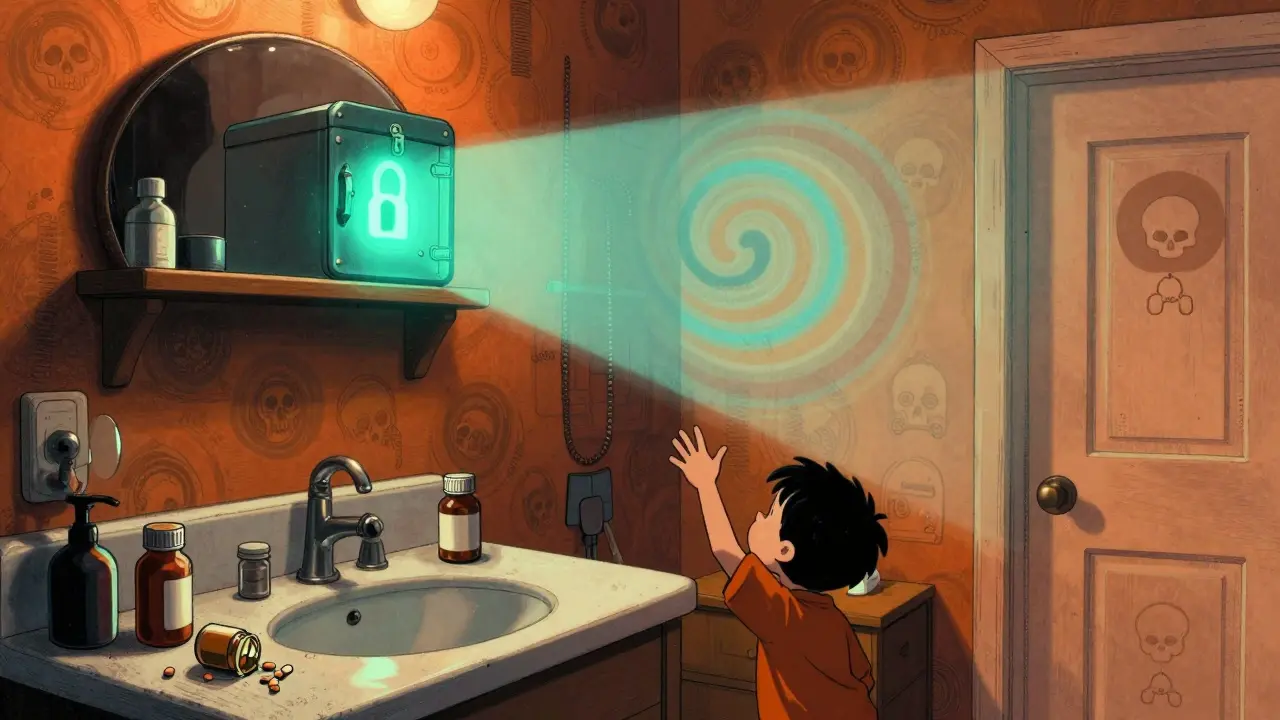
Why Storing High-Risk Medications Right Saves Lives
Every year in the U.S., over 90,000 people die from drug overdoses. Around 16,000 of those deaths come from prescription opioids - drugs like oxycodone, hydrocodone, and fentanyl that were meant to help manage pain. But here’s the hard truth: most of these overdoses don’t happen to the person who was prescribed the medicine. They happen to kids, teens, visitors, or even well-meaning family members who find the pills in an unlocked drawer, on a nightstand, or in a bathroom cabinet.
Storing these medications securely isn’t just a good idea - it’s a lifeline. The CDC says that 53% of people who misuse prescription opioids get them from friends or family. That’s not street dealers. That’s someone’s medicine cabinet. And if you’re keeping high-risk drugs anywhere that’s easy to reach, you’re putting your whole household at risk.
What Counts as a High-Risk Medication?
Not all prescriptions need the same level of security. But if it’s an opioid, a benzodiazepine, or a strong painkiller, it’s high-risk. Common examples include:
- Oxycodone (OxyContin, Percocet)
- Hydrocodone (Vicodin)
- Fentanyl patches or lozenges
- Morphine
- Alprazolam (Xanax)
- Clonazepam (Klonopin)
These aren’t just strong - they’re deadly in small doses. A single fentanyl patch can kill a child. A few pills of oxycodone can shut down breathing in someone who’s never taken them before. And if you’ve ever taken a pill out of its bottle and tossed it into a pill organizer, you’re already making it easier for someone else to accidentally - or intentionally - take too much.
The Gold Standard: Locked, Original, and Out of Reach
The CDC, FDA, and DEA all agree on three non-negotiable rules for storing high-risk medications:
- Keep them in their original container. The label has the name, dosage, and instructions. If you transfer pills to a different bottle or pill box, you lose that safety info - and make it harder for emergency responders to know what was taken.
- Use a locked container. A simple lockbox, medicine cabinet with a key, or even a small safe works. The CDC says locked storage reduces accidental poisonings by 87%. Basic lockboxes cost $15-$30. Biometric or smart ones run $100+, but you don’t need fancy tech to save a life.
- Store them at least 4 feet off the ground. Kids can climb, open drawers, and pull things down. A nightstand? Too low. A kitchen cabinet? Too accessible. A top shelf in a bedroom closet? Perfect. The average child can reach up to 36 inches. Anything above 48 inches is out of their grasp.
And don’t forget the child-resistant cap. It’s not a suggestion - it’s federal law under the Poison Prevention Packaging Act. Make sure it’s snapped shut after every use. If you have arthritis or hand pain and can’t twist those caps, ask your pharmacist for an easy-open version. Many pharmacies offer those now.
What Not to Do
Here are the most common mistakes - and why they’re dangerous:
- Don’t keep meds in the bathroom. Humidity ruins pills. Plus, it’s a high-traffic area. Kids go in and out. Guests use it. It’s not a safe spot.
- Don’t leave pills on a dresser or bedside table. Even if you think you’ll remember to take them, someone else might think they need them too.
- Don’t transfer pills to pill organizers unless you’re using them daily. If you’re taking them once a day, fine. But if you’re storing a week’s worth in a plastic box, you’ve removed the safety label and made it look like candy.
- Don’t assume your teen won’t try them. The National Institute on Drug Abuse says 1 in 4 teens who misuse prescription opioids get them from their own family’s medicine cabinet. They’re not looking for a high - they’re curious, or they think it’ll help with stress, anxiety, or pain.
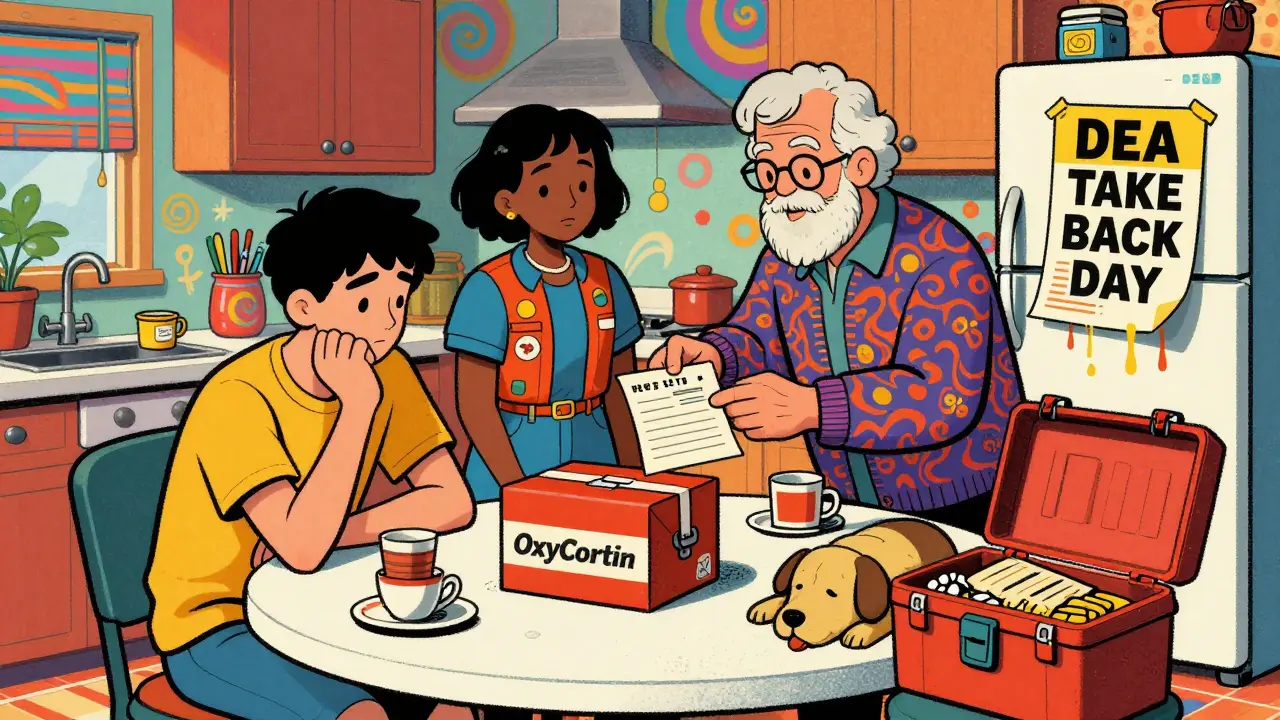
What If You Can’t Use a Lockbox?
Cost, mobility, or physical limitations shouldn’t stop you from keeping meds safe. Here are realistic alternatives:
- Use a locked drawer. If you have a dresser with a lock, that’s better than nothing. Just make sure it’s not the one your kid opens every day.
- Ask your pharmacist for a lockbox. Some pharmacies, especially CVS and Walgreens, give out free lockboxes to patients on high-risk prescriptions. Ask at pickup.
- Use a locked suitcase or tool box. If you’ve got one lying around, clean it out and use it. A metal toolbox with a padlock is better than an open bottle on the counter.
- Ask for help. If you’re elderly or have trouble opening locks, get a family member, neighbor, or caregiver to manage the lockbox. You can still access your meds - just not alone.
There’s a product called the Med-ic Safe Locking Pill Organizer - it’s a lockbox that opens with a 4-digit code. It’s $35, fits in a drawer, and lets you set a code your caregiver knows. No keys to lose. No twisting caps. Just safe, simple access.
Track What You Have - And When
Knowing how many pills you have left isn’t just about not running out. It’s about spotting when someone else might be taking them.
Keep a simple log: write down the date and how many pills are left each morning. You don’t need an app. A sticky note on the fridge works. If you notice 10 pills missing between Monday and Wednesday - that’s a red flag.
Some people use smart dispensers like Hero Health or MedMinder. They beep when it’s time to take a pill, record who opened it, and send alerts if someone misses a dose. But they cost $100+, and most people don’t need them. A notebook and pen are just as effective.
Dispose of Unused Meds the Right Way
Don’t flush them. Don’t throw them in the trash. Don’t let them sit in a drawer for years.
Every year, the DEA runs National Prescription Drug Take Back Day - twice a year, in April and October. You can drop off unused or expired meds at police stations, pharmacies, or hospitals. Find your nearest drop-off site at dea.gov/takebackday.
If you can’t wait for Take Back Day, mix your pills with used coffee grounds or cat litter, seal them in a plastic bag, and throw them in the trash. It makes them unappealing and unusable. And always remove the label from the bottle before tossing it - to protect your privacy.

What If Someone Already Took the Meds?
If you suspect someone - a child, teen, or adult - has taken your medication, act fast.
- Call Poison Help: 1-800-222-1222. It’s free, 24/7, and staffed by experts. They’ll tell you what to do next.
- If the person is unconscious, not breathing, or turning blue - call 911 immediately.
- If you have Narcan (naloxone), use it. It reverses opioid overdoses. Keep it in your home if you’re storing opioids. Many pharmacies sell it without a prescription.
The CDC says 92% of calls to Poison Help are resolved without a trip to the ER. But you have to call. Don’t wait. Don’t hope it’s not serious.
Why This Matters More Than You Think
This isn’t just about protecting your own family. It’s about breaking a cycle. When a teen gets opioids from a family member’s cabinet, they’re more likely to keep using. They might turn to heroin. They might die. You didn’t mean for this to happen. But if you leave pills unsecured, you’re part of the problem - even if you’re the one who’s sick.
Dr. Scott Gottlieb, former FDA commissioner, said it plainly: “Locking up opioids is the single most effective intervention we have to prevent diversion and accidental overdose in homes.”
And it works. A 2018 JAMA Pediatrics study found that locked storage cut pediatric poisonings by 87%. That’s not a small number. That’s 87% of kids who didn’t end up in the ER. That’s 87% of parents who didn’t face the worst day of their lives.
Start Today - It Takes Less Than 10 Minutes
You don’t need to overhaul your life. Just do this:
- Find all your high-risk meds. Check medicine cabinets, drawers, purses, nightstands.
- Put them back in their original bottles with child-resistant caps on.
- Buy a $20 lockbox (or use a locked drawer).
- Put it on a high shelf - out of reach, but you can still get to it.
- Write down how many pills you have today.
Done. That’s it. You’ve just made your home safer. You’ve protected your kids, your grandkids, your guests, and maybe even yourself from a mistake you’ll never get back.
Can I just keep my pain pills in the bathroom?
No. Bathrooms are humid, which can ruin the pills, and they’re too accessible. Kids and guests use the bathroom. Store your medications in a dry, locked place like a bedroom closet or top drawer - at least 4 feet off the ground.
What if I have arthritis and can’t open child-resistant caps?
Ask your pharmacist for an easy-open cap. Many pharmacies offer them at no extra cost. You can also use a lockbox with a code or key that a trusted person holds. Your safety and access matter - you don’t have to choose between them.
Are lockboxes really worth the cost?
Yes. A basic lockbox costs $15-$30. Compare that to an ER visit, a hospital stay, or worse - losing a loved one to an accidental overdose. The CDC says locked storage prevents 92% of unauthorized access. That’s not an expense. That’s insurance.
Should I tell my teen I’m locking up my meds?
Yes. Say it plainly: “I’m locking up my pain pills because they’re dangerous if someone else takes them. I love you, and I want to keep you safe.” It’s not about distrust - it’s about responsibility. Teens who know their parents take safety seriously are less likely to experiment.
Can I use a pill organizer and still be safe?
Only if you’re using it daily and keep the original bottle locked up. Never store a week’s supply in an unlabeled plastic box. That’s how kids mistake them for candy. Keep the labeled bottle locked, and use the organizer only for the day’s dose.
What if I don’t have a lockbox and can’t afford one?
Call your pharmacy. CVS, Walgreens, and others often give out free lockboxes to patients on opioids. If they don’t, use a locked drawer, a toolbox, or even a locked suitcase. Anything that’s not easily accessible is better than leaving pills out.
How do I dispose of old or unused meds?
Find a DEA Take Back Day location near you at dea.gov/takebackday. If you can’t wait, mix pills with coffee grounds or cat litter, seal them in a plastic bag, and throw them in the trash. Always remove the label first to protect your privacy.
kate jones 29.01.2026
This is exactly the kind of public health intervention that gets ignored until it’s too late. Locked storage isn’t just about kids-it’s about preventing the first step into addiction for anyone who stumbles on unsecured pills. The 87% reduction in pediatric poisonings? That’s not statistics, that’s real children who didn’t end up in the ER because someone did the right thing. Original containers + child-resistant caps + height >48 inches. No exceptions.
And yes, if you have arthritis, ask for easy-open caps. Pharmacists are trained to help with this. Don’t let pain be an excuse for negligence.
Yanaton Whittaker 29.01.2026
Y’all are overreacting. My grandpa keeps his oxycodone on his nightstand and he’s 78. No one touches it. Why do we need to treat everyone like potential addicts? 😒
Beth Beltway 29.01.2026
Let’s be real: if your teenager is stealing your meds, that’s a parenting failure, not a storage failure. You raised a thief, not a victim of poor cabinet placement. Locking pills doesn’t fix broken families-it just makes you feel better while ignoring the root problem. And don’t get me started on the ‘ask your pharmacist’ nonsense. That’s not a solution, that’s a band-aid on a hemorrhage.
Natasha Plebani 29.01.2026
The metaphysics of access is fascinating here. We treat pharmaceuticals as if they’re inherently dangerous objects, when in fact their danger is relational-it emerges only in the context of unregulated access and psychological vulnerability. The lockbox isn’t a container; it’s a social contract. It says: ‘I acknowledge your fragility, and I choose not to weaponize my own survival.’
But here’s the paradox: the more we isolate these drugs, the more we reinforce the stigma that drives people to hide their use, to seek them in secret, to risk everything for relief. Is safety the same as control? Or are we just building better cages for pain?
Sarah Blevins 29.01.2026
According to CDC data from 2022, 63% of opioid diversion incidents occurred in households where medications were stored in unlocked containers. The statistical significance is p < 0.001. The recommendation for locked storage is not anecdotal-it is evidence-based, reproducible, and endorsed by every major medical association in the U.S. Any deviation from this protocol constitutes a measurable increase in public health risk.
Blair Kelly 29.01.2026
I just saw a 12-year-old in the Walmart pharmacy aisle holding a fentanyl patch like it was a candy wrapper. I swear to god, if this doesn’t make you want to scream, nothing will. We’re not talking about ‘maybe’ danger. We’re talking about death in a pill bottle. And people are still putting them on the nightstand? I don’t even know what to say anymore. 😭
Gaurav Meena 29.01.2026
In India, we don’t have lockboxes, but we do have something better: family. My uncle keeps his pain meds in a locked tin inside his wardrobe, and only my aunt knows the key. But here’s the thing-he tells everyone in the house: ‘These aren’t for you. They’re for me. If you take them, you’re not helping-you’re hurting.’ That’s the real lock. Trust + communication. 💪
Diksha Srivastava 29.01.2026
This made me cry. My cousin lost her 16-year-old son to a Vicodin overdose last year-he took it from her nightstand because he thought it would help with his anxiety. She still blames herself every single day. Please, if you’re reading this-lock them up. It’s not about suspicion. It’s about love. ❤️
Sidhanth SY 29.01.2026
I like how this post doesn’t shame people. It just says: here’s what works. No drama. No guilt. Just facts and simple steps. I’m getting a lockbox this weekend. My dad’s on morphine and I’ve been nervous since my little sister started visiting. Better safe than sorry. Thanks for the clarity.
Adarsh Uttral 29.01.2026
i just put all my meds in a locked drawer and it felt so weirdly empowering? like i was finally doing something right. also my cat now sleeps on top of it. so that’s a win.
April Allen 29.01.2026
The most overlooked part of this entire framework is the log. Tracking pill counts isn’t about paranoia-it’s about noticing patterns. When someone takes a few here and there, the absence accumulates. A sticky note on the fridge creates accountability without confrontation. It’s behavioral economics in its purest form: visibility changes behavior. And yes, it works even if you’re not storing opioids. Benzodiazepines? Same risk profile. Same solution.