
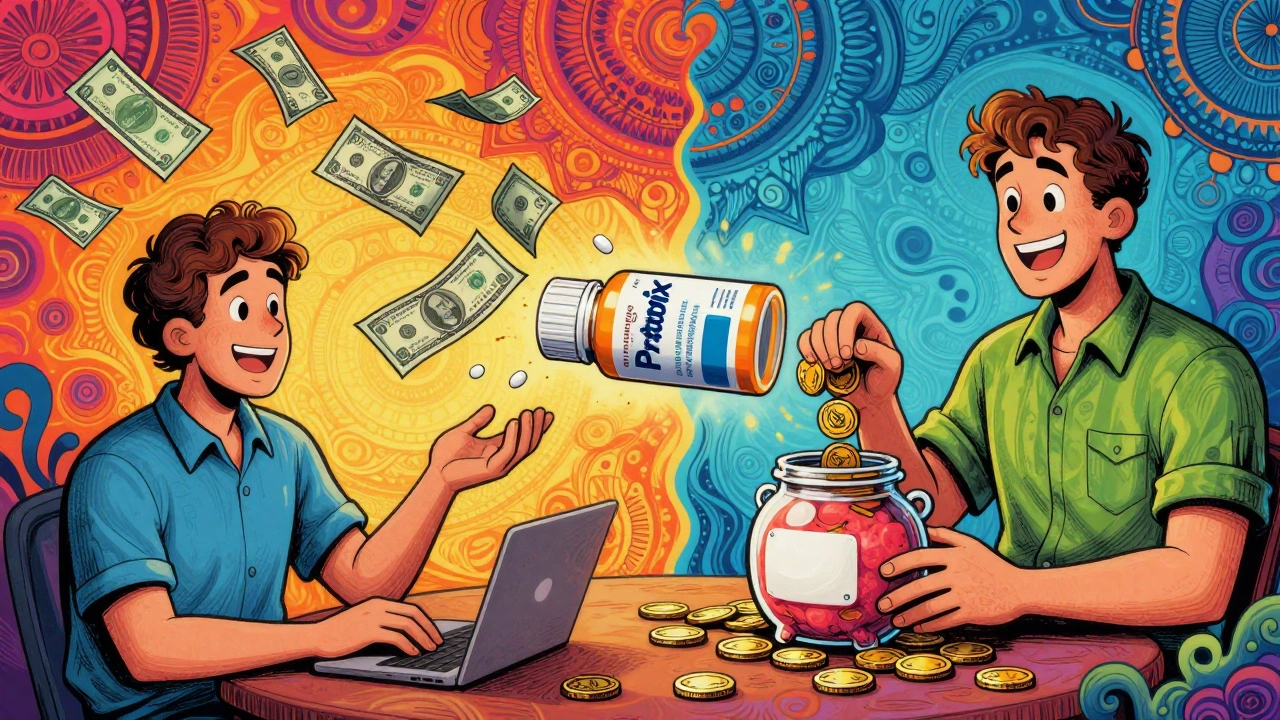
When you fill a prescription for a medication like Protonix or Ocella, you might not realize you’re getting something called an authorized generic. It looks different from the brand-name pill - different color, different markings, no brand name on the bottle - but it’s made by the same company, in the same factory, with the exact same ingredients. And here’s the kicker: your insurance often covers it at the same low price as a regular generic, even though it’s identical to the brand-name drug you were originally prescribed.
That’s the power of authorized generics. But not all insurers treat them the same. Some put them on the lowest-cost tier. Others treat them like brand-name drugs. And many patients never even know they’re being switched. So how does insurance decide where to place authorized generics? And what does that mean for your wallet and your health?
What Exactly Is an Authorized Generic?
An authorized generic isn’t just another generic. It’s the brand-name drug, sold under a different label, with no brand name on it. The manufacturer uses the original FDA-approved New Drug Application (NDA) to sell it - not the Abbreviated New Drug Application (ANDA) that traditional generics use. That means it doesn’t need to prove it’s bioequivalent. It already is. The FDA calls it a "listed drug" marketed under a different trade name or packaging.
Think of it this way: if the brand-name drug is a Toyota Camry, the authorized generic is the exact same car - same engine, same seats, same paint - but sold without the Toyota logo. The only difference? The price. Authorized generics typically cost 15-25% less than the brand-name version, and the same as traditional generics.
As of October 2023, the FDA listed 147 active authorized generics. Most are in categories like cardiovascular drugs, antidepressants, and hormonal treatments. But only about 15-20% of brand-name drugs even have an authorized generic version. That’s because manufacturers choose when to launch them - often right after patent expiration, or even before traditional generics enter the market.
Why Insurers Care About Formulary Placement
Insurance plans use formularies to control costs. They group drugs into tiers: Tier 1 (cheapest), Tier 2 (moderate), Tier 3 (higher), Tier 4 (specialty). The higher the tier, the more you pay out of pocket.
Traditional generics usually land on Tier 1 or 2. Brand-name drugs? Tier 3 or 4. Authorized generics? They should be on Tier 1 or 2 - because they’re the same drug, just cheaper. But here’s the problem: many insurers don’t automatically know they’re dealing with an authorized generic.
Unlike traditional generics, authorized generics aren’t listed in the FDA’s Orange Book - the main reference for generic drug equivalency. So pharmacy systems often don’t flag them correctly. If a pharmacist doesn’t know it’s an authorized generic, the system might treat it like a brand-name drug. That means higher copays. Or worse - a denial.
But data shows it doesn’t have to be this way. A 2022 study of 1,247 Medicare Part D plans found that 87% of them placed authorized generics in the same tier as traditional generics. Plans that did this saved 7.3% per member per month on prescription costs. That’s not small change - it’s millions in savings across a large plan.
How Authorized Generics Compare to Traditional Generics
| Feature | Authorized Generic | Traditional Generic |
|---|---|---|
| Manufactured by | Brand-name company | Separate generic manufacturer |
| FDA approval path | Under original NDA | Through ANDA |
| Active ingredients | Identical to brand | Identical to brand (after bioequivalence testing) |
| Inactive ingredients | Identical to brand | May differ |
| Formulary tier | Usually Tier 1 or 2 | Usually Tier 1 or 2 |
| Launch timing | Can launch before traditional generics | Must wait for patent expiration + 180-day exclusivity period |
| Availability | Only for ~15-20% of brand drugs | Available for most brand drugs |
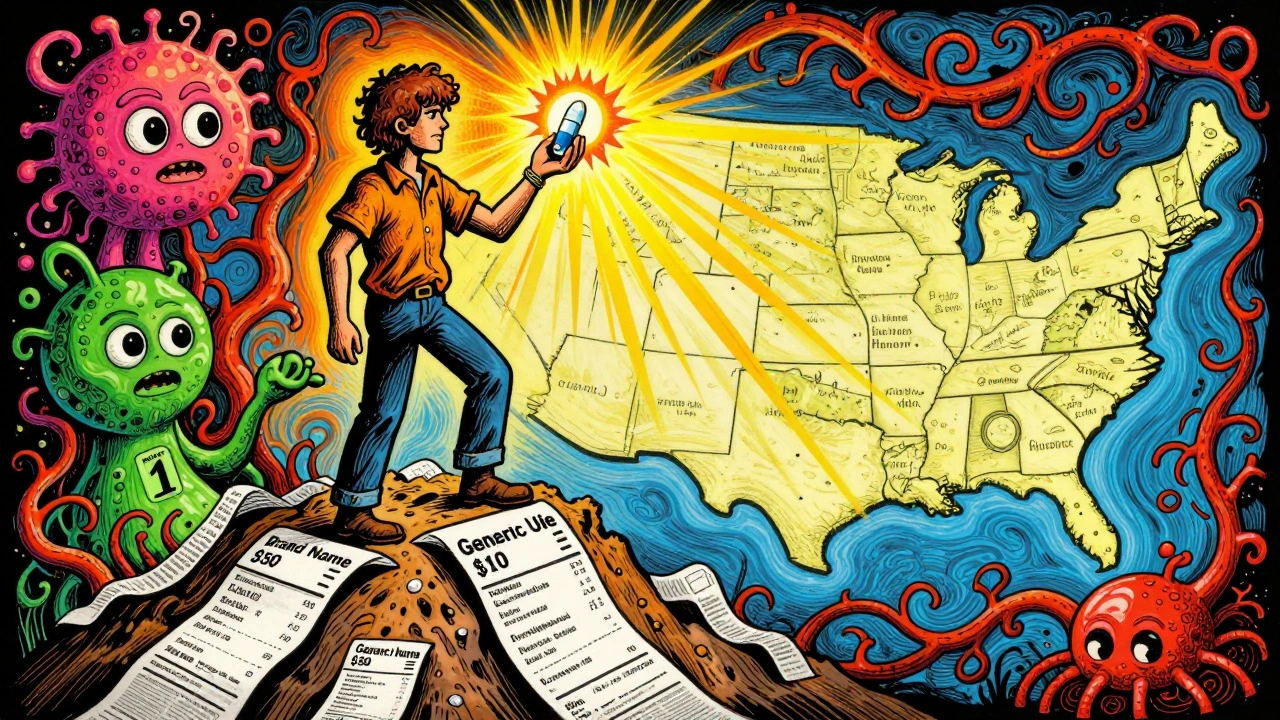
That last point matters. If your drug doesn’t have an authorized generic, you’re stuck with either the brand or a traditional generic - which might have different fillers or binders. For patients with allergies or sensitivities, that can be a big deal. One Reddit user shared how switching to the authorized generic of Synthroid cut their copay from $50 to $10 - and kept their thyroid levels stable, because the inactive ingredients matched the brand exactly.
Why Some Insurers Still Don’t Cover Them Right
Even though authorized generics are cheaper and identical, some insurers still treat them like brand-name drugs. Why?
First, confusion. Many pharmacy benefit managers (PBMs) and pharmacists don’t know how to identify them. The NDC codes (product codes) for authorized generics aren’t always labeled clearly in systems. Walgreens reported a 12% error rate in processing them before they added special verification tools.
Second, legacy contracts. Some insurers have agreements with brand manufacturers that pay rebates based on brand-name sales. If an authorized generic replaces the brand, those rebates drop. So there’s a financial incentive - however hidden - to keep the brand on the formulary.
Third, lack of policy. If a plan doesn’t have a written rule about authorized generics, pharmacists can’t automatically substitute them. Patients might get the brand by default - and pay more.
But that’s changing. In January 2023, OptumRx launched an "Authorized Generic First" policy for 47 high-cost medications. Express Scripts added flags to their system in late 2022 to auto-identify them. CVS Caremark says it takes 30-45 days to fully integrate a new authorized generic into their formulary database. That’s faster than most brand-to-generic switches.
What This Means for Patients
If you’re on a brand-name drug, ask your pharmacist: "Is there an authorized generic for this?" If there is, your copay could drop dramatically. One survey found that 34% of patients were confused when their pharmacy switched them to an authorized generic without telling them. Some even thought it was a mistake - and called their doctor.
But here’s the upside: if your drug has an authorized generic, it’s usually the best deal. You get the exact same medication as the brand, with no risk of therapeutic mismatch. That’s especially important for drugs with a narrow therapeutic index - like warfarin, levothyroxine, or seizure meds - where even tiny differences in absorption can cause problems.
And if your insurance denies coverage? Ask them why. If they say it’s because it’s "not a generic," you can push back. The FDA and CMS both confirm: authorized generics count as generics for Medicare Part D and most commercial plans.
What’s Changing in 2025
The Inflation Reduction Act is pushing insurers to lower out-of-pocket costs for seniors. CMS projects a 15-20% increase in authorized generic coverage by 2025. Large employers are also taking notice. According to the Kaiser Family Foundation’s 2023 survey, 68% plan to treat authorized generics differently from traditional generics in 2024 - meaning they might offer even lower copays for them.
Why? Because they’re smart. Authorized generics give insurers the same clinical outcomes as brand-name drugs - but at generic prices. No extra testing. No patient education. Just lower costs and better adherence.
At the same time, the FTC is watching. In 2022, they flagged authorized generics as a potential anti-competitive tool - when brand manufacturers use them to block cheaper, true generics from entering the market. If enforcement ramps up, we might see fewer authorized generics launched - or more pressure to allow traditional generics to compete.
How to Make Sure You’re Getting the Best Coverage
Here’s what you can do right now:
- Check the FDA’s Authorized Generic List (or ask your pharmacist). If your drug is on it, you have options.
- Ask your pharmacist: "Is there an authorized generic for this? What’s the copay?" Don’t assume the brand is your only option.
- If your insurance denies the authorized generic, appeal. Cite CMS guidance: authorized generics qualify as generics under Medicare Part D.
- If you have allergies or sensitivities, request the authorized generic - it’s the only generic that matches the brand’s inactive ingredients.
- Use tools like GoodRx or SingleCare to compare prices. Sometimes the authorized generic is cheaper even without insurance.
Bottom line: authorized generics are the hidden gem of prescription savings. They’re not magic. But they’re real. And if you know how to use them, you can save hundreds a year - without changing your medication or your health.
Are authorized generics the same as brand-name drugs?
Yes. Authorized generics contain the exact same active and inactive ingredients as the brand-name drug. They’re made in the same factory, using the same process. The only difference is the label and the price. The FDA considers them therapeutically equivalent.
Why are authorized generics cheaper than brand-name drugs?
They’re cheaper because they don’t carry the marketing, advertising, or R&D costs of the brand. The manufacturer already recouped those costs when selling the brand. Selling the same drug under a different label lets them capture more market share at a lower price - and insurers pass those savings to patients.
Can I get an authorized generic if my insurance doesn’t cover it?
Yes. You can always pay out-of-pocket. Many authorized generics cost less than $10 a month without insurance - sometimes even less than traditional generics. Use price-comparison apps like GoodRx to find the lowest price at your local pharmacy.
Why doesn’t my pharmacy tell me when they give me an authorized generic?
Because they’re not always required to. Unlike traditional generics, there’s no federal rule forcing pharmacists to notify patients about authorized generics. Some pharmacies do - especially if they know it saves you money. But many don’t. Always ask if you’re unsure.
Do all insurance plans cover authorized generics?
Most do - but not all treat them the same. Medicare Part D plans are required to cover them as generics. Commercial plans vary. Some place them on the lowest tier. Others treat them like brand-name drugs. Check your plan’s formulary or call customer service to confirm.
Is there a list of drugs with authorized generics?
Yes. The FDA maintains an official list of authorized generics updated monthly. You can find it at fda.gov/afg. Popular examples include Protonix (pantoprazole), Ocella (drospirenone/ethinyl estradiol), and Yasmin (same as Ocella). Not every brand has one - only about 1 in 5.
What to Do Next
If you’re on a brand-name drug that costs more than $30 a month, check if an authorized generic exists. It could cut your copay in half - or more. Ask your doctor to write the prescription for the generic version. If your pharmacy says they don’t have it, ask them to order it. Most can get it within 24 hours.
And if you’re a caregiver, employer, or plan administrator - start asking your PBM: "What’s our policy on authorized generics?" The answer could save your organization thousands - and improve patient outcomes at the same time.
Nancy Carlsen 6.12.2025
OMG I had no idea authorized generics existed!! 😱 I was paying $45 for my Synthroid until my pharmacist slipped me the generic version last month - same pill, $8 copay. I cried happy tears. Why isn’t this common knowledge??
Ted Rosenwasser 6.12.2025
Let’s be clear: authorized generics are not ‘generics’ in the regulatory sense. They’re branded drugs under a different NDC. The FDA’s classification is misleading, and insurers that treat them as Tier 1 are enabling a loophole that undermines true generic competition. This isn’t savings - it’s obfuscation.
Helen Maples 6.12.2025
Ted is technically correct, but completely missing the point. Patients don’t care about NDC codes or regulatory semantics - they care about paying less for the exact same medication. If your insurance denies coverage for an authorized generic because it’s ‘not an ANDA product,’ you have every right to appeal. CMS has issued guidance. Use it. Stop letting PBMs game the system.
Stacy here 6.12.2025
Wait… so Big Pharma is secretly selling their own brand as a ‘generic’ to keep true generics out? 🤔 This isn’t just a pricing issue - it’s a full-blown monopoly play. They patent the pill, then release their own ‘generic’ to block competitors. And now we’re told to cheer because we’re saving $10? That’s not healthcare reform - that’s corporate theater. The FTC should be investigating this like a cartel.
Wesley Phillips 6.12.2025
Stacy here you’re overthinking it. Look I get the conspiracy vibe but honestly if I can get my meds for $10 instead of $50 and my doctor says it’s the same thing? I’m not turning it down. The system’s broken but this is a glitch in the matrix that actually works for me. Chill.
Olivia Hand 6.12.2025
Has anyone checked whether authorized generics are more likely to cause adverse reactions in patients with sensitivities to fillers? The post says they match the brand’s inactive ingredients - but what if the brand itself uses problematic excipients? Are we just replacing one hidden variable with another? I need data.
Desmond Khoo 6.12.2025
Just had my doc switch me to the authorized generic of my blood pressure med - copay dropped from $42 to $9. No side effects, no drama. My pharmacist even gave me a sticker that said ‘YOU JUST SAVED $1,500/YEAR’ 🎉 Honestly? This should be advertised on TV. Why aren’t we all screaming about this?
Jane Quitain 6.12.2025
oh my gosh i just checked my med and there IS an authorized generic!! i had no idea!! thank you so much for this post!! 🥹💖 i’m gonna call my pharmacy right now!!