
Medication Refill Timing Calculator
To avoid gaps in your medication supply, order refills before you run out. Mail-order pharmacies need time to process your order (1-2 days) and ship it (typically 3-7 days). Add your buffer time for unexpected delays.
Optimal Order Time
Enter your information to see when you should order your next refill.
Important Notes
• If you're on life-saving medication, order at least two weeks before you run out. • Check with your pharmacy for their specific processing times. • Keep a 3-5 day backup supply on hand if you experience frequent delays. • Always have a local pharmacy on file for urgent medication needs.
When you order your blood pressure pills, insulin, or monthly antibiotics through the mail, you’re not just saving time or money-you’re trusting your health to a system that has to get everything right. One wrong temperature, one delayed package, one missing signature, and your medication could be useless-or worse, dangerous. This isn’t science fiction. It’s real life for millions of Americans who rely on mail-order pharmacies for their daily meds. And if you’re one of them, you need to know how temperature, timing, and tracking actually work-and what to watch out for.
Why Temperature Matters More Than You Think
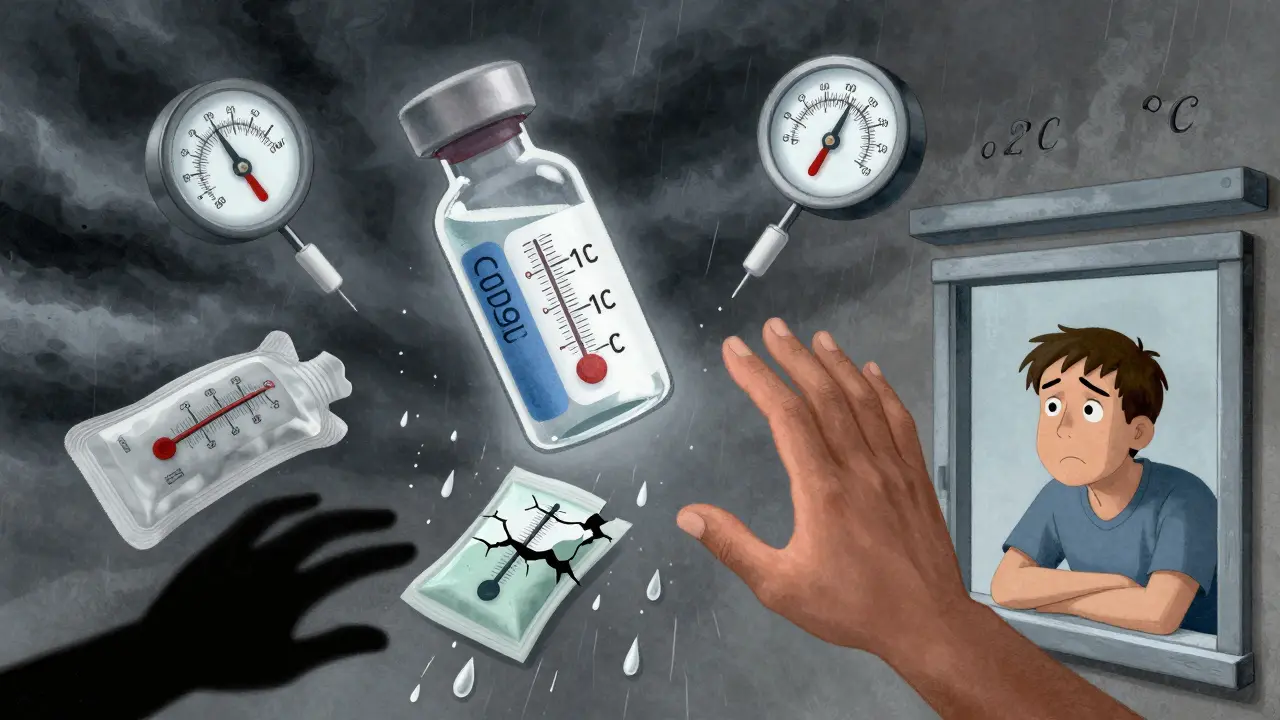
Not all pills are created equal. Some, like insulin, biologics for MS or rheumatoid arthritis, and certain antibiotics, need to stay cold. Really cold. Between 2°C and 8°C (36°F to 46°F). If they get too warm during shipping, they can break down. That doesn’t mean they look funny or smell bad. It means they stop working. You take them, and nothing happens. For someone with diabetes, that’s not a minor inconvenience-it’s a medical emergency.
The FDA says improper storage can make medications ineffective. And it’s not rare. Industry data from 2023 shows about 3.2% of temperature-sensitive shipments experience excursions-meaning the meds were exposed to unsafe temperatures at some point. That might sound low, but when you’re talking about hundreds of thousands of insulin vials shipped every week, 3.2% means thousands of people could get faulty meds.
So how do pharmacies keep things cold? They use insulated shipping boxes with gel packs, sometimes even dry ice. But it’s not enough to just pack them right. The best mail-order pharmacies now use real-time temperature sensors inside the box. These devices log the temp throughout the journey and send alerts if it goes outside the safe range. One patient on Reddit shared how her Tysabri shipment flagged a 36-hour warm spell. The pharmacy called her before delivery, held the package, and sent a replacement. That’s not luck-that’s proper system design.
Timing Isn’t Just About When It Arrives-It’s About When You Order
Most people wait until their last pill is gone before ordering the next refill. Big mistake. Mail-order isn’t like walking into a local pharmacy. It takes time. Pharmacies need 1-2 days to process your refill. Then there’s shipping-another 3-7 days depending on where you live. And if you’re on Medicare Part D, they might need to confirm with you or your caregiver before shipping at all.
GoodRx recommends ordering refills at least two weeks before you run out. Why? Because delays happen. A storm delays a truck. An address gets misread. A package gets stuck in customs (yes, even within the U.S.). A 2023 GoodRx survey found that 22% of mail-order users had at least one delayed delivery in the past year. For someone on daily medication for heart failure or epilepsy, even a 48-hour gap can be risky.
Here’s a pro tip: Set calendar reminders. Don’t wait for the pharmacy to email you. If your meds last 30 days, mark your calendar for Day 15. Order then. That gives you breathing room. And if you’ve had delays before, order even earlier. Better safe than sorry.
Tracking Isn’t Just a Feature-It’s a Safety Net
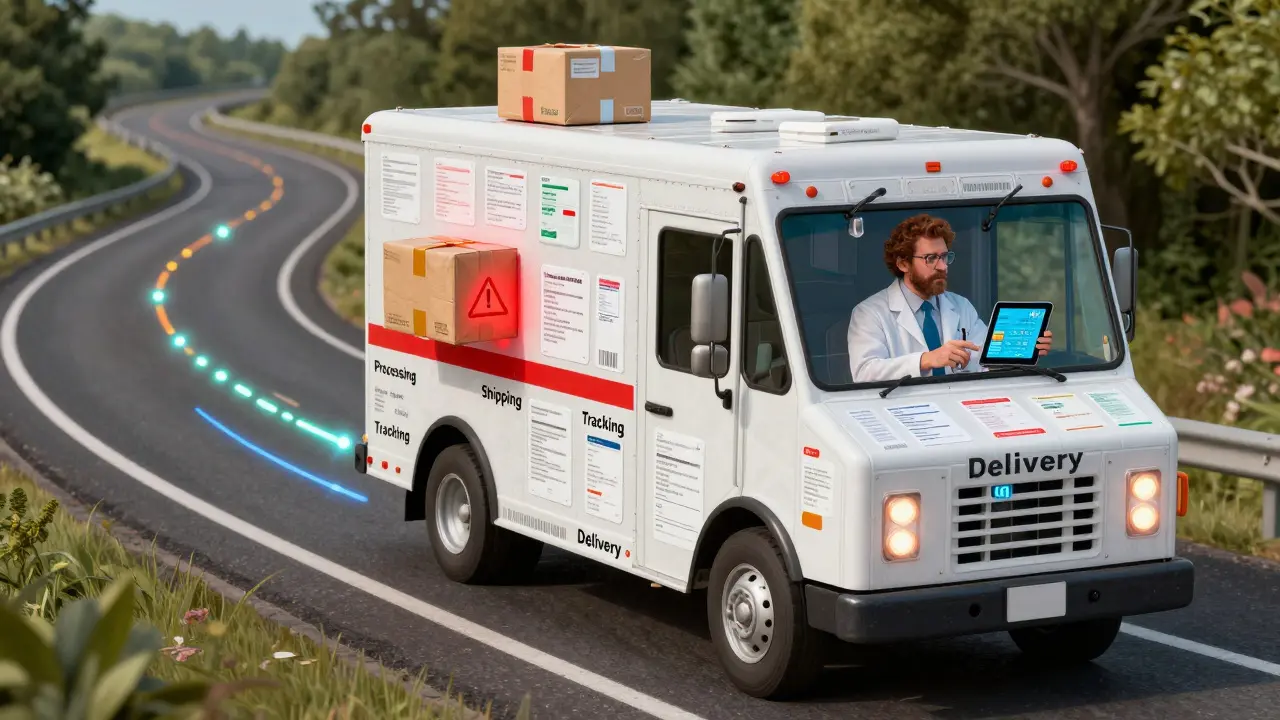
You’ve probably seen tracking numbers for Amazon packages. Mail-order pharmacies do the same-but with way more at stake. Reputable pharmacies don’t just send a box and say “good luck.” They track every step: from when the pharmacist seals the package, to when it leaves the warehouse, to when it’s scanned at each sorting center, and finally, when it’s delivered.
And it’s not just about knowing where your package is. It’s about proof. The DEA requires all controlled substances (like opioids or stimulants) to have delivery confirmation. Someone must sign for it. No more leaving packages on porches where they can be stolen. That’s why you’ll often get a text or email saying, “Your package will be delivered between 2-5 PM. Please be home.”
But tracking also means accountability. If a temperature sensor shows your insulin hit 15°C for 12 hours, the pharmacy gets an alert. They can investigate. They can replace the meds. They can even refund you. Without tracking, you’d never know-and you might take ineffective pills without realizing it.
Some companies are going further. Pitney Bowes launched PitneyShip in 2024, which cuts labeling errors by 33% and improves address accuracy to 99.2%. That means fewer wrong deliveries. And by 2026, the DEA will require blockchain-based tracking for all controlled substances. That’s not just tech buzz-it’s a way to create an unbreakable chain of custody, from pharmacy to your door.
What to Look for in a Safe Mail-Order Pharmacy
Not all online pharmacies are equal. Some are legit. Others are dangerous. The FDA says a safe mail-order pharmacy must:
- Require a valid prescription from your doctor
- Have a licensed pharmacist on staff
- Provide a physical U.S. address and phone number
- Be licensed in your state
Check their website. If you can’t find a real address or a phone number, walk away. If they sell prescriptions without a script? Red flag. If they’re based overseas? Big red flag.
The three biggest players-Express Scripts, OptumRx, and CVS Caremark-handle 78% of the U.S. mail-order market. They’re backed by major insurers and have strict compliance systems. That doesn’t mean they’re perfect, but they’re far more likely to have the temperature controls, tracking, and staff training you need.
Look for NABP accreditation (the National Association of Boards of Pharmacy). It’s not mandatory, but pharmacies that earn it have passed rigorous safety audits. Only 87% of inspected mail-order pharmacies met cold chain requirements in 2024, according to the DEA. So accreditation matters.
Common Risks-and How to Avoid Them
Even the best systems have holes. Here are the top three risks you should know:
- Package theft - About 0.7% of deliveries get stolen. That’s low, but it’s still hundreds of thousands of packages a year. Solution: Schedule delivery for when you’re home. Use a secure mailbox or porch box. Ask for signature required.
- Communication gaps - 31% of dissatisfied users say they weren’t notified about delays, refills, or changes. Solution: Confirm your contact info is up to date. Enable text or email alerts. Call the pharmacy if you haven’t heard anything 5 days after ordering.
- Temperature excursions - As mentioned, 3.2% of sensitive meds are exposed to unsafe temps. Solution: Always check your meds when they arrive. Insulin shouldn’t feel warm. If the gel packs are melted and the vial is at room temp, don’t use it. Call the pharmacy immediately.
And if you’re on a life-saving medication? Keep a 3-5 day backup on hand. Not a full refill-just enough to tide you over if delivery fails. Talk to your doctor about this. It’s a smart safety net.
What’s Changing in 2026?
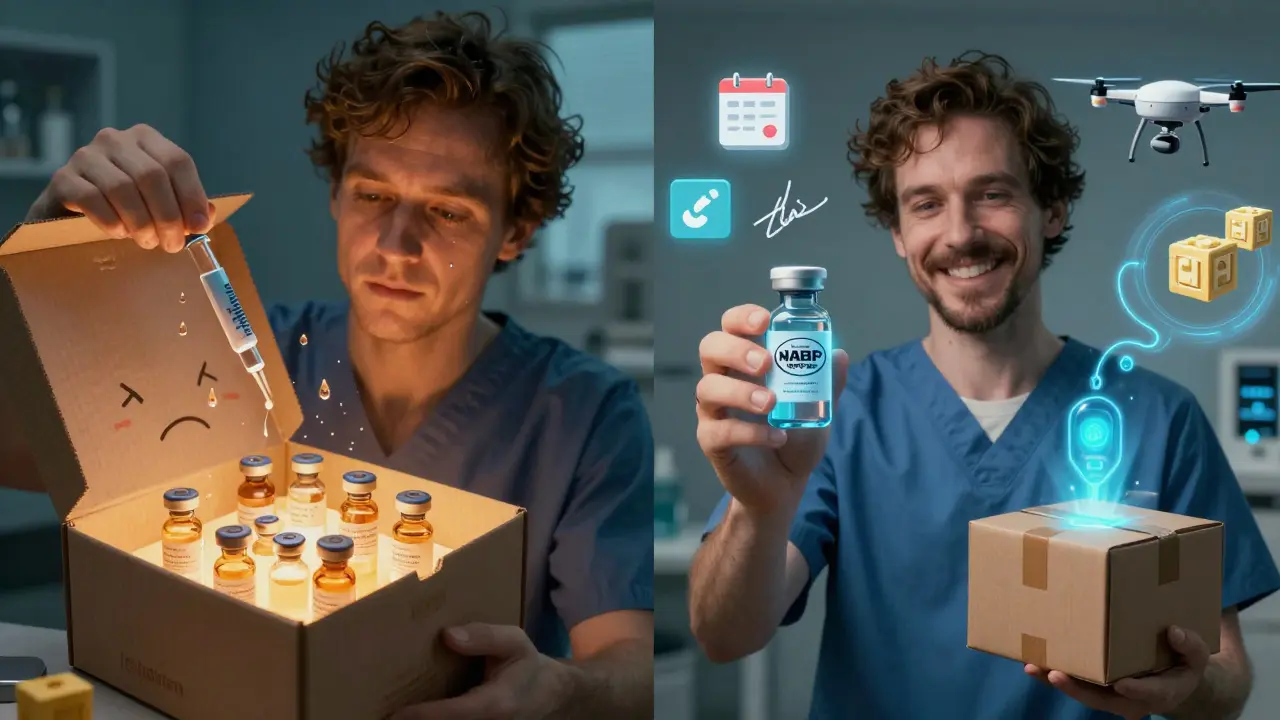
The rules are tightening. In May 2024, the FDA proposed new guidelines requiring real-time temperature tracking for all biologics shipped by mail. That means insulin, injectables, and other sensitive drugs will soon come with built-in sensors that send alerts to both the pharmacy and the patient.
By January 1, 2026, every mail-order pharmacy dispensing controlled substances must use blockchain tracking. That’s a big deal. It means every step of the journey is recorded, tamper-proof, and verifiable. No more guesswork.
And AI is stepping in. Early adopters are using machine learning to predict delays before they happen. If a storm’s coming, the system might automatically ship your refill a few days early. If your address is flagged as high-risk for theft, it might reroute to a secure locker. These aren’t future dreams-they’re live features in 2026.
Final Thought: You’re the Last Line of Defense
Mail-order pharmacies have come a long way since 1987. They’re faster, safer, and more reliable than ever. But no system is foolproof. The best temperature sensors can fail. The fastest shipping can get stuck. The smartest algorithms can misread an address.
That’s why you need to be involved. Don’t just wait for your meds to show up. Check them. Know your delivery window. Set reminders. Call if something feels off. If your insulin looks weird, don’t take it. If your tracker hasn’t updated in three days, call the pharmacy. You’re not being paranoid-you’re being responsible.
For millions of people, mail-order pharmacy isn’t a convenience. It’s a lifeline. And with the right knowledge, you can make sure that lifeline stays strong.
What should I do if my temperature-sensitive medication arrives warm?
Do not take it. Contact your mail-order pharmacy immediately. Most reputable pharmacies have protocols in place to replace compromised medication at no cost. Keep the package and any temperature logs if available-these help the pharmacy investigate and prevent future issues. Never use medication that has been exposed to unsafe temperatures, especially insulin, biologics, or antibiotics.
How far in advance should I order my refill?
Order at least two weeks before you run out. Mail-order processing can take 1-2 days, and shipping usually takes 3-7 days. If you live in a rural area or have had delays before, order even earlier. Setting a calendar reminder for halfway through your current supply is a smart habit.
Are all mail-order pharmacies required to track temperature?
Currently, only temperature-sensitive medications (like insulin and biologics) require temperature monitoring, and not all pharmacies do it well. But starting in 2026, the FDA is expected to mandate real-time tracking for all specialty drugs shipped by mail. Always ask your pharmacy if they use temperature sensors-and if they don’t, consider switching to one that does.
Can I get my prescription delivered faster if I need it urgently?
Mail-order pharmacies are designed for maintenance medications-not emergencies. If you need a medication urgently, go to a local retail pharmacy. Mail-order is not meant for acute needs like antibiotics for an infection or pain meds after surgery. Always have a local pharmacy on file for urgent situations.
How do I know if my mail-order pharmacy is legitimate?
Check for three things: 1) They require a valid prescription from your doctor. 2) They have a physical U.S. address and phone number you can call. 3) They are licensed in your state. Look for the NABP Verified Internet Pharmacy Practice Sites (VIPPS) seal on their website. Avoid pharmacies that offer medications without a prescription or ship from overseas.
William James 24.02.2026
man i just realized how much i take for granted when my insulin arrives. never thought about the temp sensors or how a 36-hour warm spell could kill me. thanks for laying this out like a lifeline instead of a checklist. i’m ordering my next refill two weeks out now. no more winging it.
David McKie 24.02.2026
oh please. you’re all acting like this is some revolutionary insight. my cousin in texas got her biologic delivered in a box that smelled like melted cheese and she took it anyway. she’s in the hospital now. this isn’t a ‘pro tip’-it’s a systemic failure masked as convenience. we’re letting corporations turn life-saving medicine into an amazon delivery.
Southern Indiana Paleontology Institute 24.02.2026
if you ain't using a legit pharmacy with a real address and a phone number you're asking for trouble. i seen one of them shady sites sell oxy without a script. that ain't pharmacy, that's a drug den with a website. you want safety? go with express scripts or caremark. no debate. if you're on medicare, they got your back. if you ain't, you're on your own.
Anil bhardwaj 24.02.2026
i live in rural india and we don’t even have mail-order pharmacies here. but i read this and i’m just amazed how much care goes into something so simple. here, if your medicine gets warm, you just hope it still works. you don’t get alerts, you don’t get replacements. just… pray.
lela izzani 24.02.2026
one thing i wish more people knew: if your pharmacy doesn’t proactively call you when a temperature excursion happens, switch. it’s not hard to find one that does. i used to get lazy and just take the meds, but after my mom had a bad reaction from a warm vial, i became a detective. check the gel packs, ask for logs, demand accountability. your life isn’t a gamble.
Joanna Reyes 24.02.2026
the part about setting calendar reminders on day 15? game changer. i used to wait until the last pill, then panic when the pharmacy said ‘processing will take 48 hours’ and then shipping took 7 days. i missed two doses last year because of a snowstorm. now i have a recurring reminder labeled ‘REFILL: DO NOT IGNORE.’ it’s not paranoia-it’s precision. also, if you’re on insulin, keep a small vial in your fridge just in case. five days’ worth. it’s not expensive, and it’s peace of mind you can’t buy.
Stephen Archbold 24.02.2026
just got my biologic shipped yesterday. the box had a little sticker that said ‘temperature monitored’ and i got a text when it left the warehouse. felt kinda emotional tbh. like someone cared. we forget how much of this is invisible labor-pharmacists double-checking, sensors logging, drivers trained. this stuff matters. don’t take it for granted.
Nerina Devi 24.02.2026
in my community, many elderly folks don’t know how to check tracking or read temperature logs. i started a little volunteer group-we call them after delivery, check the box, and help them call the pharmacy if something’s off. it’s small, but it’s something. if you’re able, do the same for someone in your life. a phone call might save a life.
Dinesh Dawn 24.02.2026
i’ve been using mail-order for 8 years. never had a problem. but now that i read this, i’m gonna start checking the gel packs. never thought to do that before. also, i’ll order earlier. seems like a no-brainer. thanks for the nudge.
Vanessa Drummond 24.02.2026
why are we praising these companies? they’re making billions off our desperation. the fact that we have to fight to get safe meds is a failure of policy. and don’t get me started on the blockchain thing-sounds cool, but who’s paying for it? you are. through your premiums. this isn’t innovation-it’s exploitation dressed up as safety.
Nick Hamby 24.02.2026
while the technical and logistical frameworks described here are commendable, one must not overlook the epistemological implications of delegating health sovereignty to corporate logistics chains. the very act of entrusting one’s physiological stability to algorithmic delivery systems represents a profound ontological shift in the patient-provider relationship. one might argue that the true innovation lies not in the sensors, but in the redefinition of care as a supply chain metric. we must interrogate whether the optimization of delivery efficiency has inadvertently eroded the human dimension of therapeutic trust.
Haley Gumm 24.02.2026
you say ‘3.2% of shipments have excursions’-but that’s just what they report. how many go unreported? how many people just take the warm meds and never know? how many die quietly? this whole thing is a numbers game. and the numbers are designed to make you feel safe while the system quietly fails.
Spenser Bickett 24.02.2026
oh wow. so now we need a phd in pharmacy logistics just to get our insulin? next they’ll be requiring us to pass a certification exam before we can open the box. maybe i’ll just go to the local pharmacy like a normal person. or better yet-live in a country where medicine doesn’t require a 12-step safety ritual just to not die.
Christopher Wiedenhaupt 24.02.2026
the nambp vipps seal is a good indicator. i checked my pharmacy’s site and they have it. also confirmed their address and phone number. no overseas domains, no ‘buy now’ buttons without a script. seems basic, but you’d be surprised how many don’t. i feel better knowing they passed an audit. not perfect, but better than most.