
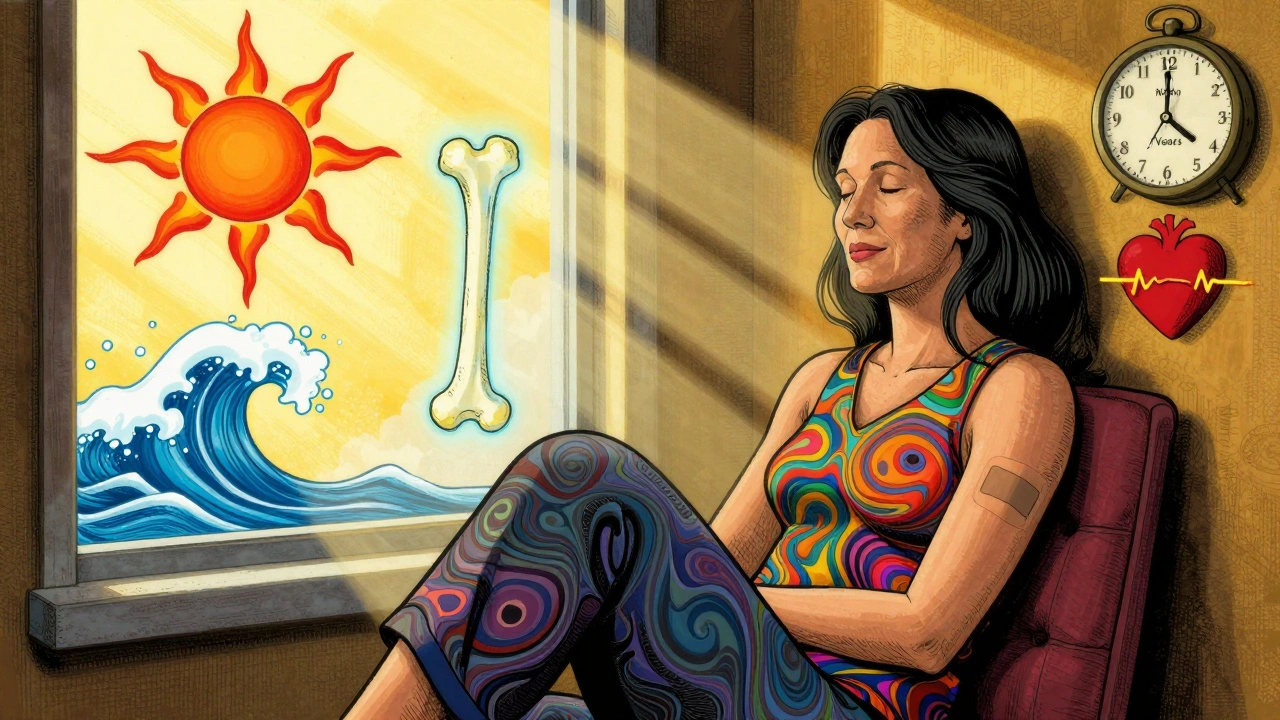
Menopause isn’t just about hot flashes and sleepless nights. For many women, it’s a turning point that affects bones, heart health, mood, and quality of life. Hormone therapy-often called HRT or menopause hormone therapy (MHT)-is the most effective treatment for severe menopausal symptoms. But it’s not a one-size-fits-all solution. Understanding the real benefits and real risks can help you make a decision that fits your body, your history, and your life.
What Hormone Therapy Actually Does
Menopause hormone therapy replaces the estrogen (and sometimes progesterone) your body stops making after your periods end. Estrogen drops sharply during menopause, and that’s what triggers the worst symptoms: hot flashes, night sweats, vaginal dryness, and mood swings. HRT doesn’t reverse aging-it helps your body manage the transition.
Studies show HRT reduces hot flashes by 75% or more compared to placebo. For women having 15 to 20 hot flashes a day, that can mean dropping down to just 2 or 3. That’s not a minor improvement-it’s life-changing. It also helps prevent bone loss. Women who take estrogen for a few years after menopause cut their risk of hip fractures by up to 30%. That matters because one in three women over 50 will break a bone due to osteoporosis.
There are two main types of HRT: estrogen-only and combined estrogen-progestogen. If you still have a uterus, you need both. Estrogen alone can cause the lining of the uterus to thicken, raising the risk of endometrial cancer. Adding progesterone (or a progestogen) prevents that. If you’ve had a hysterectomy, estrogen alone is safe and effective.
The Biggest Risks: Breast Cancer, Blood Clots, and Stroke
The fear around HRT started in 2002 with the Women’s Health Initiative (WHI) study. It found that combined hormone therapy increased breast cancer risk. That study changed everything. Millions of women stopped HRT overnight. But the data was more nuanced than headlines suggested.
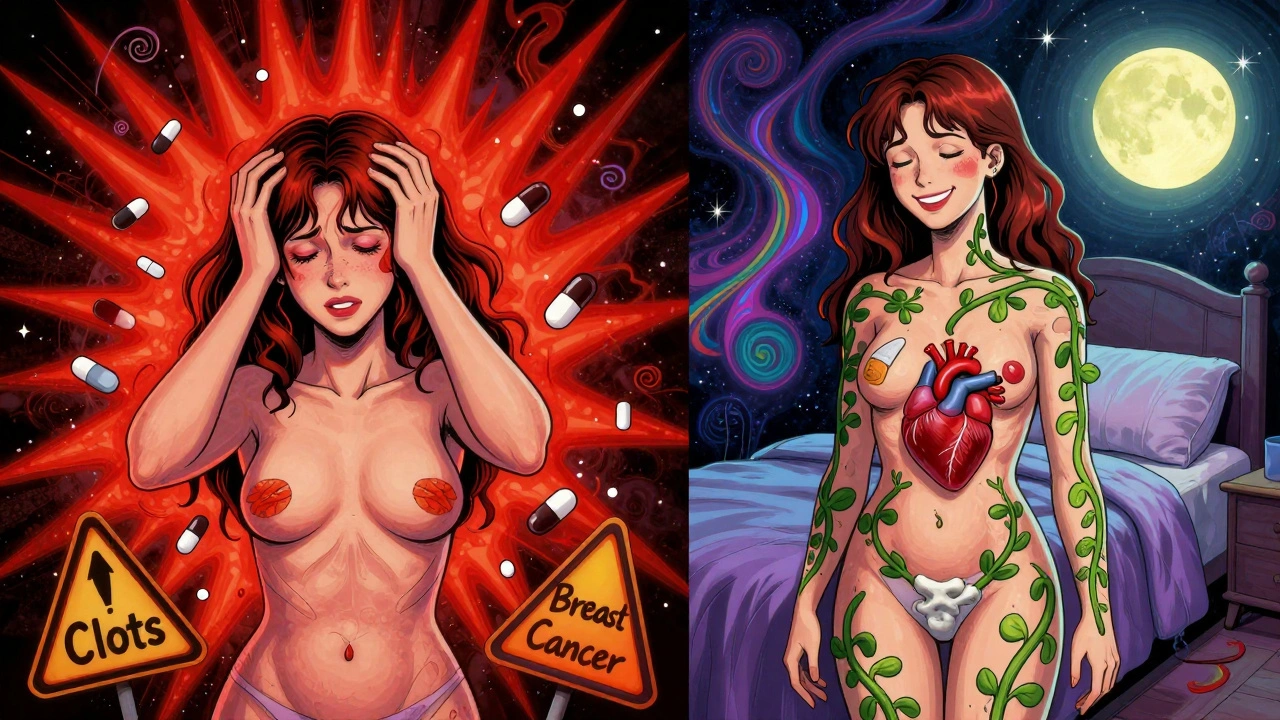
For women taking estrogen plus progestogen, there are about 29 extra cases of breast cancer per 10,000 women each year. That sounds scary-but put it in context. The baseline risk of breast cancer for a woman in her 50s is about 25 cases per 10,000. So HRT raises it to 54. For women who’ve had a hysterectomy and take estrogen alone, the increase is much smaller: only 9 extra cases per 10,000 women per year.
Another major concern is blood clots. Oral estrogen increases the risk of venous thromboembolism (VTE)-deep vein clots or pulmonary embolism. The risk jumps from 1.3 per 1,000 women per year on no therapy to 3.0 per 1,000 on oral HRT. But here’s the key: transdermal estrogen-patches, gels, or sprays-doesn’t carry that same risk. It bypasses the liver and doesn’t trigger the same clotting response. For women with a history of clots or high risk, transdermal is the safer choice.
Stroke risk is also higher with oral estrogen, especially in older women. Transdermal estrogen cuts that risk by about 30%. If you’re over 60 or more than 10 years past menopause, the stroke risk starts to outweigh the benefits. That’s why timing matters more than anything else.
Timing Is Everything: The Window of Opportunity
One of the biggest shifts in medical thinking over the last decade is the “timing hypothesis.” It’s simple: starting HRT close to menopause-within 10 years or before age 60-is safer and more beneficial than starting later.
When you begin HRT early, it helps protect your arteries. The blood vessels are still responsive to estrogen. But if you wait until you’re 65 and your arteries are already stiff and clogged, estrogen can actually make things worse. The WHI study included mostly women over 60. That’s why it showed increased heart disease risk. Later studies that looked only at women under 60 found the opposite: lower risk of heart disease and even lower death rates.
A 2025 study of over 120 million patient records showed that women who started estrogen during perimenopause had 18% fewer heart events than those who waited until after menopause ended. That’s not a small detail-it’s the foundation of modern guidelines.
Major groups like the North American Menopause Society (NAMS), the Endocrine Society, and ACOG all agree: for healthy women under 60 or within 10 years of menopause, the benefits of HRT for symptom relief and bone protection outweigh the risks.
How HRT Is Given: Pills, Patches, Gels, and More
Not all HRT is the same. The way you take it changes the risk profile.
- Oral pills: Conjugated equine estrogens (like Premarin) or 17-beta estradiol. These go through the liver, increasing clot and stroke risk. Best for women without risk factors.
- Transdermal patches or gels: Estradiol delivered through the skin. Avoids liver metabolism. Lower risk of clots and stroke. Often preferred for women over 45 or with high blood pressure.
- Vaginal estrogen: Creams, rings, or tablets. Used only for vaginal dryness and urinary symptoms. Minimal absorption into the bloodstream. Safe even for women with a history of breast cancer.
- Progestogen options: Micronized progesterone (brand name Prometrium) is better tolerated than medroxyprogesterone acetate (Provera). It’s less likely to cause mood swings or bloating.
Dosing matters too. Start low. Use the smallest dose that works. Many women do fine on 0.5 mg of estradiol daily or a 25 mcg patch. Higher doses don’t help more-they just raise risk.
What Works Instead? Non-Hormonal Options
If you can’t or won’t take hormones, there are alternatives-but they’re not as strong.
- SSRIs like paroxetine: Approved for hot flashes. Reduce them by 50-60%. Good for women with depression or anxiety.
- Gabapentin: Reduces hot flashes by about 45%. Can cause dizziness or drowsiness in 1 in 4 users.
- Clonidine: A blood pressure drug that helps some women. Side effects include dry mouth and constipation.
- Phytoestrogens: Soy, flaxseed, red clover. Cochrane Review found they reduce hot flashes by only half a day per week-barely better than placebo.
- Lifestyle changes: Cooling your room, avoiding caffeine and alcohol, paced breathing. Helpful, but not enough for severe symptoms.
None of these match the effectiveness of HRT. If your hot flashes are keeping you up at night or making you miss work, non-hormonal options often leave you disappointed.
Real Stories: What Women Actually Experience
On Reddit’s r/menopause, one woman wrote: “I went from 20 hot flashes a day to 2 after starting the 0.05 mg estradiol patch. I slept through the night for the first time in years.”
Another said: “I took oral Prempro for three months. Bloating, mood swings, headaches. I felt worse than before. I switched to the patch and everything changed.”
But not everyone has a smooth experience. A 2023 survey by NAMS found 72% of women who stopped HRT did so because they were scared of breast cancer. Another 18% quit because of side effects like bloating, breast tenderness, or spotting.
Long-term users often report benefits beyond symptom relief. “After eight years on HRT, my bone density stayed stable. My sister, who refused it, broke her hip at 62.”
These stories aren’t outliers. They reflect what the data shows: for the right woman, at the right time, HRT works.
Who Should Avoid HRT?
HRT isn’t for everyone. Absolute contraindications include:
- History of breast cancer
- History of blood clots (DVT or pulmonary embolism)
- History of stroke or heart attack
- Unexplained vaginal bleeding
- Active liver disease
- Known estrogen-sensitive cancer
If you have high blood pressure, migraines with aura, or a strong family history of breast cancer, you need to weigh risks more carefully. Transdermal estrogen may still be an option, but you’ll need close monitoring.
Getting Started: What to Ask Your Doctor
Don’t walk into a doctor’s office and just ask for “HRT.” Go prepared.
- Track your symptoms for a month. Use a journal or app. How many hot flashes? How bad is sleep? Any vaginal discomfort?
- Know your family history. Breast cancer? Blood clots? Heart disease?
- Ask: “Am I within 10 years of menopause or under 60?” That’s the key cutoff.
- Ask: “Should I use oral or transdermal estrogen?”
- Ask: “What’s the lowest dose I can start with?”
- Ask: “How often should I check in? When should I reevaluate?”
Many women stop HRT after a year or two because they think they have to take it forever. That’s not true. You can try stopping after 2-3 years. If symptoms come back, you can restart. There’s no rule that says once you start, you’re locked in.
The Bottom Line: Is HRT Right for You?
Hormone therapy is not a magic bullet. It’s not for everyone. But for women under 60 or within 10 years of menopause who are struggling with severe symptoms, it’s the most effective tool we have.
The risks are real-but they’re manageable. Transdermal estrogen, low doses, and short-term use reduce them significantly. The benefits-better sleep, fewer hot flashes, stronger bones-are life-changing.
Don’t let fear from 2002 stop you from making a decision based on today’s science. The guidelines have changed. The data is clearer. And for millions of women, HRT isn’t just a treatment-it’s a return to normal life.
If you’re considering it, talk to a specialist. Look up a NAMS-certified menopause practitioner. There are over 1,850 in the U.S. as of early 2025. They know the latest evidence-and they’ve helped women like you find balance again.
Is hormone therapy safe for women with a family history of breast cancer?
It depends. If you have a strong family history-especially a first-degree relative like a mother or sister with breast cancer-you should talk to a specialist. Estrogen-only therapy carries a smaller risk than combined therapy. Transdermal estrogen is safer than pills. Some women with BRCA mutations still use low-dose transdermal estrogen under close monitoring, especially if they’ve had preventive surgeries. But it’s not a decision to make alone. Genetic counseling and a detailed risk assessment are essential.
How long should I take hormone therapy?
There’s no fixed timeline. Most women take it for 2 to 5 years to manage symptoms. If symptoms return after stopping, you can restart. For women with severe bone loss or early menopause, longer use (up to 10 years) may be appropriate. The key is using the lowest dose that works and reevaluating every year. You don’t have to take it forever, but you also don’t have to quit just because you’ve been on it for two years.
Does HRT cause weight gain?
HRT doesn’t directly cause weight gain. Menopause does. When estrogen drops, your body stores more fat around the abdomen. Some women notice water retention or bloating when they start HRT, especially with oral pills. Switching to transdermal estrogen often helps. Weight gain during menopause is more about metabolism, activity level, and diet than hormones. HRT may actually help by improving sleep and energy, making it easier to stay active.
Can I use HRT if I’ve had a blood clot before?
Oral estrogen is not safe if you’ve had a blood clot. But transdermal estrogen (patches or gels) is considered safe for most women with a past clot, as long as it’s not due to an ongoing clotting disorder. Studies show transdermal estrogen doesn’t increase clot risk the way oral forms do. Always discuss your history with a specialist. You may need blood tests to check for clotting disorders before starting.
What’s the difference between bioidentical and synthetic hormones?
There’s no clinical difference. “Bioidentical” hormones are chemically identical to what your body makes-like estradiol and micronized progesterone. These are FDA-approved and available as generics. Compounded “bioidentical” hormones are custom-mixed by pharmacies and aren’t regulated. They can have inconsistent dosing and carry higher risks. Stick to FDA-approved products. They’re safer, tested, and backed by science.
Rashi Taliyan 1.12.2025
I started the patch after 3 years of sleepless nights and felt like I got my life back. No more 3 a.m. panic sweats. I cried the first night I slept through. 🥹
Kara Bysterbusch 1.12.2025
The nuance in this post is nothing short of extraordinary. The temporal dimension of HRT initiation-particularly the "window of opportunity" hypothesis-represents a paradigmatic shift in clinical understanding. Transdermal estrogen, as a route of administration, mitigates hepatic first-pass metabolism, thereby substantially reducing thrombotic risk. This is not merely medical advice; it is a reclamation of agency for women navigating a biological transition long misunderstood by patriarchal medicine.
Rashmin Patel 1.12.2025
Okay but let’s be real-most doctors still treat menopause like it’s a phase you should just grin and bear. I went to my OB-GYN and she handed me a pamphlet on yoga and chamomile tea. Meanwhile, I was crying in the shower because my skin felt like it was on fire. Switched to the 0.05 mg estradiol patch after reading this thread? Game changer. No more bloating, no more mood bombs. And yes, I’m still on it after 4 years. My bones are fine. My sleep is fine. My sanity? Also fine. If you’re scared of cancer, get a mammogram. Don’t let fear make you suffer. You deserve to feel human again.
sagar bhute 1.12.2025
This is just Big Pharma pushing pills. They made women feel broken so they could sell them hormones. The real issue is our culture doesn’t value older women. Instead of fixing that, they pump us full of chemicals. You think estrogen is safe? Look at the studies. Look at the lawsuits. You’re being manipulated.
Cindy Lopez 1.12.2025
The phrase 'life-changing' is used too loosely here. Also, 'reduces hot flashes by 75%'-compared to what? Placebo? That’s not impressive if placebo is 20%. And you mention 'transdermal estrogen cuts stroke risk by 30%' but don't cite the study. Sloppy.
James Kerr 1.12.2025
My wife started the patch last year. She’s a new person. Laughing again. Sleeping. Cooking. I didn’t realize how much she’d shut down until she came back. Honestly? This isn’t about hormones. It’s about dignity. 🙏
shalini vaishnav 1.12.2025
In India we don’t need this Western medical nonsense. Our grandmothers lived through menopause without pills. They drank ashwagandha, did pranayama, and never complained. This is cultural weakness. You think your body is broken because you won’t sit quietly and breathe? Shame on you.
bobby chandra 1.12.2025
Let me tell you something-this isn’t just about hot flashes. It’s about being able to look in the mirror and not feel like a ghost. I was 54, working full-time, raising teens, and I couldn’t concentrate because I was sweating through my blouses. HRT didn’t fix me-it gave me back the person I was before menopause stole her. And no, I’m not ‘addicted.’ I’m healed.
Archie singh 1.12.2025
The data is cherry picked. WHI showed increased risk. End of story. You’re just repeating pharma talking points. And why do you keep saying 'transdermal is safe'? Safe for who? The ones who can afford it? What about women on Medicaid who get generic pills? You’re ignoring equity. This isn’t medicine. It’s privilege.
Gene Linetsky 1.12.2025
HRT is a trap. The FDA, WHO, and Big Pharma are all linked. They want you dependent. Look at the patent dates. Look at the lobbying money. They’re not here to help you-they’re here to replace your hormones with their profits. You think your doctor cares? They get bonuses for prescribing. Wake up.
Francine Phillips 1.12.2025
I tried the patch. Got a rash. Switched to gel. Still got bloated. Gave up. Not worth it.
Katherine Gianelli 1.12.2025
To everyone who said they felt like a ghost before HRT-I see you. And to the ones scared of cancer or clots? You’re not alone. But please, don’t let fear silence your needs. Find a NAMS-certified provider. Ask for the lowest dose. Try transdermal. Give yourself permission to feel better. You’re not weak for wanting relief. You’re brave for seeking it. And you’re not broken-you’re human. 💛