
It's a common joke that you "sleep for two" during pregnancy, but for many women, the reality is far from restful. Between the growing bump and shifting hormones, getting a decent night's sleep can feel like a distant memory. While snoring might seem like a minor annoyance, it can actually be a sign of something more serious. Obstructive Sleep Apnea is a condition where your airway partially or completely closes during sleep, causing you to stop breathing for short periods. It's not just about feeling tired the next day; if left untreated, it can impact your blood pressure and your baby's growth. The good news is that these challenges-along with the dreaded midnight heartburn-are manageable with the right tools and positions.
The Reality of Sleep Apnea During Pregnancy
You might wonder why sleep apnea happens now when you've never struggled with it before. As your baby grows, your body undergoes massive physiological changes. Water retention can cause swelling (edema) in the tissues of your throat, and your increasing neck circumference can put pressure on your airway. Plus, the weight of the uterus pushes up against your diaphragm, making it harder to breathe deeply while lying down.
Statistics show that about 10.5% of pregnant women deal with this in their third trimester. If you're struggling with a BMI of 30 or higher, that number jumps to 26.7%. It is more than just a "heavy sleep" situation. When your breathing stops, your oxygen levels drop, which can trigger a spike in blood pressure. This is why doctors are so concerned about the link between sleep apnea and Preeclampsia is a serious pregnancy complication characterized by high blood pressure and potential organ damage . In fact, untreated apnea can more than double your risk of developing this condition.
Managing Apnea: From Pillows to CPAP
If you're snoring loudly or waking up gasping for air, you aren't alone. The approach to treatment usually depends on how severe the apnea is. For those with mild cases, simple changes in how you sleep can make a huge difference. For more moderate to severe cases, medical intervention is the gold standard.
The first line of defense for moderate to severe apnea is CPAP Therapy is Continuous Positive Airway Pressure, a treatment that uses a machine to deliver a steady stream of pressurized air through a mask to keep the airway open . While the idea of wearing a mask to bed might sound daunting, the results are impressive. Using CPAP between 24 and 28 weeks can reduce the risk of gestational hypertension by 35%.
If you're using a CPAP machine, you might find that your "pregnancy nose" (facial swelling) makes the mask leak. Switching to nasal pillows instead of a full-face mask often solves this. Also, keep your humidifier set to about 37°C to fight off that stubborn nasal congestion. If a machine feels like too much, positional therapy using specialized pregnancy pillows can reduce the Apnea-Hypopnea Index (AHI) by about 22% in mild cases.
| Method | Best For | Effectiveness (AHI Reduction) | Adherence Rate |
|---|---|---|---|
| CPAP Therapy | Moderate to Severe OSA | ~78% reduction | Lower (~62%) |
| Positional Pillows | Mild OSA | ~32% reduction | Higher (~85%) |
| Lifestyle Changes | General Wellness | Variable | Moderate |
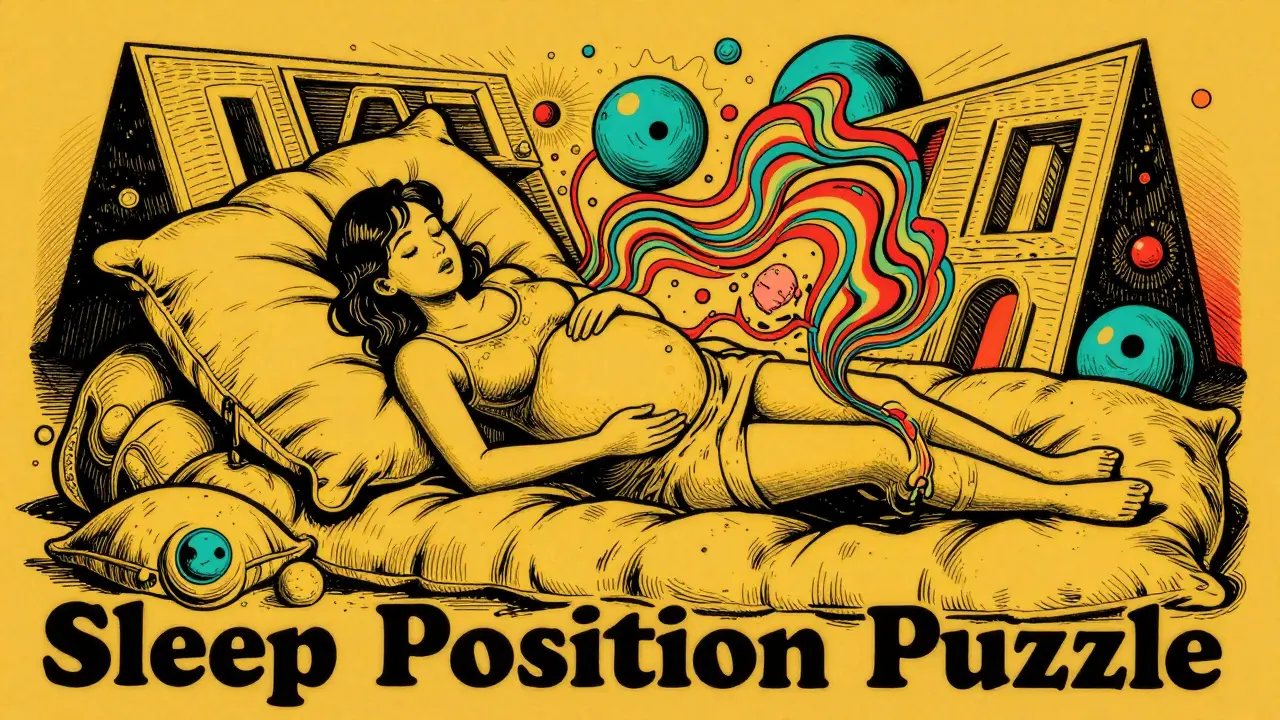
Solving the Sleep Position Puzzle
The "sleep on your left side" rule is something almost every pregnant woman hears. But why? Sleeping on your left side keeps the heavy uterus off the Inferior Vena Cava is the large vein that carries blood from the lower body back to the heart , which maximizes blood flow to the placenta and kidneys.
To make this actually work without waking up on your back, you need a system. A full-body pregnancy pillow isn't just for comfort; it's a tool to keep your spine aligned and prevent you from rolling. For those dealing with apnea, the goal is to maintain a left lateral position while slightly elevating the upper body. Using a wedge pillow to lift your torso by 15-30 degrees can improve your oxygen saturation by over 3%.

Tackling Pregnancy Reflux at Night
Heartburn is practically a rite of passage during pregnancy, but when it hits at 2 AM, it's a nightmare. Reflux happens because the hormone progesterone relaxes the valve between your stomach and esophagus, allowing acid to creep up. When you add a baby pushing against your stomach, that acid has nowhere to go but up.
The trick here is gravity. While a few extra pillows under your head might seem like the answer, be careful. Propping up just your head can actually bend your neck and worsen sleep apnea. Instead, elevate the head of the bed by 6 to 8 inches. This keeps your entire upper torso angled, keeping the acid down where it belongs.
Aside from positioning, watch your timing. Try to avoid eating anything within three hours of bedtime. If you're still struggling, some women find relief with alginate-based antacids, which create a physical foam barrier on top of the stomach contents to stop reflux from escaping.
When to See a Doctor
It's easy to brush off exhaustion as "just part of being pregnant," but some signs shouldn't be ignored. If you experience excessive daytime sleepiness, wake up with a headache, or your partner notices you stop breathing during the night, it's time for a check-up. Many doctors now use the Berlin Questionnaire or the STOP-Bang questionnaire to screen for sleep disorders during prenatal visits.
If you're diagnosed, don't panic. The window for the most impactful intervention is typically before 28 weeks. Getting a handle on your sleep now can significantly lower your risk of complications like gestational diabetes or a C-section. Even if you've already passed that mark, any improvement in sleep quality helps your overall wellbeing and the health of your baby.
Postpartum Sleep: What Happens Next?
One of the biggest questions is whether sleep apnea vanishes once the baby is born. For many, the relief of the baby leaving the abdomen resolves the airway obstruction. However, the data is mixed. Some women find their sleep issues disappear completely, while others-especially those who developed hypertension during pregnancy-might see these patterns persist.
Depending on who you ask, the follow-up is different. Some clinics suggest a repeat sleep study about 12 weeks after delivery to see if the condition has resolved. Others suggest simply observing your symptoms. Regardless, if you're still snoring or feeling exhausted (beyond the obvious new-parent fatigue), a follow-up with a sleep specialist is a smart move.
Is it safe to use a CPAP machine while pregnant?
Yes, CPAP is considered the first-line treatment for moderate to severe sleep apnea during pregnancy. It is non-invasive and provides a direct benefit by stabilizing blood pressure and improving oxygen levels for both the mother and the baby.
Will a pregnancy pillow actually help with sleep apnea?
For mild cases, yes. Positional therapy-using pillows to stay on your side and slightly elevating your upper body-can reduce the number of apnea episodes. However, it is generally not enough for moderate or severe OSA and should be used alongside medical treatment if recommended.
Why is sleeping on the left side better for sleep disorders?
Sleeping on the left side prevents the uterus from compressing the inferior vena cava, a major vein that returns blood to the heart. This ensures optimal blood flow and oxygen delivery, which can help mitigate some of the respiratory stress associated with sleep apnea.
How can I tell the difference between normal pregnancy fatigue and sleep apnea?
While everyone is tired during pregnancy, apnea usually comes with specific red flags: loud snoring, waking up gasping for air, morning headaches, and feeling extremely sleepy even after a full night's rest. If these are present, you should be screened.
Can reflux make sleep apnea worse?
They often go hand-in-hand. Acid reflux can irritate the airways, causing inflammation and narrowing, which can potentially worsen obstructive sleep apnea. Treating both through positioning (elevating the head of the bed) often helps resolve both issues simultaneously.
Next Steps for a Better Night's Rest
If you're feeling overwhelmed, start with the easiest changes first. Invest in a high-quality pregnancy pillow to support a side-sleeping position and try elevating the head of your bed to manage reflux. If you suspect you have apnea, bring it up at your next prenatal visit and ask for a screening questionnaire.
For those already using a CPAP, don't hesitate to ask your provider about different mask types-like nasal pillows-if the current one is irritating your skin or leaking. Small adjustments to your humidity and pressure settings can turn a frustrating experience into a restful one, ensuring you and your baby get the oxygen and rest you need.