
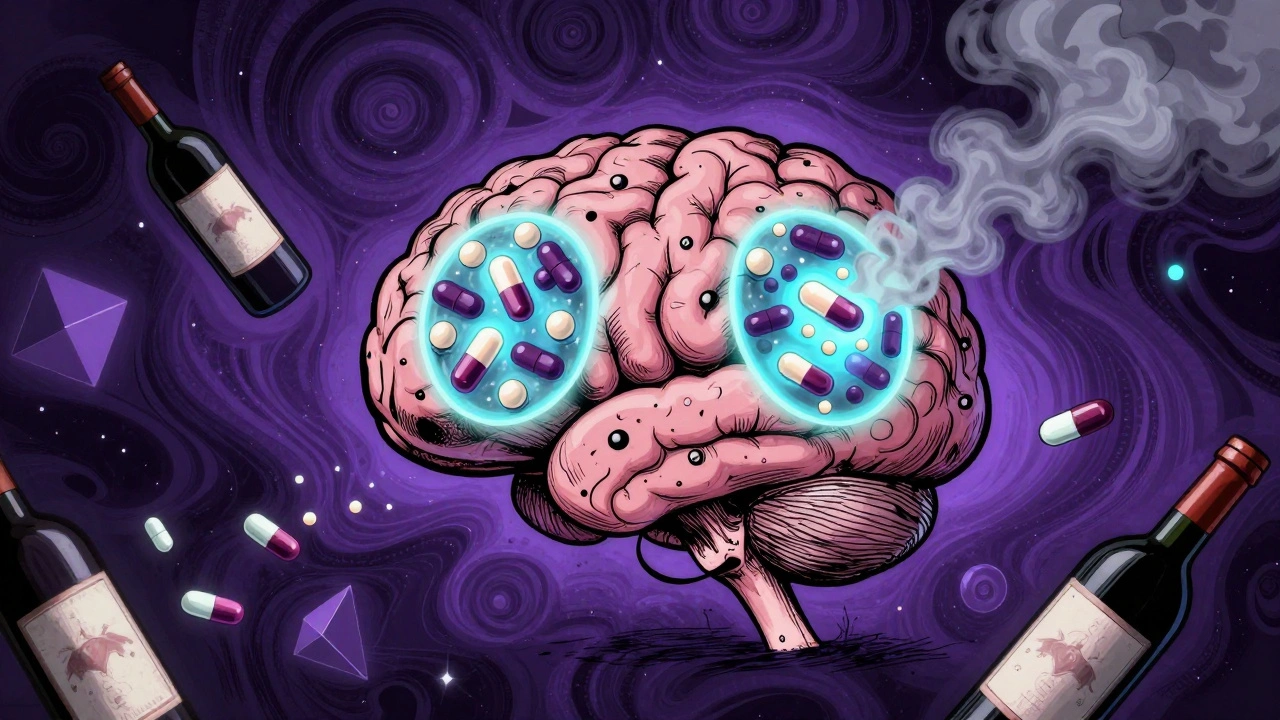
Revia is the brand name for naltrexone, a medication used primarily to treat alcohol dependence and opioid addiction. It doesn’t get you high. It doesn’t ease withdrawal. What it does is block the effects of opioids and reduce the craving for alcohol. If you’re trying to stay sober, Revia can be a powerful tool - but only if you use it correctly.
How Revia Works: The Science Behind the Pill
Revia contains naltrexone, an opioid receptor antagonist. That means it latches onto the same brain receptors that opioids like heroin, oxycodone, or fentanyl bind to - but it doesn’t activate them. Instead, it blocks them. If you take opioids while on Revia, you won’t feel the usual rush or euphoria. Over time, this breaks the reward loop that keeps addiction going.
For alcohol use disorder, Revia works differently. Alcohol triggers the release of endorphins, which create pleasurable feelings. Naltrexone reduces this release. People who take it often report that alcohol tastes bland or doesn’t give them the same satisfaction. This makes it easier to cut back or stop.
Revia is not a cure. It’s a support tool. You still need counseling, support groups, and personal commitment. But for many, it’s the missing piece that makes recovery possible.
Common Dosage and How to Take It
The standard starting dose for Revia is 50 mg once daily. That’s the most common prescription for both alcohol and opioid dependence. Some doctors may start lower - 25 mg - for the first day to check for reactions, especially if you’ve recently used opioids.
Here’s the critical rule: You must be completely opioid-free for at least 7 to 10 days before starting Revia. If you take it too soon, it can trigger sudden, severe opioid withdrawal. Symptoms include nausea, vomiting, muscle aches, sweating, anxiety, and even seizures. This isn’t a risk you can afford to ignore.
For alcohol dependence, most people take 50 mg daily for 12 weeks or longer. Studies show that people who stick with it for 3 months cut their drinking days in half. Some stay on it for a year or more. There’s no fixed timeline - it depends on your progress.
Revia is taken orally, with or without food. If you feel nauseous, taking it after a meal helps. Missing a dose? Skip it and take the next one as scheduled. Don’t double up.
There’s also an extended-release injection called Vivitrol, which is given once a month. But if you’re asking about Revia, you’re likely looking at the daily pill form.
Side Effects: What to Expect
Most people tolerate Revia well. But side effects happen. The most common ones are mild and tend to fade after a week or two:
- Nausea (affects about 10% of users)
- Headache
- Dizziness
- Fatigue or trouble sleeping
- Loss of appetite
- Mild stomach pain or cramps
These aren’t dangerous - just annoying. If nausea sticks around, talk to your doctor. They might suggest splitting the dose or switching to a different time of day.
Less common but more serious side effects include:
- Liver damage (rare, but possible - signs include yellow skin, dark urine, or persistent belly pain)
- Depression or suicidal thoughts (especially in people with a history of mental health issues)
- Allergic reactions (rash, swelling, trouble breathing - seek help immediately)
Before starting Revia, your doctor should check your liver function with a blood test. If you have existing liver disease, Revia may not be safe for you.

Drug Interactions: What to Avoid
Revia can interact with several medications. The biggest danger is mixing it with anything that contains opioids.
Never take:
- Prescription opioids: oxycodone, hydrocodone, codeine, morphine, fentanyl
- Over-the-counter cough syrups with codeine or dextromethorphan (some contain opioids)
- Illicit drugs like heroin or synthetic opioids
If you need pain relief while on Revia, acetaminophen (Tylenol) or ibuprofen (Advil) are safe. But if you’re in severe pain - say, after surgery - you may need to stop Revia temporarily. Talk to your doctor. Don’t guess.
Revia can also reduce the effectiveness of some medications. For example:
- It may interfere with opioid-based pain management in cancer patients
- It can lower the effectiveness of buprenorphine (used for opioid addiction)
- It might interact with certain antidepressants or antipsychotics - though evidence is limited
Always tell your doctor about every medication, supplement, or herbal product you take. Even something as simple as St. John’s Wort can affect how Revia works.
Who Should Not Take Revia
Revia isn’t for everyone. You should avoid it if:
- You’re currently using opioids or haven’t been opioid-free for at least 7-10 days
- You have acute hepatitis or liver failure
- You’re allergic to naltrexone or any ingredient in Revia
- You’re pregnant or breastfeeding - safety data is limited, so it’s usually avoided unless benefits clearly outweigh risks
- You have severe kidney disease - your doctor may adjust the dose
If you’ve had a recent overdose or are in a detox program, Revia is often delayed until you’re stable. Rushing it can backfire.
Where to Get a Revia Prescription Online
Getting Revia requires a prescription. You can’t buy it over the counter. Many people turn to online clinics because they offer discreet, flexible access - especially if local doctors are unfamiliar with addiction treatment or have long wait times.
Online providers typically require a medical questionnaire, a video consultation, and sometimes lab work to check liver function. If approved, they send the prescription to a licensed pharmacy. Shipping is discreet, and payment is secure.
One option for verified Revia prescriptions is Revia online pharmacy. They work with licensed U.S. and Canadian prescribers and ship directly to your door. Always confirm the pharmacy is accredited and requires a valid prescription before buying.
Be cautious of websites that sell Revia without a prescription. These are illegal, unregulated, and often sell counterfeit or contaminated pills. The risk isn’t worth it.
Real-Life Results: What Recovery Looks Like
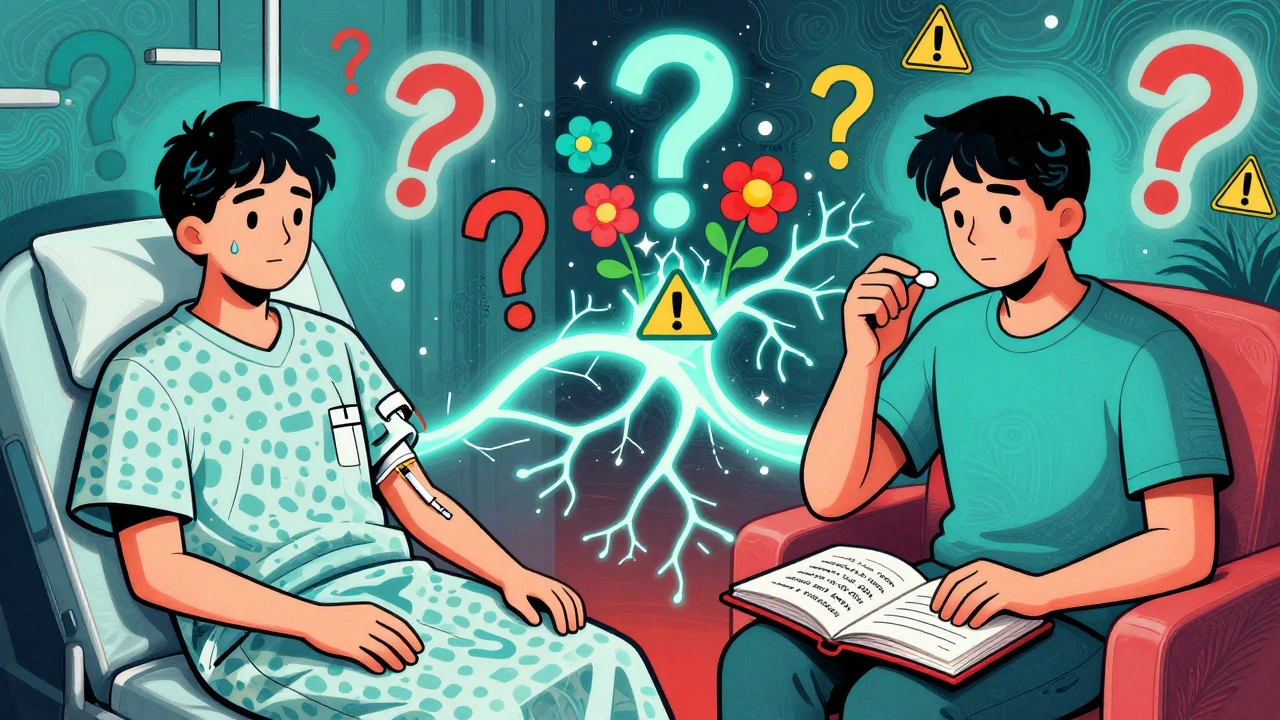
Mark, 42, drank two bottles of wine every night for 12 years. He tried AA, but cravings kept pulling him back. His doctor prescribed Revia. At first, he felt nauseous. After two weeks, the nausea faded. He started noticing he didn’t crave wine like before. "It was like the craving turned down a notch," he said. He’s been sober for 11 months.
Sarah, 28, used to take oxycodone after a car accident. She got clean but kept relapsing. Her counselor suggested Revia. She waited 14 days after her last opioid dose, then started the pill. "I tried one pill of hydrocodone just to see if it would work," she said. "I felt nothing. That was the moment I knew I could stay clean."
Revia doesn’t work for everyone. Some people still crave alcohol or opioids despite taking it. But for many, it’s the difference between relapse and recovery.
What to Do If Revia Isn’t Working
If you’ve been taking Revia for 4-6 weeks and still feel strong cravings or keep using, don’t give up. Talk to your doctor. You might need:
- A higher dose (up to 100 mg daily, though this is rare)
- Combination therapy with counseling or other medications like acamprosate (for alcohol)
- A switch to Vivitrol (monthly injection) for better adherence
- More intensive behavioral therapy
Recovery isn’t linear. Progress isn’t always obvious. But if you’re still trying, you’re already ahead of most.
Can I drink alcohol while taking Revia?
Yes, you can - but you shouldn’t. Revia doesn’t make alcohol dangerous to consume. But it reduces the pleasurable effects, which is the whole point. Drinking while on Revia defeats the purpose of treatment. If you’re using Revia to stop drinking, sticking to your goal is essential for long-term success.
How long does Revia stay in your system?
Naltrexone has a half-life of about 4 hours, but its effects last much longer - up to 24-48 hours. It takes about 2-3 days for the drug to fully clear your system. If you stop taking Revia, your opioid tolerance will return within a week. That’s why overdosing after stopping is dangerous - your body is no longer used to opioids.
Can Revia help with pain management?
No. Revia blocks opioid receptors, so it reduces or eliminates the effect of opioid painkillers. If you need strong pain relief, Revia isn’t the right medication. Use non-opioid options like acetaminophen or ibuprofen, or talk to your doctor about temporarily stopping Revia if you need surgery or severe pain treatment.
Is Revia addictive?
No. Revia (naltrexone) has no potential for abuse or dependence. It doesn’t cause euphoria, sedation, or withdrawal symptoms when stopped. You can start and stop it safely under medical supervision. It’s not a controlled substance.
What’s the difference between Revia and Vivitrol?
Revia is a daily oral tablet. Vivitrol is a monthly injection of naltrexone. Both contain the same active ingredient. Vivitrol is better for people who struggle with daily pills - it ensures consistent dosing. But it’s more expensive and requires a doctor’s visit each month. Revia is cheaper and more flexible, but requires daily discipline.
Final Thoughts: Is Revia Right for You?
Revia isn’t magic. It won’t fix your life. But it can remove a major barrier to recovery. If you’ve tried quitting alcohol or opioids and kept slipping back, Revia might be the key you’ve been missing. The side effects are mild. The risks are low - if you follow the rules. And the payoff? A life without cravings, without relapse, without regret.
Start with a doctor. Get tested. Know your liver health. Be honest about your use. And if you’re ready to take control, a Revia prescription online can be the first step - not the last.
Lauryn Smith 8.11.2025
Revia wasn't a miracle for me, but it was the first thing that made alcohol taste like water instead of a promise. I stayed on it for 18 months. No drama, no highs, just steady. That’s all I needed.
Edward Hyde 8.11.2025
So you’re telling me a pill that makes you feel nothing is the golden ticket to sobriety? Brilliant. Next they’ll sell us a pill that makes us forget we’re alive. This is just corporate pharmacy theater wrapped in pseudoscience.
Charlotte Collins 8.11.2025
Let’s not romanticize this. Revia doesn’t cure addiction-it just turns cravings into a mild annoyance while you sit in your apartment wondering why you still feel empty. The real problem isn’t the drug-it’s that we’ve outsourced healing to a pill because we’re too lazy to face the trauma underneath.
Scotia Corley 8.11.2025
While the pharmacological mechanism of naltrexone is well-documented, one must exercise considerable caution regarding the commercial promotion of online prescribing services. The absence of in-person clinical evaluation introduces significant liability, particularly with regard to hepatic function screening and opioid dependency timelines. This is not a trivial matter.
elizabeth muzichuk 8.11.2025
I know someone who took this and then tried to drink again. She ended up in the ER. Her husband said she was ‘just testing it.’ Testing it? That’s not courage, that’s suicide by proxy. People don’t understand how dangerous this is. You think you’re in control until you’re not.
Debbie Naquin 8.11.2025
The opioid receptor antagonism creates a neurochemical dissonance that disrupts the reinforcement loop. But the behavioral architecture remains intact. Without somatic regulation and environmental restructuring, pharmacological intervention is merely a temporary dampening of signal-to-noise ratio in the limbic system.
Mary Ngo 8.11.2025
Have you considered that Big Pharma funded these studies? They want you dependent on monthly pills instead of real therapy. And that link? It’s a front. The real owners are connected to opioid manufacturers. They profit either way-when you’re using, or when you’re ‘treated.’
Kenny Leow 8.11.2025
My cousin took Revia for a year after a knee surgery turned into a fentanyl habit. He said it didn’t make him feel better-but it made him stop wanting to get high. That’s enough. Sometimes healing isn’t loud. It’s quiet. And that’s okay.
Kelly Essenpreis 8.11.2025
Why are we letting Americans pay $200 for a pill that’s been around since the 80s? This is just another way to profit off suffering. In Canada they give it for free. In Germany they pair it with free therapy. Here? You get a link and a prayer.
Alexander Williams 8.11.2025
Pharmacokinetic half-life is irrelevant if adherence is poor. The real variable is behavioral compliance. The pill’s efficacy is contingent upon the subject’s capacity for sustained executive function-something most addiction models fail to account for. Hence the high relapse rates despite pharmacological intervention.