
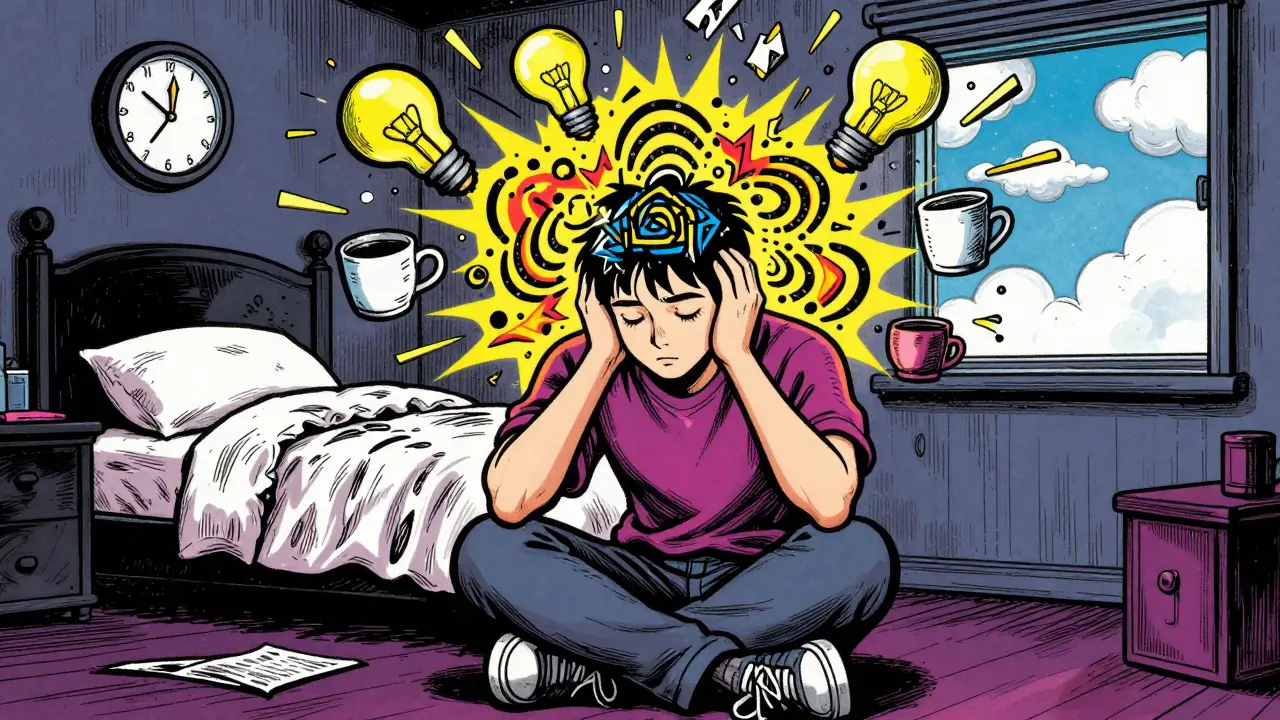
When you feel like the room is spinning, your head is pounding, and even the sound of a closing door feels too loud, you might be dealing with something more than just a bad headache or a case of vertigo. This is vestibular migraine - a condition that blends migraine pain with intense dizziness, making everyday tasks feel impossible. Unlike regular migraines, vestibular migraine doesn’t always come with a headache. Sometimes, the dizziness is the main event. And if you’ve been told it’s just stress or an inner ear infection, you’re not alone. Most people wait over a year before getting the right diagnosis.
What Exactly Is Vestibular Migraine?
Vestibular migraine isn’t a mystery - it’s a neurological condition. It happens when the brain’s pain and balance systems get tangled. The same nerves that trigger migraine headaches also connect to the inner ear’s balance sensors. When these signals go haywire, you get vertigo, nausea, and sensitivity to light and sound - all while your brain is stuck in migraine mode.
It’s the most common cause of recurring dizziness in adults. Studies show it affects about 1 in 100 people, and women are more than three times as likely to have it as men. It’s not rare. It’s just misunderstood. The official diagnostic criteria, set by the International Headache Society in 2013, require at least five episodes of moderate-to-severe dizziness lasting 5 minutes to 72 hours, along with a history of migraine. The dizziness doesn’t have to happen with a headache - but it usually comes with other migraine signs like light sensitivity, visual auras, or nausea.
Why Diagnosis Takes So Long
Most people with vestibular migraine see three or more doctors before getting the right answer. Why? Because the symptoms overlap with other conditions. Dizziness could be BPPV (a harmless inner ear rock problem), Ménière’s disease (fluid pressure in the ear), or even anxiety. But here’s the key difference: BPPV lasts seconds and is triggered by head movement. Ménière’s comes with hearing loss and ringing. Vestibular migraine? It comes with migraine history, and the dizziness can last hours or days without any head movement at all.
A 2022 study from ENT Health found that 40% of vestibular migraine cases were misdiagnosed as BPPV, and 25% were labeled as Ménière’s. That means thousands of people are getting the wrong treatment - like ear crystals being shaken loose (for BPPV) or diuretics (for Ménière’s) - when what they really need is migraine-specific care.
What Triggers Your Attacks?
Knowing your triggers is the first step to control. A 2021 survey of 850 patients found the top culprits:
- Stress (82% of patients)
- Sleep disruption (76%) - too little or too much
- Weather changes (68%) - barometric pressure shifts
- Caffeine (54%) - both too much and withdrawal
- Alcohol (49%) - especially red wine
- Aged cheeses, processed meats, MSG (38%+)
One woman in Sydney noticed her attacks always happened after her weekend sleep-in. Another found that skipping breakfast or drinking one cup of coffee triggered dizziness. Keeping a daily symptom diary for 6-8 weeks helps spot patterns. Don’t guess - track. Write down what you ate, how much you slept, your stress level, and when the dizziness hit. You’ll start to see your personal triggers.

How to Treat It: The Three-Step Plan
There’s no cure, but there’s a clear path to control. Experts agree on a three-step approach:
Step 1: Lifestyle and Trigger Management
Before you reach for pills, start here. Cutting out your top triggers can cut your attacks in half. For example, one 2017 study found that quitting caffeine reduced attack frequency by 35%. Sleep hygiene matters - aim for 7-8 hours, same time every day. Hydration is non-negotiable. Dehydration is a known trigger. Drink 2 liters of water during an attack - it helps reduce dizziness severity by 35%, according to Cleveland Clinic data.
Also, try vestibular rehabilitation therapy (VRT). This isn’t just balance exercises - it’s brain retraining. A 2018 trial showed 40% improvement in dizziness handicap scores after 8 weeks of daily VRT. Patients who did 12 supervised sessions followed by home exercises reported 50%+ symptom reduction. It’s safe, drug-free, and works better than most medications long-term.
Step 2: Managing Acute Attacks
When an attack hits, you need fast relief. For headache: sumatriptan (50-100 mg) works in 70% of cases within 2 hours. For dizziness and nausea: prochlorperazine (5-10 mg) resolves vertigo in 68% of cases within 2 hours. Ondansetron helps with nausea in 75% of patients. Avoid benzodiazepines like diazepam unless it’s a last resort - they can make balance worse over time and lead to dependency.
Rest in a dark, quiet room. Turn off lights. Silence your phone. Lie down. Don’t fight it. This alone reduces symptom severity by 35%. Combine it with hydration and one of the medications above, and most attacks can be tamed within hours.
Step 3: Preventing Future Attacks
If you have more than 4 attacks a month, it’s time for daily prevention. Three medications have strong evidence:
- Propranolol (40-160 mg daily): 62% of patients saw at least half their attacks go away.
- Amitriptyline (10-75 mg at night): 40-60% reduction in vertigo frequency.
- Topiramate (25-100 mg daily): 54% of patients had over 50% fewer attacks.
Flunarizine (5-10 mg daily) is widely used in Europe and has strong data - but it’s not approved in the U.S. Magnesium (600 mg), riboflavin (400 mg), and CoQ10 (300 mg) are safer alternatives with 30-40% effectiveness and almost no side effects. Butterbur used to be popular, but liver damage risks led to warnings in 2015 - avoid it.
And here’s something new: In 2023, the FDA approved atogepant for migraine prevention. Early data shows 56% of vestibular migraine patients had fewer attacks. It’s expensive, but it’s a breakthrough. Clinical trials for rimegepant are also showing promise.
What Doesn’t Work - And Why
Many people waste months on treatments that don’t touch the root cause:
- Diuretics (for Ménière’s): Only 20% help vestibular migraine.
- Steroids (for vestibular neuritis): Only 30% effective.
- Long-term benzodiazepines: They dull the brain’s ability to recover balance, making dizziness worse over time.
- Ignoring triggers: If you keep drinking wine or skipping sleep, no pill will fully work.
One Reddit user shared: “I took diazepam for 18 months. I got used to the dizziness, but I couldn’t walk without holding onto walls. I stopped, started VRT, and now I hike again.”
When to See a Specialist
If you’ve had more than three unexplained dizziness episodes in six months - especially with migraine history - see a neurologist who specializes in headaches or a vestibular specialist. A combined neurology + ENT approach works best. In fact, 70% of successful cases involve both specialists. Don’t wait. Delaying treatment for over 3 months increases the chance of chronic dizziness by 40%.

Real Stories, Real Results
One 34-year-old teacher in Melbourne stopped having attacks after:
- Quitting caffeine cold turkey
- Taking magnesium and riboflavin daily
- Doing 10 minutes of VRT exercises every morning
- Starting propranolol after 3 attacks a week
She went from 10 attacks a month to 1 or 2. Her boss didn’t even notice the change - until she told him.
Another man in Brisbane tried 5 medications before finding that amitriptyline worked - but only after he stopped sleeping past 9 a.m. He didn’t realize sleep timing was part of the puzzle.
The Future Is Personal
Researchers are now looking at genetic markers. A mutation in the CACNA1A gene is linked to 25% of familial vestibular migraine cases. If you have it, calcium channel blockers like verapamil are more likely to work. In the next few years, genetic testing may guide treatment choices.
Non-invasive devices like gammaCore (vagus nerve stimulator) are also showing promise. In a 2021 trial, users saw 45% fewer vertigo days. It’s not for everyone, but it’s another tool.
By 2028, experts predict diagnostic delays will drop by 30% and treatment success will rise by 25% - thanks to better awareness and specialized clinics. Right now, only 12% of migraine trials even include vestibular migraine patients. That’s changing.
What You Can Do Today
- Start a symptom diary for 6 weeks - note food, sleep, stress, weather.
- Try cutting out caffeine and alcohol for 30 days.
- Drink 2 liters of water during an attack.
- Rest in a dark, quiet room - no screens, no noise.
- Ask your doctor about vestibular rehabilitation therapy.
- If attacks are frequent, ask about propranolol, amitriptyline, or magnesium.
You don’t have to live with this. It’s not all in your head. It’s a real, treatable condition. And with the right approach, most people get their life back.
Alyssa Williams 12.02.2026
Just went through this last year. No one believed me until I printed out the diagnostic criteria and showed my neurologist. Now I take propranolol and do VRT daily. Life is different. I actually go outside now. 🙌
Ernie Simsek 12.02.2026
Bro this is the most accurate thing I’ve read on this topic. I tried diazepam for 2 years. Turned me into a zombie. Then I cut caffeine, started sleeping at 10pm, and did 10 mins of VRT. Now I hike. No meds. Just discipline. 🤘
Reggie McIntyre 12.02.2026
Man, this isn’t just medical info-it’s a survival guide. I used to think dizziness was just ‘being out of it.’ Turns out, my brain was literally misfiring. The part about barometric pressure? I live in Colorado. Every storm front? Total disaster. Now I track weather apps like a hawk. Small changes, huge payoff. Thank you for writing this.
Jason Pascoe 12.02.2026
I’m in Australia and this resonates so hard. The local GPs here still think it’s just ‘inner ear stuff.’ I had to push for a neurologist referral for over a year. VRT changed everything. Not magic, but it’s like retraining a muscle you didn’t know was broken. Also, magnesium? Game changer. Took me 3 months to notice, but now I don’t even think about it anymore. Just take it like a vitamin.
Brad Ralph 12.02.2026
So… you’re telling me I didn’t need to be ‘more chill’? My therapist’s advice was ‘meditate more.’ Turns out, my brain was throwing a migraine party and my inner ear was just the DJ. 😅
Gabriella Adams 12.02.2026
One thing no one talks about: hydration during an attack. I used to sip water like it was optional. Then I chugged 2 liters during a flare-up. Dizziness dropped by half in 45 minutes. I know it sounds weird, but your brain needs fluid to stop spinning. It’s physics, not magic. Drink. Now.
Autumn Frankart 12.02.2026
Big Pharma is hiding the real cure. They don’t want you to know that vestibular migraine is caused by 5G radiation + GMOs in aged cheese. The FDA approves drugs that only mask symptoms because they’re paid off. Read the study-40% misdiagnosed? That’s not incompetence. That’s intentional. Wake up.
Skilken Awe 12.02.2026
Propranolol? Amitriptyline? You’re talking about off-label CNS depressants with side effects worse than the disease. Have you read the prescribing info? Sedation, weight gain, suicidal ideation? And you call this ‘treatment’? This isn’t medicine-it’s chemical suppression. Real healing is behavioral. You’re all just taking pills because you’re too lazy to fix your sleep schedule.
Stephon Devereux 12.02.2026
There’s a quiet revolution happening here. We’re moving from ‘fix the symptom’ to ‘retrain the system.’ VRT isn’t just exercises-it’s neuroplasticity in action. The brain rewires itself when you give it consistent, gentle input. And yes, meds help, but they’re not the goal. The goal is autonomy. The goal is not needing a pill to leave your house. That’s the real win.
Steve DESTIVELLE 12.02.2026
Let me tell you something about the human condition. We are all searching for meaning in pain. The vestibular system is not just about balance-it is a mirror of our inner equilibrium. When the dizziness comes, it is not the body betraying us-it is the soul screaming for alignment. The triggers-caffeine, stress, sleep-are not mere variables. They are metaphors. The cheese? The wine? They are the ghosts of our choices. We must listen. Not just to the neurologist. But to the silence between the vertigo. The truth is not in the pills. The truth is in the stillness after the storm. And that stillness… it is yours to claim.
Alyssa Williams 12.02.2026
Replying to Stephon: YES. Exactly. I used to think I was broken. Now I see it as my body asking me to slow down. VRT didn’t fix me. It helped me listen. And now I’m not just managing-I’m thriving. Thanks for saying it better than I could.