
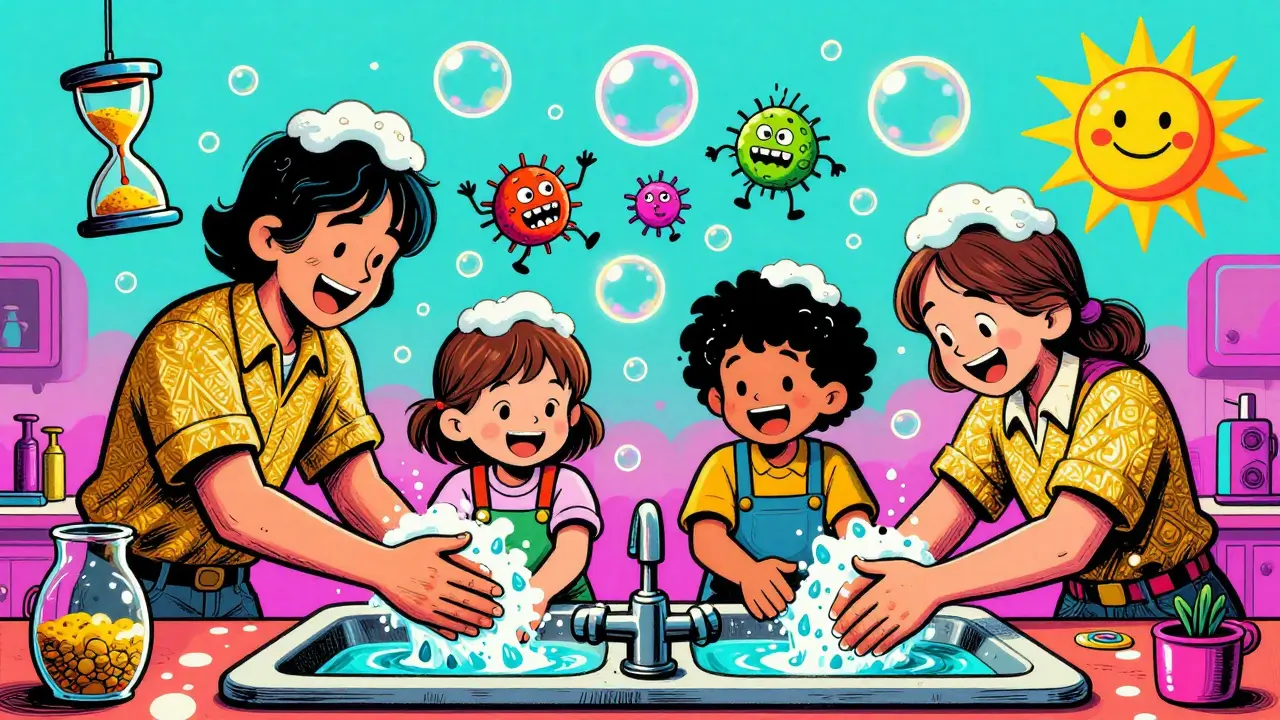
Every time you touch a doorknob, pick up your phone, or help a child wipe their nose, you’re handling germs. Most of the time, it’s harmless. But sometimes, it’s not. The simplest thing you can do to stop sickness from spreading in your home costs less than $2 a year per person. That’s not a guess. It’s science.
Why Hand Hygiene Matters More Than You Think
Hand hygiene isn’t just about soap and water. It’s a proven defense against the germs that cause colds, flu, stomach bugs, and even COVID-19. The CDC found that proper handwashing reduces respiratory infections by 16-21% and gastrointestinal illnesses by 31% in households. That means fewer sick days, fewer doctor visits, and less stress for families.
Think about it: if someone in your house catches norovirus, the chance of it spreading to another family member is between 16% and 28%. For influenza, it’s about 3.2%. For SARS-CoV-2, it’s around 10%. These aren’t rare events. They happen in kitchens, bathrooms, and living rooms every winter. And the most effective way to stop them? Clean hands.
It’s not magic. It’s physics and microbiology. Germs stick to dirt, oils, and skin. Soap breaks down the grease that holds them there. Water rinses them away. Alcohol in hand sanitizer kills them on contact. But only if you do it right.
The Right Way to Wash Your Hands
Most people think they’re washing their hands well. They’re not. A 2023 NHS audit found that nearly half of households miss key areas-fingertips, thumbs, and between fingers. That’s where germs hide.
The World Health Organization’s six-step handwashing technique isn’t optional. It’s the gold standard. Here’s how to do it:
- Wet hands with clean, running water (100-108°F / 38-42°C is ideal, but cold works too).
- Apply 3-5 mL of soap-about the size of a nickel to a quarter.
- Rub palms together.
- Rub the back of each hand with the opposite palm, fingers interlaced.
- Rub palms together with fingers interlaced.
- Rub the backs of fingers against opposing palms with fingers interlocked.
- Rub each thumb clasped in the opposite hand.
- Rub fingertips against palms in a circular motion.
- Rub wrists.
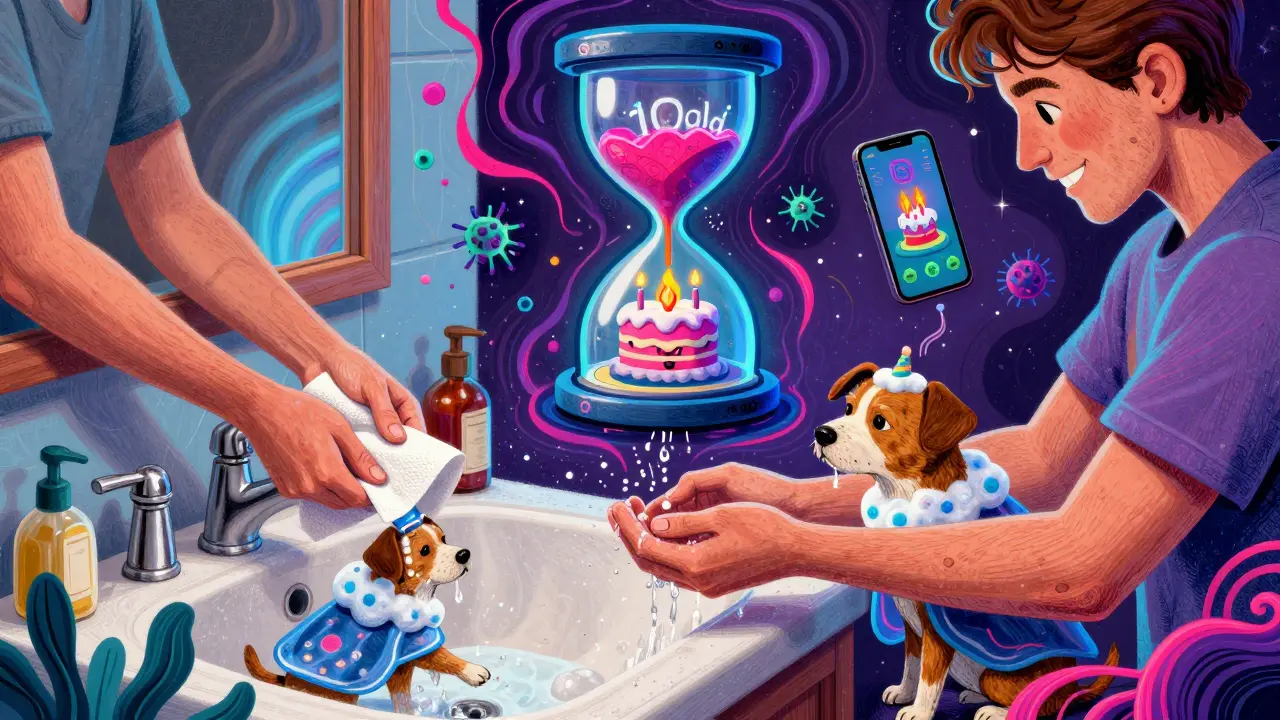
Do all this for at least 20 seconds. That’s longer than you think. Singing "Happy Birthday" twice is the easiest way to time it. A 2018 study in the American Journal of Infection Control confirmed that this method removes 90% more bacteria than shorter or incomplete washing.
After washing, dry hands with a single-use paper towel. Air dryers? They can actually spread germs. A 2012 Mayo Clinic study showed paper towels reduce bacteria by 76% more than air dryers. And don’t forget: after turning off the faucet, use the towel to open the door. Otherwise, you’re just recontaminating your clean hands.
When to Use Hand Sanitizer (And When Not To)
Hand sanitizer is convenient. It’s portable. But it’s not a replacement for soap and water.
Alcohol-based sanitizers need at least 60% alcohol to work. Anything less, and you’re just smearing germs around. The FDA requires this on labels now-so check before you buy. Use about 2.4-3 mL (a quarter-sized amount) and rub until dry. That takes 20 seconds. No rushing.
Here’s when sanitizer works best:
- Hands are visibly clean
- You’re dealing with enveloped viruses like flu or COVID-19
- Soap and water aren’t available
Here’s when it fails:
- Hands are dirty, greasy, or sticky
- You’re dealing with norovirus or C. difficile spores
- The product is expired or diluted
A CDC lab test found that when hands are visibly soiled, sanitizer’s effectiveness drops to just 12%. That’s worse than doing nothing. Soap and water physically remove dirt and spores. Sanitizer can’t. Don’t use it as a shortcut when you’re dirty.
What Doesn’t Work (And Why)
Antibacterial soap? It’s not better. In fact, it’s worse.
The FDA banned triclosan and 18 other antibacterial ingredients in consumer soaps back in 2016 because there was zero proof they prevented illness better than plain soap. Worse, they may be fueling antibiotic resistance. A 2019 study in Environmental Science & Technology found household bacteria from people using antibacterial soap were 2.7 times more likely to resist antibiotics.
Hot water? It’s not necessary. Dr. Myron Genel from Yale found cold water (60°F / 15°C) removes germs just as well as hot water-and saves energy. The real difference isn’t temperature. It’s technique.
And no, wiping your hands on your shirt doesn’t count. That’s how germs spread to doorknobs, couches, and toys.
Hand Hygiene for Kids and Busy Households
Kids don’t wash for 20 seconds. They wash for 5. A 2021 Pediatrics study found the average child washes for just 8.2 seconds. That’s not enough.
Here’s what works:
- Use a sand timer or a phone app like "Clean Hands Timer" (rated 4.7/5 by over 12,000 users).
- Put up a visual poster of the six-step technique. The Minnesota Health Department’s free poster increased compliance from 28% to 63% in schools.
- Make it fun. Sing a song. Turn it into a game. Reward consistency, not perfection.
Parents who use timers report fewer colds. One Amazon reviewer, "HealthConsciousMom," said her family went from six colds a year to two after using a 20-second sand timer.
For busy households, link handwashing to habits you already have:
- Wash when you walk in the door
- Wash before you touch food
- Wash after using the bathroom
- Wash after petting the dog
The USDA says washing before food prep cuts foodborne illness risk by 78%. That’s huge.
Fixing the Hidden Problems
Even if you wash right, your sink might be sabotaging you.
CDC testing found 89% of households touch the faucet handle after washing-recontaminating their hands. Solution? Use a paper towel to turn off the water. Or install a foot-pedal faucet. They cost $45-$120 to retrofit and eliminate the problem.
Another issue: dry, cracked skin. Frequent washing causes dermatitis, especially in healthcare workers. But it’s fixable. Apply moisturizer right after drying. A 2020 study in Dermatology Practical & Conceptual showed this cuts skin irritation by 62%.
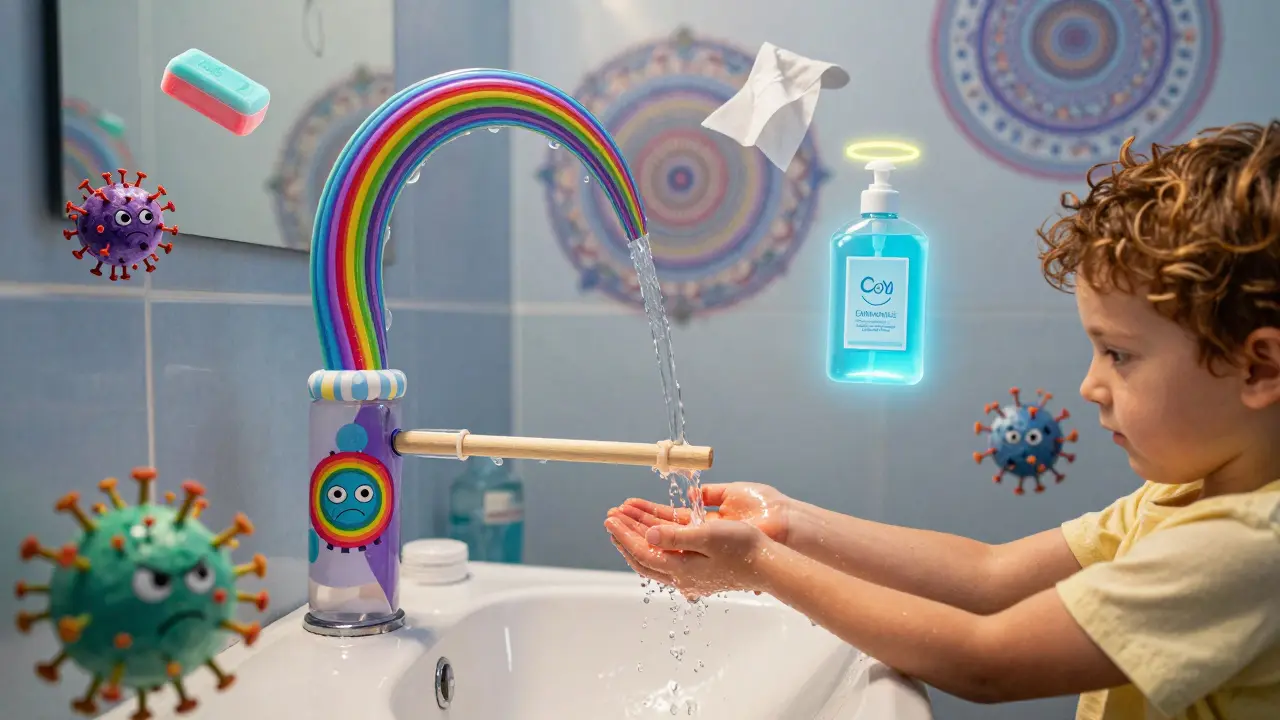
And if you live in a home without reliable running water? You’re not alone. A 2023 WaterAid report says only 63% of lower-income U.S. households have both soap and running water. The WHO recommends "tippy tap" handwashing stations-simple, low-cost devices that use 90% less water and still work. They’re used in over 1.2 million homes across 47 countries.
What’s Changing Now
Hand hygiene is getting smarter. The WHO updated its guidelines in May 2024 to include home-specific advice. The CDC’s 2023 Household Infection Prevention Toolkit now includes QR codes linking to videos like Johns Hopkins’ "Hand-washing Steps Using WHO Technique," which has over 2.4 million views.
Smart dispensers are coming into homes. GOJO’s PURELL SMART DISPENSING SYSTEM, used in 45% of U.S. hospitals, now tracks usage. A 2023 pilot study found it reduced compliance gaps by 33% in families.
The NIH just funded a $15 million study at the University of Michigan to test "habit stacking"-linking handwashing to routines like brushing teeth or checking email. Early results suggest this could be the key to long-term change.
The Bigger Picture
Hand hygiene isn’t just about your kitchen. It’s global. Dr. William Schaffner of Vanderbilt says proper handwashing prevents 1.8 million child deaths annually from diarrheal disease worldwide. The Global Handwashing Partnership projects that if everyone in the world washed hands properly, we could prevent 1.4 million deaths from respiratory and diarrheal diseases by 2030.
And the return on investment? $16 saved in healthcare costs for every $1.27 spent on soap and water. That’s the highest ROI of any public health intervention ever studied.
This isn’t about perfection. It’s about consistency. You don’t need fancy gadgets. You don’t need expensive products. You just need to wash your hands the right way, at the right times, every time.
It’s the oldest trick in public health. And it still works.
Is hand sanitizer as good as soap and water?
Hand sanitizer works well when your hands are clean and you’re dealing with viruses like flu or COVID-19. But it doesn’t remove dirt, grease, or spores like norovirus or C. difficile. Soap and water physically wash away germs and debris. Use sanitizer only when soap isn’t available. Never use it as a substitute when hands are visibly dirty.
Do I need antibacterial soap?
No. Antibacterial soaps with triclosan or similar ingredients were banned by the FDA in 2016 because they offer no extra protection over plain soap. Worse, they may contribute to antibiotic resistance. Plain soap and water are just as effective and safer for long-term use.
How long should I wash my hands?
At least 20 seconds. That’s the minimum time needed to remove 90% of harmful germs, according to the WHO and CDC. Singing "Happy Birthday" twice is a simple way to time it. Shorter washing cuts effectiveness by more than half.
Is hot water better than cold water for handwashing?
No. Studies show cold water (around 60°F / 15°C) removes germs just as effectively as hot water. The key is soap, friction, and time-not temperature. Using cold water also saves energy and reduces scalding risk, especially for children.
What if I don’t have access to running water?
Use alcohol-based hand sanitizer with at least 60% alcohol. If that’s not available, a "tippy tap"-a simple, low-cost handwashing station made from a bottle and a stick-can be used with limited water. It’s been adopted in over 1.2 million homes worldwide and reduces water use by 90% while maintaining effectiveness.
How can I get my kids to wash their hands properly?
Make it fun and visual. Use a 20-second sand timer or a phone app. Post a colorful handwashing chart near the sink. Let them choose their soap scent. Sing a song together. Studies show visual aids and routines increase compliance from under 30% to over 60% in children.
Can handwashing really prevent illness in my family?
Yes. The CDC reports that proper hand hygiene reduces respiratory infections by 16-21% and gastrointestinal illnesses by 31% in homes. Families who wash hands after returning home, before eating, and after using the bathroom see fewer sick days, fewer doctor visits, and lower medical costs. It’s the most cost-effective infection control tool available.
Start today. Wash your hands the right way. It’s not complicated. It’s not expensive. But it’s powerful.
Tim Goodfellow 18.12.2025
Yo, this post is a godsend. I used to think handwashing was just a chore until I saw the stats-31% fewer stomach bugs? That’s like having a personal bodyguard against germs. Now I sing ‘Happy Birthday’ twice while scrubbing, and my kid actually asks for the sand timer. No more ‘I’m done!’ after three seconds. Game changer.
mark shortus 18.12.2025
OKAY BUT HAVE YOU SEEN WHAT’S IN THOSE ‘SANITIZERS’?!?!? I read somewhere that the alcohol is just a front for glyphosate and microplastics. They’re making us think we’re clean while poisoning us slowly. The FDA? Corrupt. The CDC? Bought. I don’t trust ANY of it. I wash with vinegar and lemon peel now. And I don’t use paper towels-those are made by Big Tissue. 🤬
Elaine Douglass 18.12.2025
Thank you for writing this I’ve been trying to get my husband to wash properly for years and he just splashes water and calls it good. I’m printing out the WHO steps and taping them to the bathroom mirror. Also I’m getting a sand timer for the kitchen too. Seriously this is the most helpful thing I’ve read all month ❤️
Vicki Belcher 18.12.2025
OMG I LOVE THIS SO MUCH 💖 I just bought a foot-pedal faucet for $89 and it’s the best decision ever. No more recontaminating after washing! Also I started moisturizing after every wash and my hands haven’t been cracked since. My kids even do the six-step dance now. It’s like a little handwashing rave. 🕺🧼
Aboobakar Muhammedali 18.12.2025
in india we use tippy taps in villages and they work so well with just a bottle and a string. i never thought i’d see someone from the us talking about them. this is beautiful. also i wash with just water and ash when soap runs out. it’s old but it works. thank you for sharing this
Laura Hamill 18.12.2025
Hand sanitizer is a Big Pharma scam. They want you to buy it so you don’t wash your hands with soap because soap doesn’t make them money. Plus the WHO? They’re funded by the WHO-Pharma Alliance. And why are they pushing 20 seconds? To keep you in the bathroom longer so you don’t work. This is all about control. I use my sleeve. Works better.
Alana Koerts 18.12.2025
Did you even read the CDC study? 16-21% reduction? That’s statistically insignificant. And the 31% for GI illness? Sample size was 87 households. Also, your ‘six-step’ method is just the WHO’s 2005 version. They updated it in 2022. You missed the palm-to-thumb rotation. And why are you quoting a 2018 study? There’s a 2024 meta-analysis that shows no difference between 15 and 20 seconds. You’re spreading outdated info.
Gloria Parraz 18.12.2025
This is the kind of post that makes me believe in humanity again. I’ve been washing my hands for 20 seconds since I read this and I’ve only had one cold this winter. My coworkers noticed. One asked if I started meditating. I told them it was handwashing. They’re all buying timers now. You didn’t just give advice-you started a movement. Keep going.
Nicole Rutherford 18.12.2025
Wow. So you’re telling me I’ve been doing this wrong for 15 years? And now I’m supposed to believe that singing ‘Happy Birthday’ is science? I don’t have time for this. I’m not a child. I just wipe my hands on my jeans and call it a day. Also, why are you promoting soap? It’s full of chemicals. I use dish soap. It’s stronger. And I don’t dry my hands at all. Germs hate moisture. That’s why they’re everywhere.
Mark Able 18.12.2025
Hey I’m a nurse and I just had to ask-do you know how many people touch the faucet after washing? I’ve seen it a thousand times. And you know what? Most of them don’t even use soap. They just run water for five seconds and think they’re clean. I had a patient last week who said ‘I wash my hands every morning’-and then I saw her grab the doorknob with the same hand she used to scratch her butt. I swear to god.
Chris Clark 18.12.2025
As a guy who grew up in Nigeria and now lives in Texas, I’ve seen it all. In Lagos we used tippy taps. Here? People use hand sanitizer like it’s perfume. But here’s the truth-soap and water works everywhere. I taught my daughter the WHO steps using a song from Afrobeats. She sings it while scrubbing. Now she corrects me when I rush. It’s beautiful. This isn’t just hygiene. It’s culture. And it’s universal.