CBD and Medications: What You Need to Know About Interactions and Safety
When you use CBD, a non-intoxicating compound derived from cannabis that’s used for pain, anxiety, and sleep. Also known as cannabidiol, it's become a popular supplement—but it doesn’t play nice with every medication. Unlike marijuana, CBD won’t get you high, but it does mess with your liver’s ability to break down drugs. That’s not a small thing. If you’re on blood thinners, seizure meds, antidepressants, or even statins, CBD could make those drugs stronger—or weaker—than they should be.
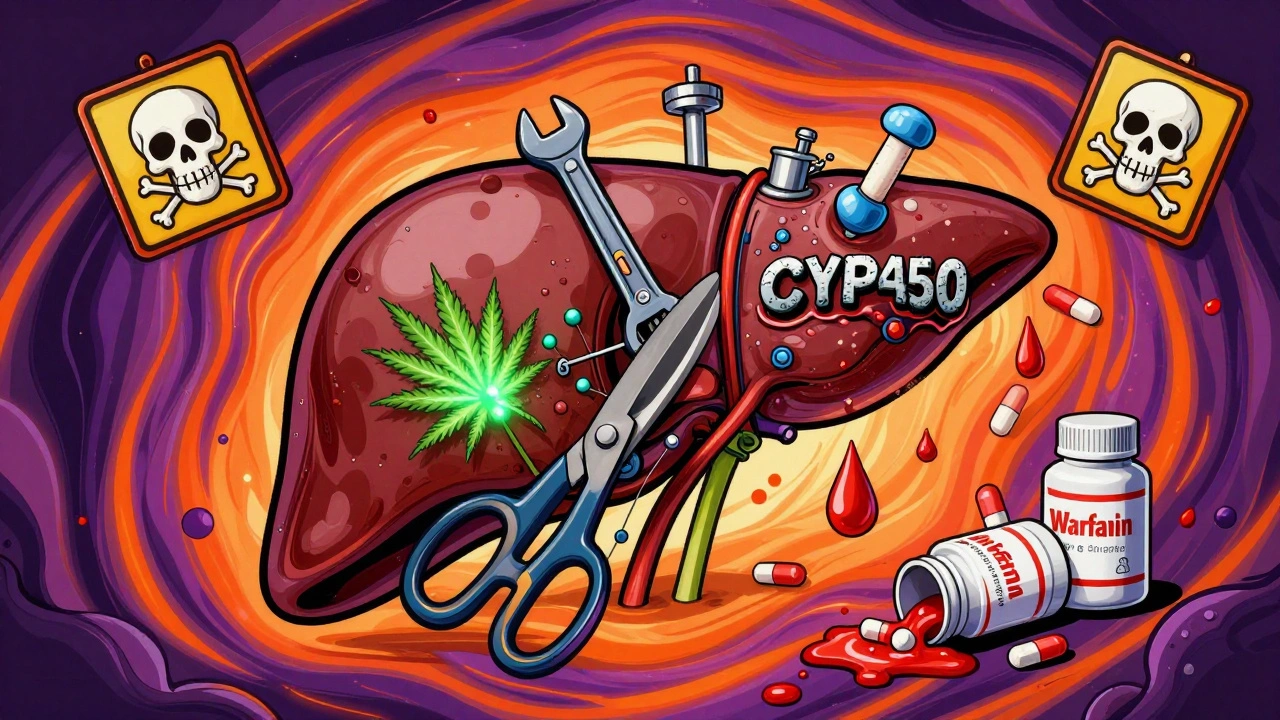
This isn’t theory. The FDA has warned about CBD interacting with warfarin, a common blood thinner that requires precise dosing to avoid dangerous bleeding, and clobazam, an anti-seizure drug where CBD raised blood levels by up to 600% in some patients. Even common OTC meds like ibuprofen or melatonin can be affected. CBD blocks the CYP3A4 and CYP2C19 enzymes—your body’s main drug-processing system. That means your meds sit in your system longer, increasing side effects or toxicity risk. It’s like pouring extra fuel into an engine that wasn’t built for it.
People often think, "It’s natural, so it’s safe." But natural doesn’t mean harmless. If you’re taking Revia (naltrexone), a drug used for opioid or alcohol dependence, or any psychiatric medication, mixing it with CBD could change how your brain responds. Some users report feeling more tired, dizzy, or even depressed when combining CBD with antidepressants. And if you’re on thyroid meds like levothyroxine, CBD might interfere with absorption—just like iron-rich meals do. The same goes for statins like simvastatin: CBD could raise your risk of muscle damage, just like grapefruit juice does.
There’s no one-size-fits-all answer. Your age, liver health, dosage, and exact meds all matter. Some people take CBD with zero issues. Others end up in the ER. That’s why you need to talk to your doctor—not a wellness influencer or a dispensary clerk. Bring your full med list. Ask: "Could CBD make any of these drugs more dangerous?" Keep a journal. Note changes in energy, mood, or side effects after starting CBD. If you’re on a medication with a narrow safety window—like seizure drugs or blood thinners—don’t guess. Get a blood test to check levels before and after adding CBD.
The truth is, we’re still learning. Studies on CBD and drug interactions are limited, and most products on the market aren’t regulated. You might buy a bottle labeled "10mg CBD" and get 25mg—or worse, contaminants. That’s why the same risks that apply to generic drugs—like nitrosamine contamination or inconsistent dosing—also apply to CBD. If you’re using it for sleep, anxiety, or chronic pain, you’re not just adding a supplement. You’re changing how your whole system handles medicine.
Below, you’ll find real, practical guides on how CBD fits into the bigger picture of medication safety—from how to spot dangerous interactions to what to tell your doctor when you’re already taking something serious. These aren’t opinions. They’re based on clinical reports, FDA alerts, and patient experiences. Whether you’re considering CBD or already using it, this collection gives you the facts you need to stay safe.